Most candidates freeze, ramble, or default to something like "I've always loved the stock market." Interviewers hear that line dozens of times a season, and it tells them almost nothing about whether you'll last past year one.
This guide breaks down why interviewers keep asking this question, gives you a step-by-step framework for building a genuine answer, and shows sample responses for different candidate backgrounds — including the growing world of real-asset and energy investing.
Key Takeaways
- Generic answers like "I'm good with numbers" signal weak prep and get filtered out fast
- Interviewers use this question to predict retention through the grueling early-career years
- A strong answer pairs a genuine motivation with proof — a project, internship, or skill
- Real assets like energy and natural resources are expanding what "asset management" even means
What Is Asset Management? A Quick Primer
Asset management is the professional practice of managing client capital across stocks, bonds, real estate, and, increasingly, alternative assets, to grow and protect wealth within an agreed risk tolerance. Clients range from individual retirees to pension funds and sovereign wealth funds.
This isn't a niche industry: global assets under management hit a record $147 trillion by June 2025, according to McKinsey's 2025 asset management report. That scale means real career runway and real client stakes.
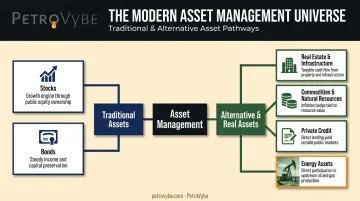
The field looks different than it did a decade ago, with traditional stock-and-bond portfolios now sitting alongside:
- Real estate and infrastructure funds
- Commodities and natural resource development
- Private credit and direct lending
- Energy assets tied to power generation
That expansion matters for job seekers: more entry points, more specializations, and more room to build a career around what actually interests you, whether that's equity research or physical infrastructure.
Why Do Interviewers Ask "Why Asset Management?"
This question isn't small talk. Interviewers use it as a filter for three specific things:
- Intrinsic versus opportunistic motivation: Someone chasing a paycheck answers differently than someone genuinely curious about markets and client outcomes, and interviewers can usually tell within the first ten seconds.
- Preparation depth: A strong answer references the firm's specific strategy, client base, or recent moves, while a weak one could describe any asset manager on the street.
- Retention risk: Asset management demands long hours during the analyst years before the payoff arrives, so firms don't want to train someone who quits at month eight.
McKinsey's research on workplace purpose found that employees who connect with their work's purpose are far more likely to stick around, which is exactly the trait firms are screening for with this question.
This question is ultimately a proxy for one thing: will you actually stay, and will you actually care?
How to Craft a Winning Answer
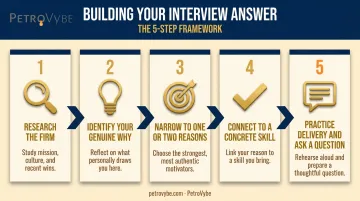
Building a genuine answer takes structure. Here's the process, step by step.
- Research the role and the firm. Study the firm's specialization: is it heavy in fixed income, focused on institutional clients, or building a real assets desk? Answer with specifics, not generic industry talk. A line like "I'm drawn to how your team approaches distressed credit" beats "I love finance."
- Identify your genuine "why." Skip the rehearsed line. Think back to a specific moment, such as a project, an internship, a class, or a personal investing experience, that first pulled you toward markets or portfolio management. Specificity beats polish every time.
- Narrow to one or two core reasons. Don't list every reason you've ever had. Covering client impact, intellectual challenge, and compensation all at once dilutes each one. Pick the one or two reasons most relevant to the role.
- Connect your reason to a concrete skill or achievement. Motivation without proof sounds hollow. Pair your stated "why" with a specific skill, internship, or project. If you're drawn to research, mention the equity pitch you built for a student investment fund.
- Practice the delivery and end with a question. Rehearse a 30-45 second answer, then time it. Close by asking the interviewer something related, such as how their team's mandate has shifted recently. That turns a monologue into a conversation.
Top Reasons to Highlight in Your Answer
Not every reason carries equal weight in an interview. These six tend to resonate most, but pick only what's genuinely true for you.
Client impact and trust-building. Helping individuals and institutions reach retirement goals or preserve legacy wealth offers direct, measurable impact. Your decisions show up in someone's actual financial future.
Intellectual challenge. Continuous market analysis, financial modeling, and staying current on macro and company-level trends keep the work from ever going stale.
Direct link between effort and results. Performance-based compensation and visible portfolio outcomes reward diligence. Unlike some careers, your work product is measured in numbers, not opinions.
Career growth and earning potential. Compensation varies enormously by firm, location, and performance, but the general trajectory looks like this:
| Role | Typical Compensation Range |
|---|---|
| Junior analyst | $150K-$300K |
| Senior analyst | $300K-$400K |
| Portfolio manager | $400K-$1M+ |
(Ranges compiled from Wall Street Oasis compensation benchmarking, 2024. Actual pay varies widely by firm size, geography, and track record.)
Expanding range of asset classes. Today's asset managers work across equities, fixed income, real estate, and alternatives, giving candidates room to specialize in what genuinely interests them.
Energy and natural resource asset management. This is a growing niche worth knowing about. Real-asset portfolios (including natural gas and NGL development projects) increasingly factor into asset management roles, especially as AI-driven electricity demand reshapes energy infrastructure needs.
Firms like PetroVybe, which develops natural gas assets in South Texas and the Gulf Coast Basin, apply overlapping disciplines: risk management, portfolio construction, and financial modeling. The underlying skill set clearly extends beyond a traditional trading desk.
Example Answers by Candidate Profile
Your answer should sound like you, not a template. Here's how it might shift depending on your background.
The Recent Graduate or Entry-Level Candidate
"During my finance coursework, I built a discounted cash flow model for a class project and realized I genuinely enjoyed the process of stress-testing assumptions. I interned at a regional bank's investment desk last summer, where I helped prep client review materials.
I'm drawn to asset management because I want to build a career around portfolio construction, and I know the analyst years are where that foundation gets built."
The Career Changer
"I spent four years in management consulting, where I learned to break down complex problems and defend recommendations under pressure. What I missed was seeing the long-term outcome of my analysis. Asset management gives me that: the chance to apply the same rigor, but track results over years, not just a single engagement."
The Experienced Analyst Moving Into Portfolio Management
"Over the past three years as a research analyst, I've built a track record of stock picks that outperformed our sector benchmark by a meaningful margin. I'm ready to move from recommending decisions to owning them directly, and I want to do that at a firm where portfolio managers have real latitude to act on conviction."
The Candidate Drawn to Alternative or Real Asset Investing
"I've always been more interested in tangible value creation than paper assets. That's what pulled me toward real estate and energy investing during my MBA.
I like that firms managing natural gas or infrastructure portfolios apply the same financial modeling and risk discipline you'd see in a traditional fund, just against a physical, cash-flowing asset instead of a ticker symbol."
Common Mistakes to Avoid When Answering
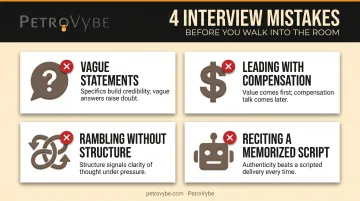
Watch for these pitfalls. Each one weakens an otherwise strong candidate.
- Vague statements. "I love the stock market" or "I'm good with numbers" could describe half the applicant pool without differentiating you from anyone else in the room.
- Leading with compensation. Talking mostly about bonus potential signals short-term thinking. Interviewers want to see you'd stay through a rough year, not just a good one.
- Rambling without structure. An unfocused answer, or one that never connects back to the specific firm or role, undercuts your preparation even if your motivation is genuine.
- Reciting a memorized script. Interviewers can spot a canned answer immediately, so practice your delivery while keeping the language natural.
Frequently Asked Questions
Why is asset management so important?
Asset management channels household and institutional savings into productive investments, helping people meet long-term financial goals while supporting broader economic growth through efficient capital allocation.
Why is IT asset management important?
IT asset management tracks hardware and software throughout their lifecycle for operational efficiency. It's a completely separate discipline from financial asset management, which is the focus of this guide.
What skills do interviewers look for when asking this question?
Communication, analytical thinking, genuine curiosity about markets, and self-awareness. Interviewers want to see you understand your own motivation, not just recite industry buzzwords.
What's the difference between asset management and wealth management careers?
Asset management focuses on investment growth and portfolio construction. Wealth management offers broader, holistic financial planning, often including tax, estate, and retirement advice for individual clients.
Do you need a CFA charter to work in asset management?
A CFA charter is highly valued and often pursued after one to two years as an analyst. CFA Institute confirms qualifying experience can be earned before, during, or after the program, so it's rarely required for entry-level roles.
Is energy and natural resource asset management a good career path?
Rising electricity demand from AI and data centers is fueling growth in energy asset development. This real-asset niche is expanding quickly, creating openings for analysts and portfolio managers within infrastructure and natural resource funds.