

Wealth management apps solve the visibility problem. They pull every account into one dashboard so you can see your real net worth, cash flow, and asset allocation without opening six different logins.
This guide breaks down the top wealth management apps of 2026, how to pick one that fits your portfolio, and why tracking your wealth is only half the job. Building it — especially in a tax-efficient way — is the harder half.
TL;DR
- Wealth apps range from free net worth trackers to institutional-grade platforms
- Your best fit depends on portfolio complexity, asset types, and desired automation level
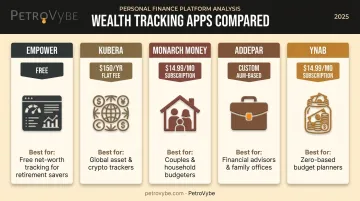
- Five apps stand out for 2026: Empower, Kubera, Monarch Money, Addepar, and YNAB
- Tracking apps organize wealth; growing it tax-efficiently requires real allocation moves, like alternative investments
Overview of Wealth Management Apps in the Personal Finance Market
A wealth management app is a digital platform that aggregates bank, brokerage, crypto, and alternative asset data into a single dashboard. It handles net worth tracking, budgeting, and investment monitoring so you're not reconciling five separate account statements by hand.
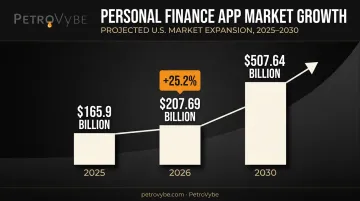
Demand for these tools is exploding. The global personal finance app market was valued at $165.9 billion in 2025, according to The Business Research Company's 2026 market report. Projections show:
- $207.69 billion by 2026, a 25.2% jump in a single year
- $507.64 billion by 2030, as adoption accelerates further
Affluent households are driving a meaningful share of that growth. 55% of high-net-worth individuals say digital capabilities directly influence which wealth firm or platform they choose, while 47% report dissatisfaction with their current digital experience, per Capgemini's 2024 wealth advising research.
As portfolios diversify beyond stocks and bonds into crypto, real estate, and private deals, the appetite for tools that can actually see all of it, not just the brokerage slice, keeps climbing.
Top Wealth Management Apps in 2026
We evaluated apps on four criteria: multi-asset support, security architecture, fee transparency, and usability for genuinely complex portfolios, not just clean design.
Empower Personal Dashboard
Empower (formerly Personal Capital) built its reputation as a free net worth and investment tracking tool, with an optional paid advisory arm layered on top. The dashboard itself stays free, but it also functions as a lead-generation funnel into Empower's managed wealth services.
It stands out because you get retirement planning, fee analysis, and portfolio checkup tools at no cost — the tradeoff is regular prompts to upgrade once your balances grow.
| Category | Details |
|---|---|
| Pricing | Dashboard is free. Advisory starts at $100,000 in assets, charging 0.89% annually; Private Client (above $1M) scales down to 0.49% on balances over $10M |
| Key Features | Net worth tracker, retirement planner, retirement fee analyzer, investment checkup tool |
| Best For | U.S. investors who want a free dashboard with the option to add human advisory later |
Kubera
Kubera positions itself as the all-in-one net worth tracker for hands-on, globally minded investors. It's built for people who don't want an advisor pitch attached to their dashboard.
What makes it different: Kubera tracks banks, brokerages, crypto wallets, real estate, domain names, and other unconventional holdings in any currency, and it charges a flat annual fee instead of taking a cut of your assets.
| Category | Details |
|---|---|
| Pricing | Kubera Essentials: $250/year; Kubera Black: $2,500/year |
| Key Features | Multi-currency support, crypto and DeFi tracking, beneficiary "Dead Man's Switch," Safe Deposit Box for estate documents |
| Best For | Investors with globally diversified or unconventional portfolios who want full control, no upsells |
Monarch Money
Monarch built a cleaner, modern alternative to legacy budgeting tools. Rather than focusing purely on net worth aggregation, it combines budgeting, goals, and investment visibility in one place, making it a favorite among couples managing shared money.
- Household-friendly: Partners get separate logins at no extra cost while sharing visibility into joint accounts
- Beyond budgeting: Plus tier adds unrealized gains/losses and asset allocation analysis
| Category | Details |
|---|---|
| Pricing | $14.99/month or $99.99/year (core); Plus: $199.99/year |
| Key Features | Shared household budgeting, investment tracking, customizable goals and spending reports |
| Best For | Individuals or couples wanting strong budgeting alongside investment visibility |
Addepar
Addepar targets institutions, not individual retail users. Family offices, RIAs, and ultra-high-net-worth advisors run their operations on this infrastructure. It consolidates complex, illiquid-heavy portfolios (private equity, venture, hedge funds, direct real estate) into one real-time reporting layer.
Addepar publishes no public pricing. Prospective clients submit a request through its contact form, and quotes are built around AUM and account complexity.
| Category | Details |
|---|---|
| Pricing | Custom quote only, typically AUM-based; contact sales directly |
| Key Features | Multi-asset aggregation, custom reporting, API integrations, scenario and pacing modeling |
| Best For | UHNW individuals, family offices, and advisors managing illiquid-heavy, complex portfolios |
YNAB (You Need A Budget)
YNAB works more like a philosophy than a traditional net worth tracker, built around one core rule: give every dollar a job. The focus stays on active cash-flow discipline rather than passive visibility.
This makes it a strong fit for people earlier in their wealth-building journey, working toward a specific savings goal, debt payoff, or investment target rather than managing eight asset classes at once.
| Category | Details |
|---|---|
| Pricing | $109/year ($9.08/month billed annually) or $14.99/month |
| Key Features | Zero-based budgeting, goal tracking, real-time syncing across devices |
| Best For | Wealth builders early in their journey who want hands-on control over spending habits |
How We Chose the Best Wealth Management Apps
The most common mistake investors make is picking an app based on how polished the interface looks, rather than whether it actually covers their asset mix and discloses its fees honestly.
We weighted four factors instead:
- Bank-level security: encryption standards, SOC 2 certification, and read-only account connections
- Multi-currency and multi-asset support: coverage for every currency and asset class in an investor's portfolio
- Pricing model transparency: flat fee versus AUM-based, disclosed upfront rather than buried in fine print
- Integration breadth: connections across banks, brokerages, and alternative custodians
Marketing copy didn't factor into our rankings. We relied only on what each platform's own documentation and security pages confirm.
Why Tracking Wealth Isn't the Same as Building It
Wealth apps are excellent at one job: showing you what you already have. They don't create new income streams, and they don't lower your tax bill. That distinction matters more than most users realize.
A common pattern: high-income W2 earners and capital-gains-heavy investors open Kubera or Empower and see their allocation breakdown. They realize they're overexposed to traditional stocks and bonds, with almost no tax efficiency built in. The dashboard reveals the problem. It doesn't solve it.
That's driving a real shift among accredited investors, who are allocating a slice of tracked net worth into tax-advantaged alternatives that traditional portfolios don't include, such as direct oil and natural gas development.
This is exactly the gap PetroVybe fills. PetroVybe is a private Texas natural gas development company operating in Lavaca County and the broader Gulf Coast Basin, offering accredited investors:
- Upfront tax deductions against active income, including W-2 earnings and capital gains, through Intangible Drilling Cost (IDC) deductions not restricted to passive income like typical real estate deductions
- Passive monthly distributions projected to peak above $10,000 per month per $100,000 unit invested
- A real, tangible asset backed by a $48 million third-party engineered proved reserves valuation
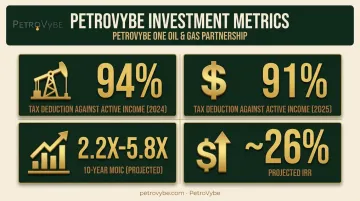
- A defined return window targeting a 10-year MOIC of roughly 2.2x–5.8x and ~26% IRR
PetroVybe partners saw a 94% tax deduction against active income in 2024 and 91% in 2025, numbers that change the after-tax math of a concentrated stock or W2-heavy portfolio.
Once a position like this enters the picture, tools like Kubera or Empower actually become more useful. They let you see the blended portfolio (public equities, real estate, crypto, and direct energy assets) as one coherent net worth number instead of scattered statements.
Conclusion
The best wealth management app matches your asset complexity, security requirements, and cost tolerance, not the size of its user base. A retail investor with three brokerage accounts needs something very different from a family office managing private equity and direct energy positions.
Choosing the right app matters, but it's only half the equation. The real work is pairing it with an actual wealth-building strategy, including tax-advantaged diversification, rather than treating tracking software as a substitute for allocation decisions.
This logic extends beyond apps into direct asset ownership. If you're an accredited investor or high-income earner looking to complement your tracked portfolio with a real asset that offers upfront tax efficiency, PetroVybe's natural gas development opportunities are worth a conversation.
Frequently Asked Questions
What is the best app for tracking wealth management?
It depends on your portfolio. Kubera is the strongest choice for multi-asset, multi-currency portfolios including crypto and real estate, while Empower is best if you want free tracking with an optional advisory upgrade.
What is considered ultra wealthy?
Ultra-high-net-worth individuals (UHNWIs) are typically defined as those with $30 million or more in investable assets, per Knight Frank's 2026 Wealth Sizing Model. Their portfolios often include private equity, direct energy, and multi-entity structures that mass-affluent investors rarely hold.
Are wealth management apps safe to use?
Reputable apps like Kubera, Empower, and Monarch use bank-level encryption, SOC 2 Type II certification, and read-only account connections, meaning they can't move your money. Always check a platform's security page before linking accounts.
Do wealth management apps replace a financial advisor?
No. Most are tracking and organizing tools, not fiduciaries. Some, like Empower, offer optional paid advisory services on top of the free dashboard, but the core product doesn't manage your money for you.
What's the difference between a net worth tracker and a robo-advisor?
A net worth tracker aggregates and displays your financial data across accounts. A robo-advisor actively selects, manages, and rebalances your investments — the SEC classifies it as an automated advisory program, not just a dashboard.
How can accredited investors diversify beyond stocks, bonds, and typical apps?
Alternative asset classes, including private equity, real estate, and direct energy development like PetroVybe's natural gas projects, offer tax efficiency and passive income streams that standard brokerage-linked apps don't track natively.