

The stakes are bigger than most realize. Cerulli Associates projects nearly $124 trillion will transfer between generations in the U.S. through 2048, with roughly $105 trillion going directly to heirs. That's the so-called Great Wealth Transfer, and it's already reshaping how families handle money.
Whether you've inherited $15,000 or $1.5 million, the mechanics of managing it well are similar. This guide covers the first steps to take, the tax rules that actually apply to you, smart ways to invest what you've received, and mistakes that trip up even careful people.
Key Takeaways
- Pausing before major decisions prevents costly, emotion-driven mistakes
- Most inheritances avoid federal tax, though certain assets carry tax implications
- Align inherited assets with your own goals before merging portfolios
- Financial, tax, and legal professionals help you avoid expensive missteps
- Larger inheritances can unlock tax-advantaged investments beyond traditional portfolios
First Steps After Receiving an Inheritance
There's no prize for moving fast here. The first move is to do nothing for a while. Give yourself time to grieve, and resist any pressure (from family, advisors, or your own anxiety) to make big decisions in week one.
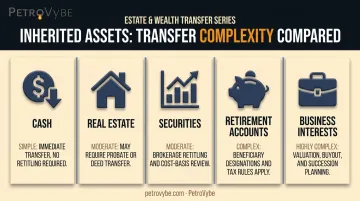
Once you're ready to engage, start by figuring out exactly what you've inherited. Each asset type comes with its own transfer process and tax treatment:
- Cash: typically the simplest to access
- Real estate: may involve a deed transfer, mortgage assumption, or sale
- Securities: stocks, bonds, or brokerage accounts with their own cost-basis rules
- Retirement accounts: IRAs and 401(k)s with strict distribution timelines
- Business interests: often the most complex, requiring valuation and legal review
If cash is part of the picture, park it somewhere safe while you think. A high-yield savings account or money market deposit account at an FDIC-insured bank works well. Just remember that FDIC coverage tops out at $250,000 per depositor, per bank, per ownership category. Spread larger sums across institutions or account types if needed.
Finally, take stock of your own finances. Inheriting assets changes your net worth and your options, so build a simple picture of what you now own and owe before deciding anything else.
Understanding the Probate Process
Probate is the court-supervised process of validating a will and distributing an estate's assets. According to the American Bar Association, the average estate takes about 6 to 9 months to move through probate, though formal or contested cases can stretch well past a year.
Not everything goes through probate, though. Assets with named beneficiaries (retirement accounts, life insurance policies, payable-on-death bank accounts) usually transfer directly to the named person, often within weeks rather than months.
Tax Implications You Need to Know
Here's some good news: most people who inherit money never owe federal estate tax. The IRS federal estate tax exclusion sits at $15 million for deaths in 2026, which means only very large estates trigger it at all.
State rules are a different story. Several states impose their own estate or inheritance taxes at much lower thresholds: Oregon's filing threshold is just $1 million, for example, while Massachusetts triggers tax above $2 million. Check your specific state's rules before assuming you're in the clear.
One rule works heavily in your favor: step-up in basis. Inherited assets are valued at fair market value on the date of death, not what the original owner paid. If you inherit stock originally bought for $20,000 that's now worth $200,000, your cost basis becomes $200,000, wiping out decades of embedded capital gains.
Sell soon after inheriting, and you're taxed only on gains since the date of death. Inherited assets also automatically qualify for long-term capital gains rates (0%, 15%, or 20% depending on income), regardless of how long you personally held them.
Inherited Retirement Account Rules
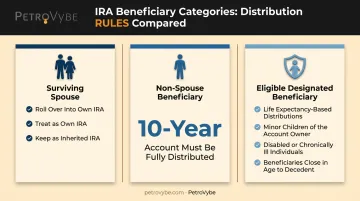
Inherited IRAs are where people get tripped up. The rules differ sharply based on your relationship to the original owner:
- Surviving spouses can treat the IRA as their own, roll it into their existing IRA, or keep it as an inherited account
- Non-spouse beneficiaries generally must empty the account within 10 years of the owner's death
- Eligible designated beneficiaries (minor children, disabled individuals, or those less than 10 years younger than the deceased) may qualify for life-expectancy-based distributions instead
If the original owner had already started required minimum distributions, many non-spouse beneficiaries must also take annual RMDs during years one through nine, not just empty the account by year 10. Miss an RMD, and the IRS can charge a 25% excise tax on the shortfall (reduced to 10% if corrected quickly). This is genuinely one area where a tax professional earns their fee.
Smart Ways to Invest and Grow Your Inheritance
There's no universal "best" investment for inherited money. What makes sense depends on your debt, your timeline, and how much risk you can stomach. That said, a few priorities apply almost across the board:
- Pay off high-interest debt first. Credit card APRs often exceed 25%, and no portfolio reliably beats that guaranteed return.
- Rebuild your emergency fund. Keep 3 to 6 months of essential expenses in reserve so a downturn doesn't force you to unwind investments early.
- Review before merging. If you inherited an existing portfolio, check its allocation, risk level, and tax lots against your own goals before folding it into your accounts.
Diversifying Beyond Stocks, Bonds, and Real Estate
Once debt is handled and your emergency fund is solid, larger inheritances open doors that smaller portfolios can't access.
If your inheritance pushes your net worth above $1 million (excluding your home) or your income above $200,000 individually, you likely qualify as an accredited investor under SEC rules, a status that unlocks private equity, direct real estate deals, and energy development projects unavailable on public markets.
This is where alternative assets like direct natural gas development come in. PetroVybe, for instance, offers accredited investors direct partnership units in upstream natural gas liquids projects across South Texas's Lavaca County basin: direct ownership of the underlying wells, not shares in a company or fund.
The structure carries a $100,000 minimum and requires third-party verification of accredited status. In exchange, it delivers advantages traditional portfolios simply don't offer:
| Feature | Traditional Stocks/Bonds | Direct Energy Development |
|---|---|---|
| Tax treatment | Standard capital gains | Up to 94% first-year deduction against active income (IDC deductions) |
| Inflation linkage | Low to moderate | High — commodity-linked returns |
| Asset ownership | Company shares | Direct working interest in wells |
| Liquidity | Daily | Illiquid, multi-year hold |
The Intangible Drilling Cost deduction is the standout feature here — it applies against active income, including W-2 wages and capital gains, not just passive income the way most real estate deductions do. For someone who just inherited a lump sum and is facing a larger tax bill this year, that's a meaningful lever.
It won't fit every inheritance, and the illiquidity means it's not for money you'll need soon. For a portion of a larger windfall earmarked for long-term growth, though, it merits serious consideration alongside a tax advisor's input.
Common Mistakes to Avoid With an Inheritance
Even well-intentioned heirs stumble in predictable ways.
- Rushing into big purchases. A new car or lifestyle upgrade feels great in month one and painful by year three, before the windfall's impact sinks in
- Blindly merging portfolios. Inherited investments were built for someone else's goals and risk tolerance, not yours — rebalance before combining accounts
- Chasing hot tips. Known inheritances attract unsolicited advice, and concentrated bets on a single "sure thing" have wrecked more fortunes than market downturns ever have
When to Bring in Professional Help
You don't need to figure this out alone, and honestly, you shouldn't try to.
Three professionals can help you manage this transition:
- Fee-only financial advisor: Compensated solely by you, not by commissions on products, for unbiased guidance on structuring and investing what you've received
- CPA or tax professional: Reviews your state's estate and inheritance tax rules, plus any capital gains exposure from selling inherited assets
- Estate attorney: Helps you update your own will or trust once your financial picture has changed this much
Frequently Asked Questions
What is the first thing you should do when you inherit money?
Pause before making any major decisions. Identify exactly what you've received, then park any cash in an FDIC-insured high-yield savings account while you plan your next steps.
What is the best investment if you inherit money?
It depends on your debt levels, emergency savings, and goals — there's no single answer. For larger inheritances, diversifying into alternative assets alongside traditional investments is often a strong long-term approach.
What should you not do with inheritance money?
Avoid rushing into big purchases, inflating your lifestyle, or merging inherited investments into your own portfolio without reviewing them first. Unsolicited "hot stock" tips deserve extra skepticism too.
Do you have to pay taxes on an inheritance?
Most inheritances aren't subject to federal tax, since the exclusion threshold is $15 million for 2026. Some states impose their own estate or inheritance taxes at much lower amounts, and inherited IRAs carry separate distribution rules.
How long does probate take?
The American Bar Association cites an average of 6 to 9 months for typical estates. Complex or contested cases, or those involving federal estate tax filings, can take well over a year.
What happens if I inherit a house?
You generally have three options: keep it, rent it out, or sell it. If you sell, the step-up in basis usually minimizes capital gains tax, though any existing mortgage and its terms need review first.