
This disconnect between "profitable on paper" and "broke in the bank" trips up more business owners than most people realize. Negative cash flow is one of the top reasons small businesses struggle, even when everything else looks fine.
Here's the good news: it's not always a red flag. Sometimes it's just the cost of growing. This guide breaks down what negative cash flow actually means, when it's dangerous versus normal, and exactly how to fix it.
Key Takeaways
- Negative cash flow means more money leaves your business than comes in, regardless of paper profits
- It's often strategic during growth or capital-intensive projects, not a warning sign
- Three types exist: initial, temporary, and chronic; only chronic demands urgent action
- Fixes involve tightening receivables, renegotiating payables, cutting costs, and securing financing
What Is Negative Cash Flow?
Negative cash flow happens when your cash outflows exceed your cash inflows over a specific period. Simple as that. It has nothing to do with whether you're "successful" on an income statement.
That's the part that confuses people. Profit and cash flow are not the same thing. The Securities and Exchange Commission puts it plainly: an income statement shows whether a business earned a profit, while a cash-flow statement shows whether it actually generated cash.
You can post a net profit under accrual accounting and still watch your checking account dwindle to nothing.
Where Negative Cash Flow Comes From
Every cash flow statement breaks activity into three buckets:
- Operating activities — cash from your core business (sales, payroll, rent, supplies)
- Investing activities — cash tied up in equipment, property, or long-term assets
- Financing activities — cash from loans, repayments, or owner contributions
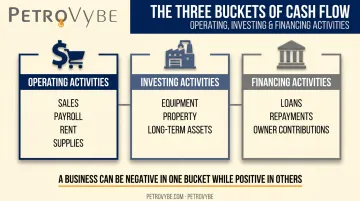
Negative cash flow can originate from any single one of these, even while the others stay healthy. A business might run positive operating cash flow but still post an overall net decrease because it just bought a $200,000 piece of equipment (investing) or paid down a chunk of debt (financing).
A Quick Way to Self-Diagnose
Want a fast gut check on your operating cash flow? Compare what customers owe you against what you owe others:
Receivables minus Payables. If receivables are piling up faster than you're paying down payables, you're likely bleeding operating cash even if your income statement looks great.
This isn't a rare problem. In the Federal Reserve's 2025 report on employer firms, 56% of businesses said they struggled to pay operating expenses, and 51% reported uneven cash flow as an ongoing challenge. If you're dealing with this, you're in familiar company.
Is Negative Cash Flow Always a Bad Sign?
No, and treating every negative month as a crisis will burn you out fast. Context matters more than the raw number. A $20,000 cash deficit means something completely different for a startup buying inventory than it does for a five-year-old company that can't explain where its money went.
There are four patterns worth knowing.
Initial Negative Cash Flow
Startups almost always run negative cash flow in their early months. Founders are paying for inventory, staff, equipment, and rent before revenue has a chance to catch up. The Small Business Administration recommends budgeting at least one year of monthly expenses before you even open your doors, precisely because this gap is expected, not exceptional.
Temporary Negative Cash Flow
Even healthy, established businesses dip negative sometimes. A retailer stocking up before the holiday season. A manufacturer expanding into a second facility. A contractor buying materials for a large one-time job. These dips are short-lived and tied to a specific, identifiable cause, not a mystery.
Chronic Negative Cash Flow
This is the version to worry about. When cash outflows exceed inflows month after month with no clear project, season, or investment driving it, that's a sign of overinvestment or ongoing losses.
Unlike initial or temporary negative cash flow, chronic cases don't have a forecasted end date. That absence of a recovery plan is the real red flag, not the negative number itself.
Negative Cash Flow in Capital-Intensive Industries
Some industries build negative cash flow into the business model on purpose. Oil and gas development is a textbook example: companies spend heavily on drilling and infrastructure for months or years before a well reaches full production, similar to how tech firms front-load R&D spending before a product generates revenue.
For accredited investors, this upfront phase can actually work in their favor. Here's how it plays out with PetroVybe's natural gas development projects in Lavaca County, Texas:
- Capital deployed during the drilling and completion phase generates Intangible Drilling Cost (IDC) deductions
- These deductions are **not restricted to passive income** — they can offset active income, including W-2 wages and capital gains
- PetroVybe partners claimed a 94% deduction in 2024 and a 91% deduction in 2025 against active income during this exact development window
- A $100,000 investment can translate to a $60,000-$94,000 first-year deduction, depending on the tax year

In other words, the same "negative cash flow" period that would worry a typical business owner becomes a deliberate entry point for tax-advantaged wealth building. The company still needs 2-3 years before distributions begin, but the deduction lands immediately, turning a classic cash-flow warning sign into a planned financial strategy.
Common Causes of Negative Cash Flow
Most negative cash flow traces back to a handful of repeat offenders. Recognizing which one applies to you is half the battle.
Operational culprits:
- Slow-paying customers who stretch payment terms past 30, 60, even 90 days
- High fixed overhead that keeps draining cash regardless of sales volume
- Thin profit margins that leave little buffer when expenses shift
- Inventory that sits on shelves, tying up cash without generating sales fast enough
The numbers back this up. Intuit's 2025 survey of nearly 2,500 small businesses found 56% had unpaid invoices, and 47% reported invoices more than 30 days overdue, averaging $17,500 per affected business. That's real cash sitting outside your bank account.
Two causes people overlook:
- Growth outpacing working capital. A business landing new contracts often needs to pay for materials, labor, and inventory before the customer pays their invoice. Success itself creates the cash crunch.
- Timing mismatches. It's not always about weak sales. If your rent, payroll, and supplier bills are due on the 1st and 15th, but your customers pay on 45-day terms, you'll run negative even in a growing, profitable business.
Risks of Ignoring Negative Cash Flow
Letting chronic negative cash flow slide doesn't just stall growth. It compounds into bigger problems.
Credit and financing get harder. Lenders scrutinize cash flow closely. SBA 7(a) loan applicants, for example, must demonstrate a reasonable ability to repay. Recurring negative operating cash flow directly undercuts that case.
Debt cycles start forming. Businesses that plug cash gaps with short-term financing often lean on it repeatedly. Firms hit hardest by overdue invoices reported heavier use of credit cards (54% vs. 46%) and lines of credit (31% vs. 21%) than firms with fewer payment issues.
That debt then makes future approvals tougher. Among Federal Reserve survey respondents denied financing, the share citing "too much debt" jumped from 22% in 2021 to 41% in 2024.
Relationships suffer. Vendors tighten payment terms or freeze accounts. Customers notice inconsistent service. And there's a personal cost too — the stress of constant cash crunches wears on owners in ways that rarely show up in financial statements.
How to Fix and Manage Negative Cash Flow
Fixing negative cash flow takes a combination of moves, not a single fix. Start by figuring out where the leak is before you try to patch it.
Diagnose the Leak, Then Tighten Collections
Pull up your cash flow statement and separate the three categories: operating, investing, financing. A shortfall from a one-time equipment purchase needs a different fix than a shortfall from customers who won't pay on time.
Once you know where the gap comes from, tighten how fast cash comes in:
- Shorten payment terms (30 days instead of 60)
- Require partial upfront payment on large orders
- Use invoice factoring to convert receivables into immediate cash, minus a factoring fee
- Follow up on overdue accounts consistently, not sporadically
On the payables side, ask suppliers for longer payment windows or installment arrangements before you're late, not after. Vendors are far more flexible when you raise the issue proactively.
Cut Costs, Finance Strategically, and Forecast Ahead
Audit your current spending line by line. Delay or eliminate anything non-essential, and redirect that cash toward a reserve fund. Even a small buffer changes how much breathing room you have during a rough month.
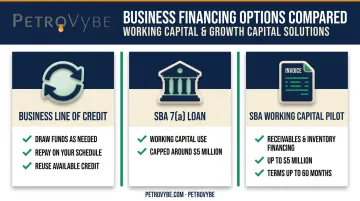
When cost-cutting alone isn't enough, financing can bridge the gap:
- Business line of credit: draw only what you need, repay, and reuse it
- SBA 7(a) loan: funds working capital, capped around $5 million for most loans
- SBA Working Capital Pilot: designed specifically around receivables and inventory financing, up to $5 million with terms up to 60 months
Whichever option you choose, build a rolling cash flow forecast and update it regularly. The SBA lists cash-flow projections among the core finance tasks every business owner should track. Seeing a shortfall three weeks out gives you options. Seeing it the day it hits gives you none.
Frequently Asked Questions
What is considered negative cash flow?
Negative cash flow occurs whenever total cash outflows exceed total cash inflows in a given period, whether the cause is operating expenses, an equipment purchase, or a loan repayment.
What happens when cash flow is negative?
Short-term negative cash flow often just means cash is temporarily tied up in receivables or reinvested in growth. Sustained negative cash flow, however, can lead to missed payments, growing debt reliance, and real financial strain.
How do you fix negative cash flow?
Identify the source first, then accelerate receivables, renegotiate payables, cut non-essential costs, and use financing strategically to bridge any remaining gap.
Is negative cash flow always bad for a business?
Not at all. Initial and temporary negative cash flow tied to growth, seasonality, or investment are normal and often expected. Chronic negative cash flow with no clear cause is the version that signals real trouble.
Can a profitable business still have negative cash flow?
Yes. Profit is an accounting measure based on accrual timing, while cash flow tracks the actual movement of money. A business can book a profit and still run out of cash if customers haven't paid yet.
How long can a business survive negative cash flow?
It depends on your cash reserves, credit access, and how fast you address the underlying cause. Some businesses operate with only a couple of weeks of cash reserves on hand, which is why early diagnosis matters so much.