
That single decision determines who controls the asset, how it's taxed, and what happens to it if you die or become incapacitated. Get it wrong, and even a well-chosen investment can turn into a legal headache for the people you meant to protect.
Ownership mistakes are common and expensive. They surface with a bank account, a piece of land, or a stake in an energy development project. This article breaks down the four main ownership structures, the problems that trip up each one, and how to set ownership up correctly from day one.
Key Takeaways
- Individual, joint, trust, and entity ownership each carry different outcomes
- Joint ownership skips probate but risks a co-owner's creditors or divorce claims
- LLCs and LPs pair liability protection with flexible tax treatment for partners
- Most ownership failures stem from poor documentation or a mismatched structure
- A quick professional review before finalizing ownership avoids costly fallout
What Is Asset Ownership?
Asset ownership is the legal right to control, use, transfer, and benefit from something you hold. It applies just as much to tangible property, such as real estate or equipment, as it does to intangible interests like financial accounts, working interests, or intellectual property.
How that ownership gets documented depends entirely on the asset class:
- Real estate uses titles and deeds
- Bank and brokerage accounts use account registrations
- Business and investment interests use partnership or LLC agreements
Each documentation type creates a different paper trail, and that paper trail is what courts, banks, and the IRS look to when something needs to be verified or transferred.
Why the Ownership Structure You Choose Matters
The "how" of ownership shapes four things: tax treatment, exposure to creditors or liability claims, how the asset transfers at death, and who can act on your behalf during incapacity.
Skip a deliberate structure, and here's what typically goes wrong:
- Probate delays that keep heirs waiting for access to funds or property
- Disputes among co-owners with no clear tiebreaker
- Unintended tax exposure that could have been avoided with better planning
- Assets getting pulled into someone else's creditor claim or divorce settlement
None of these problems announce themselves in advance. They surface during a death, a divorce, or a lawsuit — precisely when there's no time left to fix the structure.
Types of Asset Ownership
Ownership isn't one-size-fits-all. The right type depends on the asset itself, how many people are involved, your tax goals, and what should happen if you become incapacitated or pass away.
Individual (Sole) Ownership
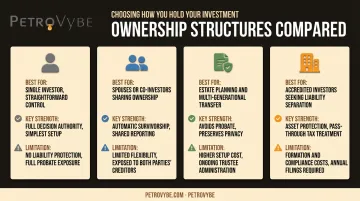
One person holds full legal title and complete control. There's no automatic transfer to anyone else, which means a will, power of attorney, or beneficiary designation has to be in place to handle incapacity or death.
- Best suited for: Single owners who already have a succession plan in place
- Key strength: Total control with no co-owner consent required for any decision
- Limitation: Without a POA or trust, incapacity leaves no one legally authorized to act, and death triggers probate
Joint Ownership
Two or more people share ownership, most commonly through joint tenancy with rights of survivorship. Ownership transfers automatically to the surviving owner at death, bypassing probate. But any change to the account requires unanimous consent.
- Best suited for: Spouses managing shared household or financial assets
- Key strength: Simplicity and automatic transfer that skips probate delays
- Limitation: Any joint owner can withdraw all the funds or block changes, and the full asset can become exposed to a co-owner's creditors, divorce, or long-term care calculations
Trust Ownership
A trustee holds legal title on behalf of designated beneficiaries, according to the trust's terms. This separates ownership from control, which allows for detailed instructions on management, distribution timing, and successor trustees.
- Best suited for: Owners who want to avoid probate, provide for a beneficiary with special needs, or control how and when assets get distributed
- Key strength: Avoids probate, provides continuity through incapacity, and can shield assets from certain creditors
- Limitation: Costs more to set up correctly, and a trust that's never funded (assets never retitled into it) delivers none of the intended protection
Entity Ownership (LLCs, LPs, and Similar Structures)
An entity, such as an LLC or LP, holds legal title to the underlying asset. Individuals own interests or units in that entity rather than the asset itself. This creates a liability shield between someone's personal assets and the risks tied to the underlying investment, and it lets multiple unrelated parties co-own cleanly without the pitfalls of joint tenancy.
- Best suited for: Investment assets held by multiple parties, such as real estate syndications or working interests in oil and gas development
- Key strength: Liability protection, flexible profit and tax allocation among members, and transferable ownership interests without disrupting the underlying asset
- Limitation: More complex to establish, and it requires ongoing compliance, including operating agreements and annual K-1 filings
This is the structure PetroVybe uses. Through PetroVybe ONE, accredited investors hold units in a limited partnership that owns direct working-interest positions in our South Texas and Gulf Coast Basin natural gas development projects. Each partner receives a K-1 documenting their capital contribution, ending capital account, and deductions, rather than a vague claim on a shared pool of assets.
Common Problems That Arise with Each Ownership Type
Most ownership problems surface at the worst possible time, specifically during incapacity, death, or a dispute, because the structure was chosen for convenience rather than fit.
Individual ownership without a plan. An estate that lacks a POA or beneficiary designation heads straight into probate. The American Bar Association reports that an average estate takes 6 to 9 months to complete probate. That timeline doesn't include attorney fees, appraisal costs, or the fiduciary expenses that stack on top of court costs.
Joint ownership landmines. These show up more often than people expect:
- A bank refuses to honor a valid power of attorney because a co-owner hasn't consented to changes
- A rogue joint tenant drains the account without warning
- Creditors, a divorce court, or a Medicaid caseworker treat the entire account as one owner's asset, not a shared one
That last point matters more than most people realize. Federal Medicaid rules apply a 60-month look-back period on asset transfers for long-term care eligibility, so a joint account funded years ago can still create eligibility complications today.
Trust ownership gaps. Trusts carry a different risk than joint accounts: a trust that's never funded, meaning assets were never retitled into its name, fails to avoid probate entirely. Vague or missing successor-trustee instructions also invite disputes among beneficiaries who disagree about who's in charge.
Entity ownership missteps. Business entities aren't immune either. Poorly drafted operating agreements or missed compliance filings can create member deadlock or, worse, expose owners to the personal liability the entity was supposed to prevent.
The cross-cutting issue. Missing or outdated documentation, whether it's a title, a lease agreement, or a beneficiary form, delays transfers and due diligence. It also tends to spark disputes among heirs or co-investors over who's owed what.
How to Avoid Ownership Problems and Choose the Right Structure
The right structure depends on the asset's purpose, who else is involved, and what should happen at incapacity, death, or exit. Not on which option is easiest to set up today.
A few factors worth weighing:
- Match the structure to the actual goal. Control, probate avoidance, tax efficiency, or liability protection each point toward a different answer. Don't default to joint ownership just because it's familiar.
- Use a power of attorney instead of adding a joint owner when the real goal is assistance, not shared ownership. This avoids exposing the asset to someone else's creditors or disputes.
- For multi-party investments, choose an entity structure that clearly defines each member's rights, tax treatment, and exit terms from the start.
- Review beneficiary designations and trust funding after marriage, divorce, births, or new asset acquisitions. A trust drafted in 2015 that's never been touched since is a trust waiting to fail its purpose.
- Keep organized documentation so transfers, due diligence, and tax deductions can be verified quickly.
- Bring in a professional before finalizing anything. This matters especially for assets carrying tax deduction implications, such as intangible drilling cost (IDC) deductions on oil and gas interests. IDC deductions can represent 60% to 80% of invested capital, and getting the entity structure wrong can complicate how that deduction applies against W-2 income or capital gains.
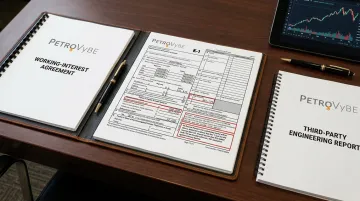
The documentation habit above is where PetroVybe partners see a real advantage. Our accredited investors receive documented working-interest positions, K-1 tax forms, third-party engineering reports, and quarterly updates.
This level of detail avoids the ownership ambiguity that trips up joint and individual holdings. Partners also have access to publicly filed lease records through resources like mineralrecords.com for added verification.
Frequently Asked Questions
What is the meaning of asset ownership?
Asset ownership is the legal right to control, use, transfer, and benefit from a resource. You can hold that right individually, or share it through joint, trust, or entity structures depending on the goal.
What are examples of assets owned?
Common examples include real estate, financial accounts, vehicles, and business interests. Investment interests, such as working interests in oil and gas development projects, also fall into this category.
What are examples of asset owners?
Asset owners range from individuals and married couples to trusts, LLCs, pension funds, and institutional investors managing large portfolios. The ownership form depends on scale and purpose.
What is the difference between joint tenancy and tenancy in common?
Joint tenancy includes automatic survivorship rights, so a deceased owner's share passes directly to the surviving owner. Tenancy in common lets each owner hold a separate, transferable share that passes through their own estate instead.
How can I avoid probate on my assets?
You can typically avoid probate through a funded trust, joint ownership with survivorship, or transfer-on-death and payable-on-death designations. Each option carries different trade-offs around control and access.
Can I change how an asset is owned after I've acquired it?
Yes, usually by retitling the asset or amending account or entity documents. Work with a professional, since retitling can trigger gift tax or basis issues if handled incorrectly.