
That choice affects far more than your bank balance. It changes how much control you keep, how exposed you are to liability, and how your tax bill looks in April. Global alternative assets under management are projected to climb from $16.78 trillion in 2023 to $29.22 trillion by 2029, a 74.1% increase, according to Preqin's 2029 forecast. More capital is flowing into private structures than ever, which makes picking the right one for your situation more consequential, not less.
This guide breaks down investment versus acquisition so you can match the structure to your capital, time, and risk appetite.
Key Takeaways
- Investment means contributing capital for a financial return without operational control.
- Acquisition means buying decision-making authority over a business or asset.
- Acquisitions demand more capital, expertise, and hands-on time than most individual investors have.
- Oil and gas working interests can unlock active-income tax deductions rare for passive shareholders.
- Your capital, risk tolerance, and desired control, not a generic rule, should drive the decision.
Investment vs Acquisition: Quick Comparison
| Factor | Investment | Acquisition |
|---|---|---|
| Capital Required | Entry points vary by offering, but accredited-investor placements commonly start in the tens of thousands. One SEC-filed deal set a $25,000 minimum, though that figure is issuer-specific, not a market standard. | Buying a controlling stake means financing the full purchase price plus working capital. SBA 7(a) loans support deals up to $5 million, typically requiring a 10% equity injection from the buyer. |
| Control & Involvement | You contribute capital while a sponsor or operator runs day-to-day operations. The SEC defines minority investing as participation without a governing stake. | You direct strategy, staffing, and cash flow. A controlling interest gives you the legal voting power to make major business decisions. |
| Risk & Liability | Risk ties mainly to the underlying asset's performance, not your personal balance sheet. | You inherit every liability tied to ownership, plus market risk. HBR's 2024 analysis found that 70% of M&A deals have historically failed to meet expectations. |
| Tax Treatment | Direct participation structures, particularly oil and gas working interests, can allow intangible drilling cost deductions against active income when liability isn't limited. | Tax outcomes depend entirely on deal structure, with no comparable, generalized active-income deduction built into most purchase agreements. |
Bottom line:
- Choose investment for passive income and tax efficiency without leaving your day job.
- Choose acquisition for full operational control if you're ready to run the business day-to-day.
What Is Investment?
Investment, in this context, means putting capital into a company, fund, or development program in exchange for a financial return, without taking on management responsibility. For accredited investors, this opens doors beyond the usual stocks, bonds, and rental properties.
The core appeal is straightforward:
- Passive income without a second job running the asset
- Diversification away from public market volatility
- Professional management handled by people who do this full-time
- Lower day-to-day burden than direct ownership
Investment vehicles vary widely. Some common structures include:
- Direct participation in operating partnerships, such as natural gas working-interest programs
- Minority stakes in private equity deals
- Fund-based vehicles pooling capital across multiple assets
The Tax Angle Most Investors Miss
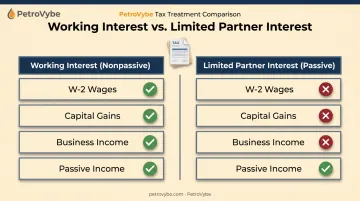
Energy-sector investment structures stand apart from typical passive deals. Under IRS rules, a working interest in an oil or gas well, when held directly or through an entity that doesn't limit your liability, can qualify for nonpassive tax treatment.
That means intangible drilling cost deductions can offset active income, including W-2 wages and capital gains, not just passive income like most limited-partner structures allow, according to IRS Publication 925.
Where Direct Investment Fits Your Portfolio
For accredited investors, direct investment programs work as a tax-efficient, hands-off allocation sitting alongside your existing stocks, bonds, and real estate. Sectors where this shows up most often include oil and gas development programs, private real estate syndications, and early-stage venture rounds.
PetroVybe's own structure illustrates the model. Investors contribute capital into PetroVybe ONE, a natural gas development program in South Texas. The program targets a 10-year MOIC of roughly 2.2x to 5.8x and an IRR near 26%, without investors ever setting foot on a drilling site or managing a well.
What Is Acquisition?
Acquisition means purchasing a controlling or full stake in a company or asset. Once the deal closes, you hold decision-making authority over how it operates, who runs it, and where the cash flow goes.
Why investors pursue it:
- Full control over strategy and capital allocation
- Direct influence over performance and exit timing
- Potential for outsized returns if you operate the asset well
Acquisitions come in different flavors:
- Asset acquisitions – buying specific wells, leases, or equipment outright
- Equity/stock acquisitions – purchasing full ownership of an operating company
- Friendly vs. hostile structures – depending on whether current ownership is cooperating
The Weight That Comes With Control
Control isn't free. Acquiring an operating business or producing asset adds responsibilities that a passive investor never sees:
- Extensive due diligence before closing
- Assumption of existing liabilities
- Staffing and day-to-day operational management
- Regulatory and licensing requirements
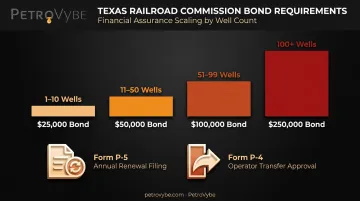
In Texas oil and gas specifically, that means filing Form P-5 before operations begin and renewing it annually. Operators also post financial assurance bonds ranging from $25,000 for 1-10 wells up to $250,000 for 100-plus wells, and secure Form P-4 approval before any operator transfer takes effect.
Where Acquisition Makes Sense
Acquisition tends to fit entrepreneurs and high-net-worth individuals who want to build and run a business directly, or established operators expanding through consolidation. Independent oil and gas operators buying producing leases, private equity roll-ups, and family offices purchasing operating businesses outright are the clearest examples.
The catch: this path carries real complexity. That 70% historical M&A failure rate cited earlier applies broadly, not to every small acquisition, but it's a fair warning that buying control is harder than it looks on paper.
Real-World Example: Why Accredited Investors Choose the Investment Path
Consider the choice facing accredited investors seeking oil and gas exposure. Direct acquisition of producing leases means taking on:
- Operator licensing through the Texas Railroad Commission
- An in-house engineering and geology staff
- Full liability for every well Without an in-house team, that's a steep hill to climb.
PetroVybe was built around solving exactly this problem. Rather than asking investors to acquire and operate assets themselves, the company structures a professionally managed development program. Investors contribute capital, and PetroVybe OpCo LLC, holding its own RRC operator license, handles the operational and regulatory load.
The expertise behind that structure matters. PetroVybe's Chief Geophysicist, Michael Stamatedes, has posted a 75.2% well-success rate over a 48-year career, well above an industry peer average that sits below 40%. That track record directly shapes which locations get drilled, and it's the kind of specialized judgment most individual acquirers simply don't have in-house.
What the numbers look like:
| Metric | Target |
|---|---|
| 10-year MOIC | ~2.2x – 5.8x |
| 10-year IRR | ~26% |
| First-year tax deduction against active income | ~70-94% |
| Minimum liquidity | $100,000 |
| Time before first distribution | 2-3 years |
For most accredited investors, a structure like this delivers comparable upside to acquiring producing assets outright, minus the licensing burden, staffing headaches, and personal liability exposure. If you have $100,000 in liquidity and want direct exposure to natural gas development in South Texas and the Gulf Coast Basin, that's achievable without becoming an operator. It's worth a conversation with PetroVybe's team to see if the structure fits your goals.

Conclusion
Neither path wins outright. Acquisition suits investors who want full control and are ready to manage operational risk day-to-day. Investment suits those who want tax efficiency, passive income, and diversification without becoming an operator themselves.
The right answer comes down to your available capital, how much control you actually want, your appetite for risk, and how much time you're willing to commit. For accredited investors who want that passive, tax-advantaged route, PetroVybe's partnership structure offers direct access to Texas natural gas development.
Frequently Asked Questions
What is the difference between acquisition and equity investment?
Acquisition means buying a controlling stake and taking over operations and decision-making. Equity investment provides capital for financial return without management rights or operational control.
Is investing in oil and gas development riskier than acquiring a company outright?
Both carry risk, but acquisition adds operational, liability, and management risk on top of market risk. Investment risk is largely limited to the performance of the underlying asset.
Can I get the same tax benefits from an investment as from an acquisition?
Certain investment structures, like direct oil and gas working interests, offer intangible drilling cost deductions against active income that are often unavailable or more limited in typical passive equity ownership.
What is the minimum capital needed for an investment versus an acquisition?
Acquisitions typically require far more capital to purchase a controlling interest and cover liabilities. Direct investment programs often have lower minimums, commonly $100,000 or more for accredited investors.
Do investors have any control over operations in an investment structure?
No. Investment structures are intentionally passive, with the operator or sponsor retaining day-to-day control. Investors generally receive reporting rights and periodic updates instead.
Which option offers better liquidity, investment or acquisition?
Both are generally illiquid compared to public markets. Acquisitions often require a lengthier resale or exit process than a structured investment with a defined multi-year hold period.