

Introduction
Roughly $124 trillion is expected to change hands in the United States through 2048. Nearly $100 trillion of that will come from Baby Boomers and older generations, according to Cerulli Associates' 2024 wealth transfer forecast. That's the largest generational handoff of assets in American history.
Yet many families struggle to move that wealth intact. Without a plan, taxes, probate delays, and family miscommunication can steadily drain what took a lifetime to build.
This guide breaks down the fundamentals of estate and gift tax, the trust structures and gifting strategies wealth advisors actually use, and a modern addition to the toolkit: tax-advantaged tangible assets. You'll also get a five-step framework for building a plan that protects your legacy instead of leaving it to chance.
Key Takeaways
- Wealth transfer planning relies on tax and asset-structuring strategies that extend well beyond a basic will
- Federal gift, estate, and generation-skipping exemptions determine how much passes tax-free
- Trusts, life insurance, and alternative assets each reduce estate tax exposure differently
- Legal documentation, professional guidance, and clear family communication must align to prevent costly transfer mistakes
What Is Wealth Transfer Planning (and Why It's Urgent Now)?
A will or a revocable trust tells the world who gets what. Wealth transfer planning is different. It layers tax strategy, asset structuring, and liquidity planning on top of those foundational documents so heirs actually keep more of what they inherit.
The stakes are enormous. The wealth transfer already underway isn't hypothetical — Cerulli projects $105 trillion flowing to heirs and $18 trillion to charity through 2048, with more than half of that total coming from high-net-worth and ultra-high-net-worth households.
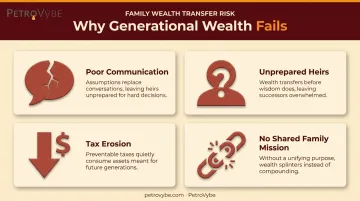
But size alone doesn't guarantee success. Industry researchers have long pointed to a troubling pattern: a large share of affluent families lose control of their wealth by the second generation, and even more by the third. The usual culprits:
- Poor communication about the plan itself
- Heirs unprepared to manage inherited assets or businesses
- Tax erosion from avoidable estate and capital gains exposure
- No shared family mission around what the wealth is for
Why the Window Feels Narrower Than Ever
Many advisors spent years warning clients about a scheduled drop in the federal estate tax exemption after 2025. That cliff didn't happen: new legislation set the exemption at a historically high level for 2026 and beyond. Still, urgency hasn't disappeared. Exemption levels are set by Congress, not carved in stone, and they've moved before.
This planning isn't reserved for nine-figure estates either. A $2 million estate with an illiquid family business or a vacation property can face the same probate delays and forced-sale scenarios as a much larger one, especially in states with lower estate tax thresholds.
Understanding Estate & Gift Tax Fundamentals
Before choosing strategies, understand the mechanics first. The federal system runs on three separate but related pieces.
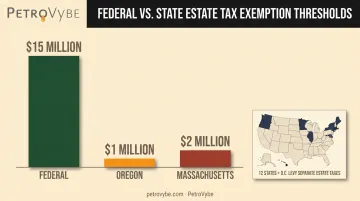
The lifetime gift and estate tax exemption lets individuals transfer a set amount, tax-free, across gifts made during life and assets left at death. For 2026, that amount is $15 million per individual (up from $13.99 million in 2025), indexed for inflation going forward under the One Big Beautiful Bill Act, signed into law in 2025.
The annual gift tax exclusion is separate and resets every year. For 2026, it's $19,000 per recipient — meaning a couple can give $38,000 to each child or grandchild without touching their lifetime exemption. It's strictly "use it or lose it" within the calendar year.
Here's how the core figures compare:
| Tax Feature | 2026 Amount | Key Detail |
|---|---|---|
| Lifetime gift/estate exemption | $15,000,000 | Shared pool across gifts and estate |
| Annual gift exclusion | $19,000 per recipient | Resets annually, doesn't carry forward |
| GST exemption | $15,000,000 | Separate pool, same dollar amount |
| Top federal estate tax rate | 40% | Applies above available exemption |
Source: IRS estate and gift tax figures
The Generation-Skipping Transfer Tax (GSTT) applies when assets move to grandchildren or beneficiaries more than 37.5 years younger than the giver. It uses its own $15 million exemption, separate from the unified lifetime exemption, closing a loophole where families might otherwise skip a generation to avoid tax entirely.
Two more details matter:
- Step-up in basis: Heirs who inherit appreciated assets generally receive a new cost basis equal to fair market value at death, which can eliminate capital gains tax on decades of appreciation.
- Unlimited marital and charitable deductions: Assets passing to a surviving U.S. citizen spouse or to qualifying charities aren't counted against the exemption at all.
State rules add another layer. Twelve states plus D.C. impose their own estate taxes, with thresholds far below the federal number in places like Oregon ($1 million) and Massachusetts ($2 million). A tax professional should review state exposure separately from federal planning.
Proven Wealth Transfer Strategies & Tools
Once the tax fundamentals are clear, the real planning work starts: choosing structures that move wealth efficiently while keeping some flexibility for the family.
Trust Structures for Tax-Efficient Transfers
Trusts remain the workhorse of wealth transfer planning, and different structures solve different problems:
- Irrevocable Life Insurance Trusts (ILITs): own a life insurance policy outside the estate, so death benefit proceeds avoid estate tax and can supply immediate liquidity to heirs.
- Grantor Retained Annuity Trusts (GRATs): transfer future appreciation on fast-growing assets to beneficiaries while the grantor keeps a fixed annuity stream for a set term.
- Spousal Lifetime Access Trusts (SLATs): let one spouse gift assets into an irrevocable trust that benefits the other spouse (and often children), preserving some indirect family access.
- Intentionally Defective Grantor Trusts (IDGTs): remove assets from the taxable estate while the grantor still pays the trust's income tax, letting trust assets grow tax-free for beneficiaries.
Lifetime Gifting and Liquidity Tools
Not every strategy requires a trust. Two simpler tools solve common problems:
Upstream gifting combines a parent or grandparent's unused exemption with a future step-up in basis. A younger family member gifts appreciated, low-basis property to an older relative with exemption capacity; if that relative later leaves the property to descendants, it can receive a new basis at death.
When a family business or farm is involved, life insurance can serve as an equalizer. Instead of splitting an operating business or farm into fractional ownership among heirs who don't all want to run it, life insurance proceeds can go to the non-operating heirs while the business passes intact to the one who runs it.
Alternative Tangible Asset Strategies for Legacy Wealth
A newer category has gained traction among high-income households looking for tax efficiency and diversification beyond stocks, bonds, and real estate: direct investment in tax-advantaged tangible assets, particularly private oil and natural gas development projects.
Here's why this matters for wealth transfer specifically. Intangible Drilling Cost (IDC) deductions, a provision dating back to 1913, aren't restricted to passive income the way real estate depreciation typically is. They can offset active income, including W-2 wages and capital gains, in the year the costs are incurred.
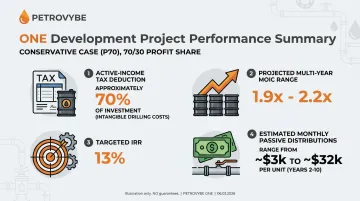
PetroVybe offers accredited investors a concrete example of how this works in practice. Through its PetroVybe ONE development project in Lavaca County, Texas, partners have received substantial upfront deductions:
- 94% tax deduction against active income in 2024, and 91% in 2025
- IDC deductions usable against W-2 earnings and capital gains, not just passive income
- A 10-year target MOIC of roughly 2.2x to 5.8x, with a targeted IRR near 26%
- Monthly passive distributions projected to exceed $10,000 during peak production
For families weighing how to reduce current tax exposure while building an asset that can eventually pass to heirs, this kind of structure adds a tangible, income-producing option alongside traditional trusts and gifting.
It won't fit every investor: accreditation and a $100,000 minimum apply. But for the right household, it pairs a near-term tax benefit with a long-term legacy asset.
How to Build Your Wealth Transfer Plan: 5 Steps
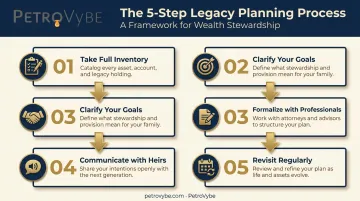
A plan only works if it's actually built. Here's the sequence most estate attorneys and advisors follow:
- Take full inventory. List financial assets, liabilities, business interests, and sentimental property, including alternative investments such as direct energy partnerships, which often require specialized valuation. You can't structure a transfer around what you haven't accounted for.
- Clarify your goals. Decide whether you'd rather gift during your lifetime or transfer at death, and note any charitable or education-funding intentions.
- Formalize the plan with professionals. Bring in an estate attorney, CPA, and financial advisor to cover wills, trusts, beneficiary designations, and powers of attorney.
- Communicate the plan and introduce heirs to your team. Heirs who understand the plan — and know who to call — handle inheritance far better than heirs who are surprised by it.
- Revisit the plan regularly. Review it every few years and after major life events: births, deaths, marriages, or divorces.
Common Wealth Transfer Mistakes to Avoid
Even well-funded plans fail when a few predictable mistakes go unaddressed.
Three problems account for most failed transitions:
- Keeping the plan secret from heirs. Communication breakdown and lack of trust cause roughly 60% of failed wealth transitions, according to Williams Group research; another 25% stems from heirs who weren't prepared to manage what they inherited.
- Underestimating liquidity needs. Asset-rich, cash-poor estates can force heirs to sell inherited property just to cover the tax bill. The Miami Dolphins' founding family faced this after Joe Robbie's 1990 death, when a $40-50 million estate tax bill pressured the sale of team and stadium ownership stakes.
- Failing to update beneficiary designations. Divorce, remarriage, or a new grandchild can render old designations obsolete overnight, sending assets to an unintended person unless documents are updated promptly.
Frequently Asked Questions
How do I plan for wealth transfer?
Start with a full asset inventory, define your goals, and formalize everything with an estate attorney, CPA, and financial advisor. Then communicate the plan to your family and revisit it every few years.
What is the 7-7-7 rule for money?
There's no standardized, authoritative definition of a "7-7-7 rule" in U.S. estate or tax planning. Be cautious of informal versions circulating online — they aren't grounded in IRS or established financial guidance.
Is there a Great Wealth Transfer coming?
Yes, and it's already underway. Cerulli projects roughly $124 trillion transferring through 2048, with nearly $100 trillion originating from Baby Boomers and older generations.
What's the difference between estate planning and wealth transfer planning?
Estate planning covers the foundational legal documents, such as wills, trusts, and powers of attorney. Wealth transfer planning adds tax strategy and asset structuring on top to maximize what heirs actually receive.
How much money can I gift tax-free in 2026?
You can give $19,000 per recipient annually without touching your lifetime exemption, which sits at $15 million per individual for 2026. Both figures are set by current law and subject to future change.
Can trusts really help reduce estate taxes?
Yes. Certain irrevocable trusts, like ILITs and GRATs, can remove assets and their future appreciation from your taxable estate entirely. Effectiveness depends heavily on how the trust is structured and when it's funded.