This article is general education, not investment, tax, or legal advice. In 2022, Citadel reportedly pulled in $7 billion to $8 billion from commodity trades, largely tied to natural gas positions during the Ukraine-driven energy crisis, according to Financial Times reporting cited by Business Insider. Impressive number. Almost nobody reading this article could have invested in that fund.
Natural gas hedge funds are exclusive by design. Most require institutional capital or ultra-high minimums, and even then, they're built around derivatives, not physical assets. That creates a real problem for accredited investors who want exposure to natural gas markets without wagering on a trader's next weather call.
This article breaks down what natural gas hedge funds actually are, how they operate, their track record of booms and busts, and how direct natural gas development investing offers a fundamentally different path to the same market.
Key Takeaways
- Natural gas hedge funds trade futures, options, and swaps tied to gas prices; they don't own physical reserves
- Performance swings wildly: Citadel's billions in gains sit next to Amaranth's $6.4 billion collapse
- Retail natural gas ETFs have posted brutal long-term losses due to contango and daily-reset compounding
- Direct development investing gives accredited investors tangible assets and active-income tax deductions instead of pure trading risk
What Are Natural Gas Hedge Funds?
A natural gas hedge fund doesn't drill wells or own pipelines. It trades financial instruments—futures contracts, options, and swaps— to profit from price movements in natural gas markets. That's the core distinction between these funds and companies that physically produce the commodity.
The energy hedge fund space is younger than most people assume. According to a 2005 analysis from the Energy Hedge Fund Center, most hedge funds avoided energy entirely before 2004 because commodities felt unfamiliar to many investors. By 2005, that had changed dramatically: researchers estimated more than 400 dedicated energy hedge funds globally, ranging in size from $1 million to $2 billion.
Two broad categories exist:
- Generalist macro/commodity funds that trade natural gas alongside oil, metals, and agricultural products
- Dedicated energy-specific funds, often founded by former energy traders who bring deep sector expertise
Why Natural Gas Specifically Attracts Trading Capital
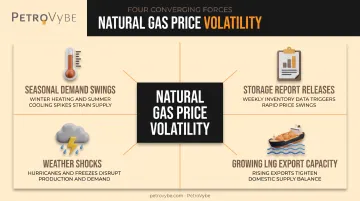
Natural gas is uniquely suited to speculative trading because of its volatile pricing dynamics. Several forces converge:
- Seasonal demand swings between summer cooling and winter heating
- Storage report releases that move markets within seconds
- Weather shocks — hurricanes and cold snaps can spike prices overnight
- Growing LNG export capacity linking US prices to global demand shocks
Each of these creates short-term price dislocations—exactly what active trading strategies are built to exploit.
How Natural Gas Hedge Funds Operate: Strategies & Risks
Natural gas hedge funds don't rely on a single strategy. Most run several simultaneously.
Core trading approaches include:
- Directional bets on Henry Hub futures, wagering prices will rise or fall
- Spread trading, including calendar spreads (betting on the gap between winter and summer contracts) and basis spreads (regional price differences)
- Volatility and options plays timed around weekly storage reports and shifting weather forecasts
Leverage Cuts Both Ways
Futures trading allows funds to control large positions with relatively little capital upfront. That leverage magnifies gains, but it magnifies losses just as fast. A modest adverse price move can wipe out a position that looked conservative on paper.
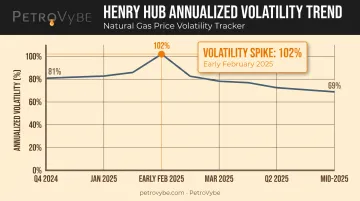
Natural gas isn't a mild market to begin with. The EIA measured annualized Henry Hub volatility at 81% in the fourth quarter of 2024, falling to 69% by mid-2025.
Thirty-day volatility briefly spiked to 102% in early February 2025. That is a harsh backdrop for leveraged futures books.
The Talent Arms Race
Strategy execution depends heavily on individual trader skill, which is why compensation gets extreme.
Macquarie's top commodities trader, Nick O'Kane, earned A$57.6 million for the year through March 2023—more than double CEO Shemara Wikramanayake—per Bloomberg.
Funds also poach aggressively. Verition reportedly hired roughly 10 high-profile energy traders in the year through November 2025 and opened a Houston office, even as other desks struggled. Talent moves fast in this business, and so does capital.
Boom and Bust: Notable Natural Gas Hedge Fund Performance
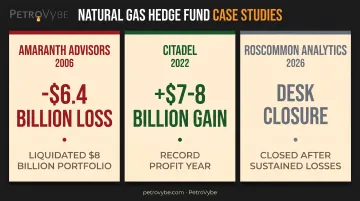
Few case studies illustrate the risk better than these three.
Amaranth Advisors (2006). Amaranth built a concentrated position in natural gas calendar spreads, betting winter prices would hold a premium over fall. A quieter-than-expected hurricane season narrowed that spread.
Reuters reported losses of $6.4 billion, forcing liquidation of an $8 billion portfolio. It remains the textbook case of concentration risk in an unforgiving market.
Citadel (2022). On the opposite end, Citadel's commodities desk, supported by a 20-person team tracking US gas supplies and weather patterns, generated an estimated $7-8 billion during Europe's energy crisis. That estimate came from media reports, not audited disclosure, and covered commodities broadly—not gas alone.
Roscommon Analytics (2026). More recently, Bloomberg reported that Roscommon shuttered its US natural gas desk after sustained losses in power and gas trading. CEO Kevin Kelley maintained the firm remained "well capitalized." Even sophisticated, well-funded players can misjudge this market badly enough to walk away.
The pattern is clear: natural gas hedge funds can deliver extraordinary gains or catastrophic losses, often within the same market cycle.
Natural Gas Hedge Funds vs. Direct Natural Gas Development Investment
Hedge funds bet on where prices will move. Direct development investing bets on what comes out of the ground.
That's the fundamental split. Hedge fund returns hinge on short-term forecasting skill, storage reports, weather models, spread positioning. Direct development returns hinge on production volumes, reserve quality, and long-term project economics. Different games entirely.
The Tax Treatment Gap
Hedge fund profits are typically taxed as short-term capital gains, full stop, no special deductions. Direct natural gas development investments work differently.
At PetroVybe, a private Texas-based natural gas development company, investors can access early-stage development in the Gulf Coast Basin around Lavaca County.
The structure uses Intangible Drilling Cost (IDC) deductions—covering drilling, fracing, and engineering expenses—that apply against active income, including W-2 earnings and capital gains. PetroVybe's materials cite a first-year deduction of roughly 70% against active income, with company milestones reporting 94% in 2025. Prior result; not a promise of any future deduction. This treatment requires the investor to elect general partner status in the Subscription Agreement and may be limited in a given year by the excess business loss limitation under IRC §461(l).
That's a structural advantage hedge fund investing simply doesn't offer.
Track Record Looks Different Too
A hedge fund's edge lives in a trader's head. Direct development relies on something more verifiable: geological and engineering data.
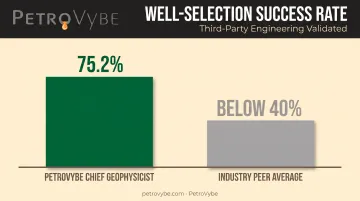
PetroVybe's Chief Geophysicist, a former ExxonMobil geology leader, brings a documented 75.2% success rate in selecting profitable well locations, well above the industry peer average the company cites at below 40%. Disclaimer: these results were achieved at prior companies. Reserves get validated by third-party engineering firms rather than backtested trading models.
Quick comparison:
| Factor | Natural Gas Hedge Funds | Direct Development Investment |
|---|---|---|
| Underlying asset | Futures, options, swaps | Physical wells and reserves |
| Return driver | Price forecasting, timing | Production volume, reserves |
| Tax treatment | Short-term capital gains | IDC deductions against active income |
| Liquidity | Generally more liquid | Illiquid, multi-year hold |
| Risk profile | Mark-to-market volatility | Production and commodity-price risk This treatment requires the investor to elect general partner status in the Subscription Agreement and may be limited in a given year by the excess business loss limitation under IRC §461(l). |
The Liquidity Trade-Off
Hedge funds offer easier exits, but that liquidity comes bundled with speculative volatility. PetroVybe's structure is built for a multi-year production hold: first distributions are projected after roughly 2–3 years of development, with quarterly passive income expected to peak above $10,000 per month during production. It's illiquid. It's also tied to a hard asset that doesn't evaporate because a storage report surprised the market.
Publicly Traded Alternatives: Natural Gas ETFs and ETCs
Retail investors without hedge fund access often default to natural gas ETFs, assuming they're a simpler way in. The numbers tell a different story.
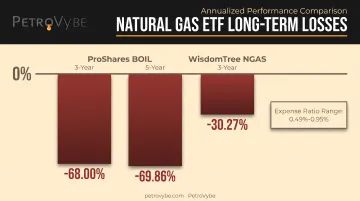
- ProShares BOIL, a 2x leveraged ETF, lost 68.00% annualized over three years and 69.86% over five years through July 2026, per ProShares—nearly a total wipeout when compounded.
- WisdomTree NGAS ETC posted a -30.27% three-year return net of fees through mid-2026.
- Expense ratios add further drag, from about 0.49% to 0.95% annually across products reviewed.
The mechanism behind this is contango. When futures contracts trade above spot price, the fund's rolling positions lose value as contracts approach expiration. United States Natural Gas Fund's own SEC filing acknowledges this directly: contango can make a futures-based fund underperform spot natural gas prices over time.
These products aren't necessarily bad tools for short-term tactical trades. But holding them for years, expecting them to track natural gas prices, has proven costly for most investors.
Frequently Asked Questions
What is a natural gas hedge fund?
A natural gas hedge fund trades futures, options, swaps, and related instruments tied to natural gas prices to generate returns. Unlike production companies, it never owns physical gas reserves.
How many hedge funds trade natural gas?
Research from the Energy Hedge Fund Center estimated 400+ energy-focused hedge funds globally in 2005. A growing subset now focuses specifically on natural gas and power markets, though no current industry-wide census confirms an exact number.
Are natural gas hedge funds a good investment?
They can deliver exceptional returns—Citadel’s 2022 energy book is a common upside example—but losses can be severe, as Amaranth’s $6.4 billion collapse and Roscommon’s 2026 desk closure show. Access is also typically limited to institutions.
How do natural gas hedge funds differ from natural gas ETFs?
Hedge funds use active, often leveraged strategies with high minimums and manager discretion. ETFs are passive, low-minimum products tracking futures indices, and they carry their own contango-related risks.
Can accredited investors invest directly in natural gas production instead of hedge funds?
Yes. Accredited investors can fund development projects directly, with returns tied to production and reserves rather than short-term trading. PetroVybe is one example, offering direct exposure to Gulf Coast Basin gas development.
What tax benefits come with direct natural gas investment versus hedge fund gains?
Hedge fund profits are generally taxed as capital gains with no special deductions. Direct development investments can offer substantial IDC deductions against active income, including W-2 earnings, in the first year of investment. This treatment requires the investor to elect general partner status in the Subscription Agreement and may be limited in a given year by the excess business loss limitation under IRC §461(l).
Informational requests only. PetroVybe projects are offered solely to verified accredited investors. Submitting this form does not create an investment or advisory relationship.