
This article is general education, not investment, tax, or legal advice. Tax rules change and apply differently to every taxpayer. Picture this: you invested $100,000 in a natural gas development partnership last year. In March, an envelope shows up with a Schedule K-1 attached. No W-2 boxes, no familiar 1099 layout, just unfamiliar codes and a capital account number that doesn't match your check amount.
You're not alone. Many accredited investors face this exact moment of confusion.
A Schedule K-1 is how pass-through entities, including oil and gas partnerships, report your share of income, losses, and deductions to the IRS. Getting it right matters. It's often the document that turns a five- or six-figure drilling investment into a meaningful deduction against your active income. This guide breaks down what a K-1 is, how to read it, and how it applies specifically to oil and gas investments. This treatment requires the investor to elect general partner status in the Subscription Agreement and may be limited in a given year by the excess business loss limitation under IRC §461(l).
Key Takeaways
- A K-1 reports your share of income, losses, deductions, and credits from a partnership, LLC, or S corp
- Oil and gas partnerships often pass through Intangible Drilling Cost (IDC) and depletion deductions that can offset active income
- K-1 data flows to Form 1040 via Schedule E and Schedule 1
- Double-deducting expenses and mismatched figures are the two most common filing errors. This treatment requires the investor to elect general partner status in the Subscription Agreement and may be limited in a given year by the excess business loss limitation under IRC §461(l).
What Is a Schedule K-1 Tax Form?
A Schedule K-1 is an IRS document that pass-through entities, meaning partnerships, LLCs, and S corporations, issue every year to report each owner's slice of taxable activity. Trusts and estates issue a similar version too.
The "pass-through" part is the key concept. The entity itself doesn't pay federal income tax. Instead, income, losses, and deductions flow to the owners, who report those amounts on their personal returns.
How does this differ from a W-2 or 1099?
| Form | Reports | Issued to |
|---|---|---|
| W-2 | Wages and withholding | Employees |
| 1099-NEC | Contractor payments | Independent contractors |
| Schedule K-1 | Ownership share of income/loss | Partners, LLC members, shareholders |
A K-1 isn't payment for work. It reflects your ownership stake in the entity's results, whether or not cash actually landed in your account.
That ownership reporting shows up clearly in energy investing. Natural gas and oil development partnerships built for accredited investors typically issue K-1s every year that reflect drilling costs, depletion, and operating results.
PetroVybe, for example, issues limited partners a Schedule K-1 (Form 1065) tied to its natural gas development activity. One redacted 2025 sample showed:
- $600,000 capital contribution
- $22,628 ending capital account
- $401,772 in other deductions tied to IDC and an ordinary business loss
How Do I Read and Interpret a Schedule K-1 Form?
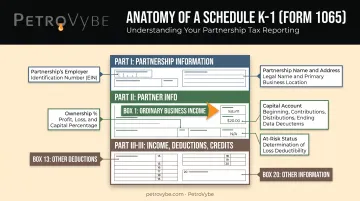
The Form 1065 Schedule K-1 has three parts:
- Part I – Information about the partnership itself
- Part II – Your info: ownership percentage, capital account activity, at-risk status
- Part III – Your share of income, deductions, and credits
Start with Part III for the dollar amounts that flow to your return, then use Part II to check ownership, capital, and at-risk limits.
What Line on a Schedule K-1 Shows Income?
Box 1 reports ordinary business income or loss. Other common income lines break out as follows:
- Boxes 2–3 – Rental real estate and other net rental income (or loss)
- Interest, dividends, and capital gains – Each appears in its own box further down Part III
Separately stated items—including intangible drilling costs (IDCs), depletion, and Section 179—appear in Box 13 and Box 20 with letter codes. Per the IRS Partner's Instructions for Schedule K-1:
- Box 13, Code J – Section 59(e)(2) expenditures such as IDC
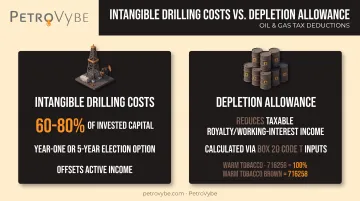
- Box 20, Code T – Inputs used to figure depletion
Codes can change by tax year, so match every code to the instructions for that year before you file.
Checking Your Capital Account and Basis
Income and deductions only help if you still have basis and at-risk amount to absorb them. Your capital account (Item L) tracks contributions, income, losses, and distributions, but it excludes partnership liabilities. That figure is not your outside tax basis—the amount that limits how much loss you can actually deduct.
Practical steps:
- Compare Item L beginning and ending balances to your own contribution and distribution records
- Maintain a separate outside-basis worksheet that includes your share of partnership liabilities
- Confirm your at-risk amount before treating any loss as fully deductible
How Does a K-1 Affect My Personal Taxes and Reporting on Form 1040?
How Do I Report K-1 Income on My Tax Return?
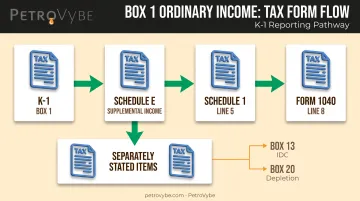
Box 1 ordinary income generally follows this path:
- Schedule E (Supplemental Income and Loss)
- Schedule 1, Line 5
- Form 1040, Line 8
Not every box uses that route. Interest, dividends, and capital gains have their own destinations, so check the instructions for each box rather than assuming one path fits all.
Separately stated items such as charitable contributions or investment interest skip Schedule E. They land on Schedule A or Form 4952 instead.
Income, Losses, and IDC Deductions
Profits raise your taxable income. Losses can lower it, sometimes significantly.
In oil and gas, intangible drilling cost (IDC) deductions can offset active income—including W-2 wages and capital gains—when the interest is structured properly. That treatment is not automatic for every investor. This treatment requires the investor to elect general partner status in the Subscription Agreement and may be limited in a given year by the excess business loss limitation under IRC §461(l).
Under 26 U.S. Code § 469, the working-interest exception to passive-loss limits applies only when the interest is held directly or through an entity that does not limit your liability. A limited partnership often does not automatically qualify, so confirm eligibility before relying on the exception.
As a concrete example, PetroVybe partners received a 94% deduction against active income in 2025 and a in 2025, driven largely by IDC pass-through. Prior result; not a promise of any future deduction. This treatment requires the investor to elect general partner status in the Subscription Agreement and may be limited in a given year by the excess business loss limitation under IRC §461(l).
Self-Employment Tax Considerations
Box 14 reports self-employment earnings for general partners. Limited partners are generally excluded from self-employment tax on their distributive share, though guaranteed payments for services are an exception.
How Do I Report Oil and Gas Royalties and Deductions Shown on a Schedule K-1?
Royalty and working-interest income from an oil and gas K-1 typically shows up in Box 1 or as supplemental rental/royalty income. You generally report both on Schedule E.
The specific box depends on how the partnership structured the underlying interest. When you file, match each K-1 line—and any supplemental statements—to the corresponding Schedule E entries.
Are Oil and Gas Deductions on a K-1 Tax Deductible?
Usually yes, and often substantially. Intangible drilling costs (IDCs) and depletion allowances are typically the largest deductible items on an oil and gas K-1.
- IDCs can represent a first-year deduction target of approximately 70–80% of invested capital in a new-drilling project
- Investors can often elect to deduct IDCs in year one or spread them over five years
- Working-interest structures may allow these deductions against active income, not just passive gains. This treatment requires the investor to elect general partner status in the Subscription Agreement and may be limited in a given year by the excess business loss limitation under IRC §461(l).
PetroVybe structures its natural gas development partnerships so accredited investor partners can receive a K-1 reflecting significant first-year IDC deductions against active income. This treatment requires the investor to elect general partner status in the Subscription Agreement and may be limited in a given year by the excess business loss limitation under IRC §461(l).
Every investor’s situation differs based on basis, at-risk amount, and partnership structure. Talk to a tax advisor about your specific K-1 before filing.
Where Do I Get My K-1 and When Should I Expect It?
The issuing partnership or S corporation prepares and sends K-1s, generally by the entity's filing deadline. For calendar-year entities, that is typically March 15. Weekend and holiday rules can shift it by a day or two, as with the Form 1065 deadline of March 16, 2026 for the 2025 tax year.
If you haven't received your K-1 by mid-March, contact the fund sponsor or general partner directly. Many partnerships extend their returns, so K-1s often arrive later in the spring or summer.
Missing your K-1 close to the filing deadline?
- File Form 4868 for an automatic six-month extension to file your return
- Pay any tax you expect to owe by the original deadline—the extension covers filing, not payment
K-1s often arrive later than W-2s or 1099s, so build this timing into your annual tax planning if you hold partnership interests.
Common K-1 Mistakes to Avoid
The biggest filing mistakes include:
- Double-deducting expenses already netted into Box 1 income. If it's already baked into the ordinary income figure, don't deduct it again elsewhere.
- Mismatched figures between your copy of the K-1 and what the IRS receives from the partnership. Always reconcile before filing.
- Confusing passive vs. active treatment, particularly for oil and gas working interests where the rules diverge from typical real estate or business K-1s.
Other errors worth flagging:
- Using Item L (capital account) as a substitute for outside basis
- Skipping the required order of loss limitations (basis, at-risk, passive activity, then excess business loss)
Oil and gas K-1s carry unique complexity around IDC elections and depletion calculations. A CPA experienced specifically in oil and gas partnership taxation, not just general partnership returns, can help you avoid costly errors and capture every deduction you're entitled to.
Frequently Asked Questions
How do I report K-1 income on my tax return (Form 1040)?
Box 1 ordinary income generally flows through Schedule E to Schedule 1, Line 5, then to Form 1040, Line 8. Other boxes, like interest or capital gains, follow separate paths, so check each box's instructions.
How does a K-1 affect my personal taxes?
Profits increase your taxable income while losses can reduce it. For oil and gas working interests, IDC deductions may offset active income, including W-2 wages, depending on your ownership structure. This treatment requires the investor to elect general partner status in the Subscription Agreement and may be limited in a given year by the excess business loss limitation under IRC §461(l).
Where do I get my K-1 tax form?
Your K-1 comes from the issuing partnership or fund, typically by mid-March for calendar-year entities. Contact the general partner or sponsor directly if it hasn't arrived by then.
How do I read and interpret a Schedule K-1 form?
Check Part I for entity details, Part II for your ownership and capital account info, and Part III for your income, deductions, and credits. Pay close attention to Box 1, Box 13, and Box 20 codes.
What are common K-1 tax mistakes?
Double-deducting expenses already included in Box 1, mismatching your figures against the IRS copy, and confusing passive versus active income treatment top the list.
Are oil and gas investments or expenses shown on a K-1 tax deductible?
Yes, IDCs and depletion allowances are typically the largest deductible items on an oil and gas K-1. Deductibility and timing depend on your specific structure, so consult a tax professional before filing.
Informational requests only. PetroVybe projects are offered solely to verified accredited investors. Submitting this form does not create an investment or advisory relationship.