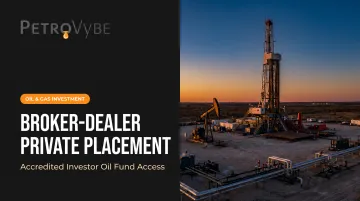
This article is general education, not investment, tax, or legal advice. Accredited investors are pouring more capital into private markets than ever, chasing yields and tax advantages that public equities simply can't match. But that shift raises a question most investors never ask until it's too late: who actually vetted this deal, and what happens if nobody did?
Private placements aren't required to file the disclosures public companies must file. Some come through registered broker-dealers bound by strict investigation duties. Others come directly from the issuer, with no intermediary at all. The protections differ dramatically depending on which path you're on.
This guide breaks down broker-dealer roles and obligations, warning signs of misrepresentation, and how to evaluate a sponsor like PetroVybe when there's no broker standing between you and the deal.
Key Takeaways
- Broker-dealers must complete a "reasonable investigation" before recommending private placements (FINRA 23-08)
- Many Reg D 506(c) offerings are sold directly by issuers, with zero broker-dealer involvement
- A Form D filing is not regulatory approval, regardless of sales channel
- Independently verify licensing, reserve reports, and audits no matter who introduced the deal
- Illiquidity and limited disclosure make sponsor transparency non-negotiable
What Is a Broker-Dealer Private Placement?
A private placement is a securities offering exempt from SEC registration, typically under Regulation D, sold only to accredited or otherwise qualified investors. That exemption removes registration paperwork. It does not remove antifraud rules, and it does not exempt anyone selling the securities from broker-dealer registration requirements.
When a registered broker-dealer is involved, they're expected to:
- Underwrite and distribute the offering
- Perform compliance oversight before recommending it
- Introduce and vet investors against suitability standards
Not every private placement works this way. Many issuers sell directly to accredited investors without any broker-dealer intermediary. PetroVybe, for example, structures its offerings under Rule 506(c) and works with investors directly through a Confidential Private Placement Memorandum (PPM), Limited Partnership Agreement, and Subscription Agreement, rather than through a broker-dealer distribution channel.
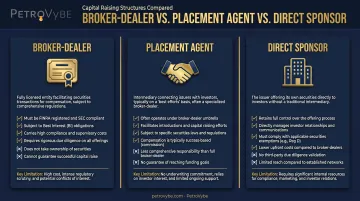
Broker-Dealer vs. Placement Agent vs. Direct Sponsor
| Model | What it means | What it doesn't mean |
|---|---|---|
| Broker-dealer | Registered, subject to FINRA suitability rules and Regulation Best Interest (Reg BI) | Registration doesn't guarantee the deal performs |
| Placement agent | A capital-raising specialist, often used interchangeably with "broker-dealer" | Not exempt from broker registration solely because the securities are exempt (SEC guidance) |
| Direct sponsor | The issuer sells its own securities, generally without needing broker registration | Issuer personnel who actively solicit and earn transaction-based pay may still trigger registration requirements |
Some investors prefer direct sponsor relationships specifically because they cut out an extra fee layer and let them talk to the people actually running the project, not a salesperson three steps removed from it.
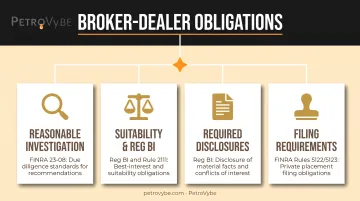
Broker-Dealer Obligations Under FINRA and Reg BI
When a broker-dealer is in the picture, the rules get specific fast.
Reasonable investigation. Under FINRA Notice 23-08, a firm recommending a private placement must investigate the issuer, its management, business prospects, assets, and use of proceeds. Relying on the issuer's own claims doesn't satisfy this duty. Neither does outsourcing it entirely to legal counsel or a third-party report.
Suitability and Reg BI. Two standards apply depending on the customer:
- Reg BI applies to retail customers (natural persons) and requires conflict disclosure, best-interest conduct, and that the broker's pay never outrank the client's needs.
- Rule 2111 covers non-retail accounts with reasonable-basis, customer-specific, and quantitative suitability tests.
Required disclosures. Broker-dealers must disclose fees, conflicts of interest, and the capacity in which they're acting—principal or agent—so investors know who the firm represents in the trade.
Filing requirements. FINRA Rules 5122 and 5123 require offering documents to be filed with FINRA. This is a notice filing, not an approval process. FINRA doesn't issue a clearance letter saying "this deal is safe."
Why does all this exist? Because private placements are illiquid, carry high risk, and skip the disclosure requirements that come with public registration. The broker-dealer's investigation is meant to fill that gap. It's not a guarantee of returns.
Red Flags That Signal Broker or Sponsor Misrepresentation
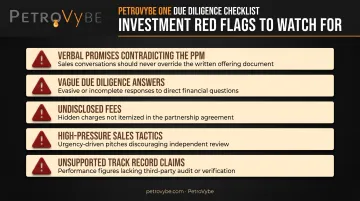
Most fraud in this space isn't dramatic. It's a mismatch between what's said out loud and what's written down. Watch for:
- Verbal promises that contradict the PPM — guaranteed returns, minimized risk language, or "can't miss" framing
- Vague answers about due diligence — can't specify what was verified and how
- Undisclosed fees or commissions — buried outside the offering documents
- High-pressure tactics — "limited allocation," "closing this week," urgency without substance
- Unsupported track record claims — can't be independently corroborated
FINRA's own enforcement history includes cases where firms identified red flags, like a pending fraud lawsuit against management, and recommended the offering anyway.
Don't assume someone else already checked. Ask directly what was verified, and reconcile every spoken claim against the written PPM.
How to Evaluate a Private Placement Sponsor Directly
When there's no broker-dealer running interference, the investigation duty shifts to you. That's not a downside if you know what to check.
Start with licensing and operational proof. For oil and gas specifically, the SEC's own investor alert on private oil and gas offerings recommends verifying the operator's track record and confirming any engineering report is genuinely independent, not produced in-house.
PetroVybe's model illustrates what this looks like in practice:
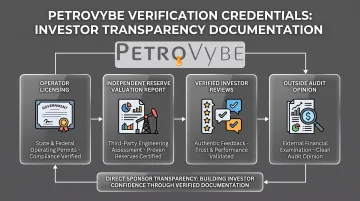
- Operator licensing through PetroVybe OpCo LLC, searchable via the Texas Railroad Commission's public database
- Third-party reserve valuation — a $48MM PV-09 report from a licensed independent engineering firm. Prepared by Lee Keeling & Associates, Tulsa, March 2026.
- Verified investor reviews — 8 reviews on Invest Clearly, all five-star
- Independent audit — a clean 2025 opinion from Weaver, PetroVybe's outside auditor
Ask for the same things a broker would be required to check:
- Management's specific, quantified track record (not just titles)
- Third-party validated financials or audited statements
- Clear documentation of tax positions, like IDC and depletion deductions
- Transparent return projections, with assumptions spelled out
PetroVybe's leadership discloses specifics rather than adjectives: a documented 5x EBITDAX turnaround, a $5 billion asset scaled from zero to 35,000 BOEPD, and a chief geophysicist with a 48-year track record—results from prior roles. Hold every direct offering to that same level of specificity, whether or not you invest with any particular sponsor.
Why Sponsor Transparency Matters as Much as Broker-Dealer Compliance
Regulatory compliance protects the process. It says nothing about whether the well produces, the market holds, or the projected returns materialize. That distinction matters more in direct-sponsor deals, where no FINRA-registered firm stands between the issuer and your capital.
Transparency measures that let you run your own diligence include:
- Independent engineering reports tied to a specific reserve valuation, not a marketing estimate
- Verified third-party reviews on platforms outside the sponsor's own website
- Documented tax substantiation — PetroVybe, for instance, issues K-1s reflecting IDC and depletion benefits that reached 94% of invested capital for 2025 partners. Prior result; not a promise of any future deduction.
- A clean audit opinion from an outside accounting firm
None of this replaces reading the PPM yourself. But sponsors willing to put third-party validation in front of you, rather than asking you to take their word for it, are giving you the tools to do the job a broker-dealer would otherwise be required to do.
Frequently Asked Questions
Do all private placements require a broker-dealer?
No. Many Reg D offerings, especially 506(c) deals sold to verified accredited investors, are sold directly by the issuer with no broker-dealer intermediary involved at all.
Can an investment adviser sell a private placement without broker-dealer registration?
Not always. According to NASAA guidance, advisers earning transaction-based compensation may trigger broker-dealer registration requirements.
What is Regulation Best Interest (Reg BI) and how does it apply to private placements?
Reg BI requires broker-dealers to act in a retail customer's best interest and disclose conflicts before recommending complex products, including private placements. It doesn't apply to direct issuer sales.
What should I ask before investing through a broker-dealer or in a direct private placement?
Ask about licensing, third-party validation of assets or reserves, exact fee structure, use of proceeds, and management's specific prior track record.
What happens if a broker-dealer fails to conduct reasonable due diligence?
It can trigger FINRA enforcement action, and investors may have arbitration remedies. FINRA arbitration claims generally must be filed within six years of the act at issue.
Are private placements only for accredited investors?
Most Reg D offerings, including 506(c), are limited to verified accredited investors—individuals meeting income or net worth thresholds— because they skip standard public disclosure requirements.
Informational requests only. PetroVybe projects are offered solely to verified accredited investors. Submitting this form does not create an investment or advisory relationship.