
Here's the good news: 2026 isn't 2016. The JOBS Act opened real doors through Regulation Crowdfunding (Reg CF) and Regulation A+ (Reg A+), letting everyday investors buy into startups, real estate, and more without six-figure net worth. You're not locked out anymore — you just need to know where to look.
This guide breaks down the top investment options available to non-accredited investors right now, how they stack up on returns and liquidity, and what to work toward if you eventually want access to accredited-only deals.
TL;DR
- Non-accredited investor: under SEC thresholds of $200K single / $300K joint income, or $1M net worth (excluding primary residence)
- JOBS Act Reg CF and Reg A+ now open private-market deals to retail investors
- Strong 2026 options: real estate crowdfunding, equity crowdfunding, REITs, mutual funds/ETFs, and fractional art
- Screen every deal for SEC compliance, minimums, return history, liquidity, and transparency
- Growing income or net worth unlocks accredited-only asset classes like private energy development
Overview of Non-Accredited Investing in the U.S. Market
Under SEC rules, you are generally a non-accredited investor if you fall below either of these thresholds:
- Income: $200,000 individual (or $300,000 joint) in each of the past two years
- Net worth: $1 million, excluding your primary residence
That covers most U.S. households. SEC data shows only 18.5% of households met the financial criteria as of 2022, so the majority remain shut out of traditional private placements and hedge funds.
The JOBS Act opened lawful paths into private markets without insider access. Two core channels:
- Reg CF: startups can raise up to $5 million per year from the public
- Reg A+ (Tier 2): issuers can raise up to $75 million, with built-in investor protections
Both are available through online platforms—not only broker networks.
Below, we rank the best investment vehicles for non-accredited investors in 2026 on accessibility, risk-adjusted return, and liquidity.
Best Investments for Non-Accredited Investors in 2026
We evaluated each option on SEC compliance, minimum investment thresholds, historical performance, liquidity terms, and platform transparency.
Real Estate Crowdfunding Platforms
Platforms like Fundrise, Arrived, and RealtyMogul pool investor capital to buy income-producing real estate. Both accredited and non-accredited investors can participate, often with minimums as low as $10-$100.
What sets them apart:
- Quarterly (or more frequent) dividend distributions
- Diversification across property types: residential, industrial, multifamily
- No accreditation requirement for most offerings
Fundrise's Income Fund reported 7.7%-8.1% total returns from 2023-2025, while Arrived cites 6%-10% annual historical returns on individual properties (Arrived's 2024 investor guide).
RealtyMogul's non-traded REIT option requires a $5,000 minimum but comes with conditional repurchase terms, meaning your money isn't always accessible on demand.
| Platform | Minimum Investment | Expected Returns | Liquidity Terms |
|---|---|---|---|
| Fundrise | $10 | 7.7%-8.1% (2023-2025) | Plan-specific redemption terms |
| Arrived | $100 | 6%-10% annually | 6-month minimum hold |
| RealtyMogul | $5,000 (REIT) | Not guaranteed | Illiquid; repurchase subject to availability |

Equity Crowdfunding via Reg CF Portals
Platforms like StartEngine and Wefunder let non-accredited investors buy equity stakes in early-stage startups under Title III of the JOBS Act. This is the closest most people get to venture capital.
Investment limits are tiered based on your income and net worth:
- If both are under $124,000: the greater of $2,500 or 5% of the greater figure
- If either is at least $124,000: 10% of the greater figure, capped at $124,000 annually
This is high-risk, high-reward ground. Startups fail often, and Reg CF shares generally can't be resold for one year. But you're getting pre-IPO access that simply didn't exist for retail investors a decade ago.
| Investment Limits | Risk Level | Typical Holding Period |
|---|---|---|
| Up to $124,000/year (tiered) | High | 1+ years, often indefinite |

REITs (Publicly Traded and Non-Traded)
Real Estate Investment Trusts pool capital into real estate portfolios and must distribute at least 90% of taxable income as dividends. Publicly traded REITs behave like stocks: you can buy and sell them through any brokerage.
The FTSE Nareit All Equity REITs Index yielded 4% at year-end 2024 (Nareit REIT Basics). That's the clean, liquid comparison point. Non-traded REITs, by contrast, often lock up capital for years with repurchase programs subject to company discretion.
Key differentiators:
- Public REITs: daily liquidity, SEC oversight, price transparency
- Non-traded REITs: potentially higher yields, but illiquid and less transparent
- Sector diversification across industrial, residential, and healthcare properties
| Dividend Yield Range | Minimum Investment | Liquidity |
|---|---|---|
| ~4% (public REIT index avg.) | Varies by broker/share price | High (public); Low (non-traded) |
Mutual Funds and ETFs
These remain the most accessible, liquid option on this list. No accreditation barriers and no six-figure minimums. Just open a brokerage account.
Fees have dropped significantly. The Investment Company Institute reports 2025 asset-weighted average expense ratios of 0.14% for index equity ETFs and 0.09% for index bond ETFs (ICI 2025 fee report).
Mutual funds run slightly higher, averaging 0.40% asset-weighted for equity funds.

- Mutual funds redeem at end-of-day NAV
- ETFs trade throughout the day at market price
- Both offer instant diversification across hundreds or thousands of holdings
- Most major brokers now offer commission-free ETF trades
| Expense Ratio Range | Minimum Investment | Liquidity |
|---|---|---|
| 0.09%-1.10% depending on fund type | Often $0-$1,000 | Daily (ETF) or next-day NAV (mutual fund) |
Fine Art & Collectibles Fractional Investing
Platforms like Masterworks let retail investors buy fractional shares of blue-chip artwork. The appeal: art has historically shown low correlation to stock market swings.
Masterworks charges a 1.5% annual management fee plus 20% of profit on sale, with offering minimums around $15,000 historically (though secondary share purchases can be lower). The company's own disclosure warns that resale may be severely limited, so you should be prepared to hold indefinitely.
Sotheby's Mei Moses Art Index, which tracks repeat auction sales, showed a 5.9% decline in 2019 overall, even as some categories gained double digits. Art isn't a guaranteed hedge. It's a genuinely illiquid, single-asset bet.
| Minimum Investment | Holding Period | Fee Structure |
|---|---|---|
| ~$15,000 (offering-dependent) | Indefinite | 1.5% annual + 20% profit share |
How We Chose the Best Options
We scored every option above against four filters:
- SEC regulatory eligibility
- Platform track record
- Minimum investment thresholds
- Fee transparency
Marketing claims got zero weight unless backed by verifiable, dated performance data.
Common mistakes to avoid:
- Chasing headline returns without reading redemption or liquidity terms
- Ignoring layered fee structures (management fees + profit splits)
- Concentrating capital in one asset class instead of diversifying
- Confusing "historical" returns with guaranteed future performance
Those pitfalls are why regulatory compliance and documented performance history outranked any platform's advertised numbers in our final rankings.
Looking Ahead: Growing Into Accredited Investor Opportunities
Many non-accredited investors eventually cross the threshold through income growth, net worth accumulation, or professional licenses like Series 7 or 65. That shift unlocks asset classes that simply aren't available otherwise:
- Private credit
- Direct real estate syndications
- Energy development partnerships
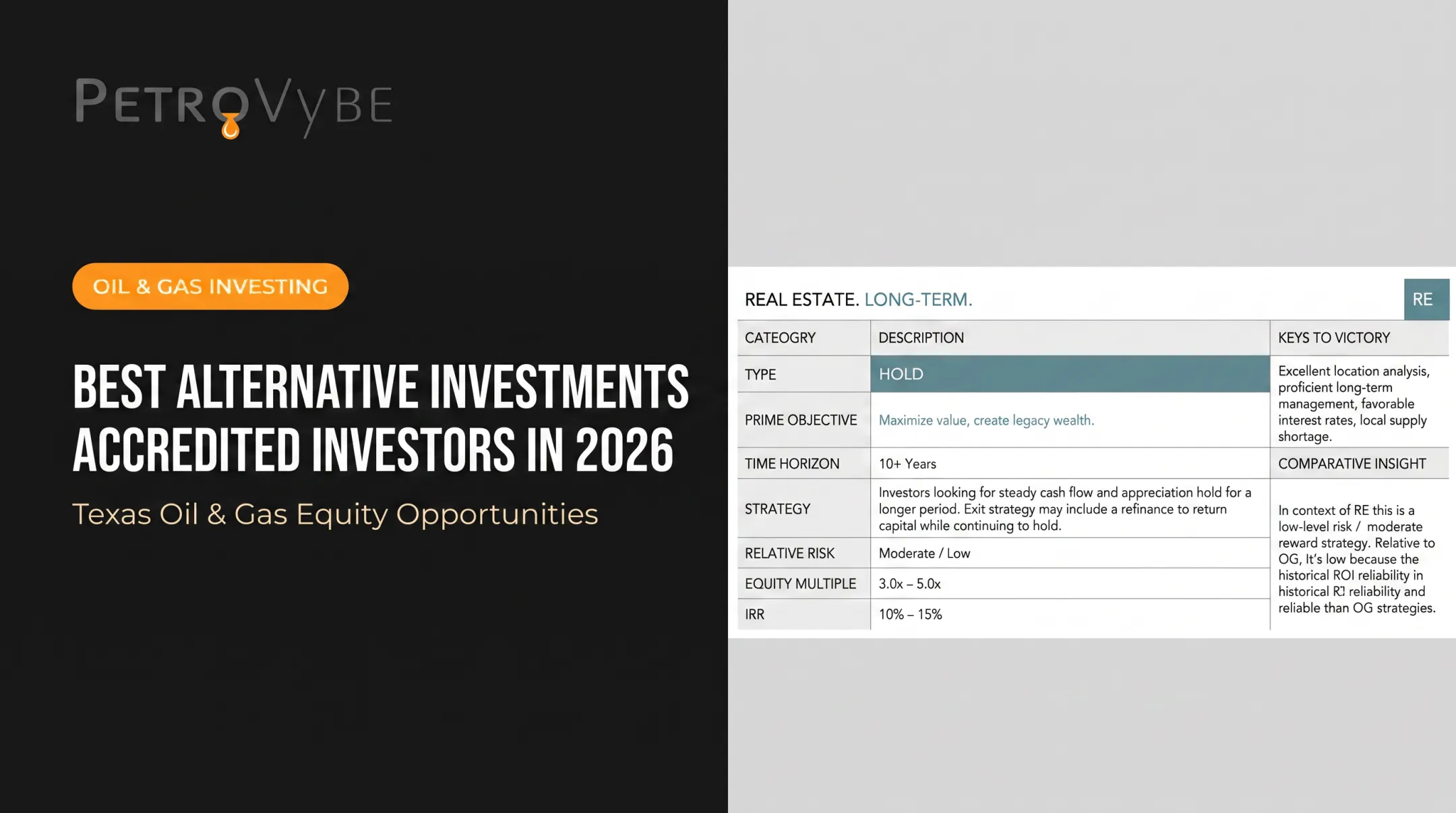
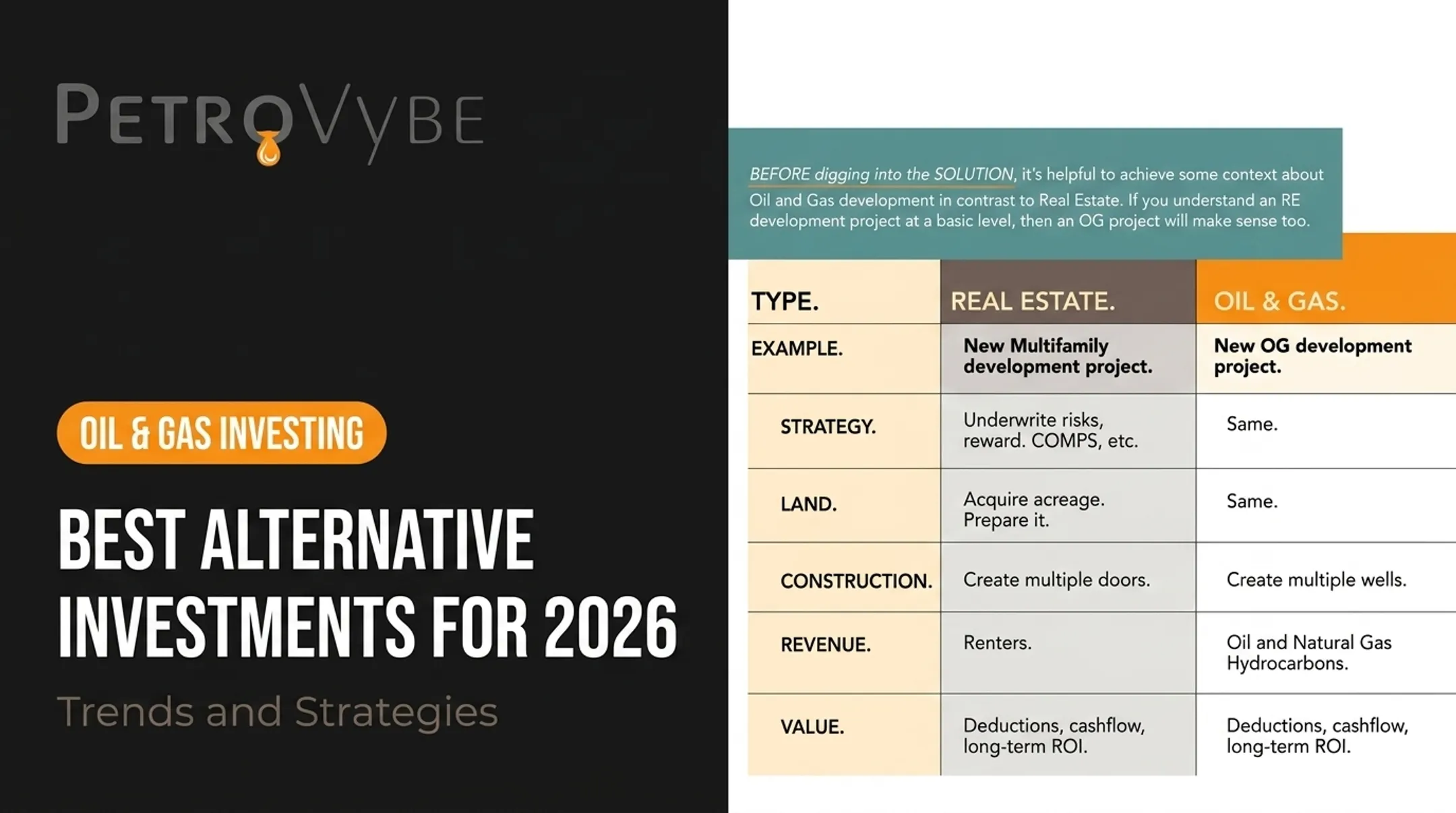
Natural gas development is one example. PetroVybe offers accredited investors direct equity participation in upstream oil and gas projects with a $100,000 minimum investment. The structure pairs Intangible Drilling Cost (IDC) deductions with depletion allowances. Partners in 2024–2025 reported 91%–94% tax deductions against active income, including W-2 earnings and capital gains.
The strategic case tracks a larger demand shift: AI and data-center electricity use is climbing fast, and natural gas already supplies nearly half of U.S. grid generation. PetroVybe's projects sit on a 58,000-acre position in Lavaca County, Texas, backed by roughly 400 producing wells and a $48 million third-party-validated reserves estimate.

This path isn't open to non-accredited investors today. It is a concrete picture of what becomes accessible once you qualify—worth keeping on your radar as your financial position grows.
Conclusion
Non-accredited investors have more legitimate options in 2026 than at any point in the past decade. Real estate crowdfunding, Reg CF startups, REITs, ETFs, and fractional art all offer different combinations of accessibility, return potential, and liquidity.
None of them are free lunches. Higher potential returns tend to come with longer lockups and less transparency. Before committing capital, assess your own risk tolerance, time horizon, and how each option fits your broader diversification strategy.
If you're building toward accredited status, opportunities like PetroVybe's natural gas development partnerships become relevant. Those structures offer tax-advantaged, asset-backed diversification that isn't available to non-accredited investors today.
Frequently Asked Questions
Can I invest if I am not an accredited investor?
Yes. Vehicles like Reg CF crowdfunding, REITs, mutual funds, ETFs, and Reg A+ offerings are all open to non-accredited investors, though some carry annual investment limits.
What is Warren Buffett's 70/30 rule?
It is a general portfolio allocation guideline (roughly 70% stocks, 30% bonds) sometimes cited as a simple approach for average investors. It is not a documented Buffett-specific rule.
How much can a non-accredited investor legally invest in a startup?
Under Reg CF, limits are tiered by income and net worth, capped at $124,000 annually across all Reg CF offerings combined.
Are REITs a good investment for non-accredited investors in 2026?
REITs offer dividend income and real estate diversification with no accreditation requirement. Returns vary by sector, and public REITs offer far better liquidity than non-traded ones.
What is the difference between Reg CF and Reg A+ offerings?
Reg CF caps raises at $5 million with lighter disclosure through funding portals. Reg A+ allows up to $75 million (Tier 2) with more extensive SEC reporting and audited financials.
Can non-accredited investors eventually access private equity or oil and gas deals?
Yes, once they meet SEC income or net worth thresholds for accredited status. That unlocks private placements, including private equity and direct energy deals that remain off-limits until then.