US mutual funds held $31.4 trillion in total net assets at year-end 2025, according to the Investment Company Institute's 2026 Fact Book. Local government investment pools, meanwhile, hold tens of billions in assets on their own, and accredited investors are increasingly weighing these commingled structures against direct, private deal opportunities.
Here's the problem: most people assume "investment pool" describes one uniform product. It doesn't. Structure, oversight, and risk profile vary enormously between an LGIP, a mutual fund, and an endowment pool, and those differences directly affect your returns, liquidity, and tax outcome.
This guide breaks down how investment pools actually function, the stages every pool moves through, and how they compare to direct investment alternatives.
TL;DR
- Investment pools combine multiple investors' capital into one professionally managed portfolio
- Pools move through four stages: capital intake, allocation, monitoring, and distribution
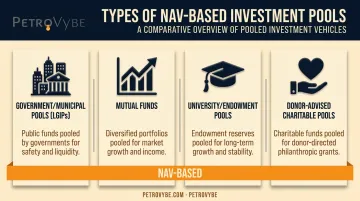
- Common types include Local Government Investment Pools (LGIPs), mutual funds, endowment pools, and donor-advised funds
- Diversification and scale come at the cost of individual control over specific holdings
- Direct partnerships, like oil and gas working interests, trade liquidity for tax efficiency and asset-level control
What Is an Investment Pool?
An investment pool is a vehicle where multiple investors contribute capital into a single fund, which a manager then invests as one collective portfolio. Each participant owns a proportional slice of the whole, tracked through a unit price or Net Asset Value (NAV), not a claim on any specific underlying holding.
Pools exist because most individual investors can't replicate what large institutions do on their own. A $10,000 account can't buy the diversification and institutional pricing that a $500 million portfolio can, let alone its full-time risk oversight team. Pooling capital closes that gap.
What an investment pool is not:
- Bundles many securities together, rather than representing a single one
- Carries market risk, since value fluctuates and returns aren't guaranteed
- Represents a share of the aggregate, not direct ownership of any one asset
Despite the rise of ETFs and robo-advisors, pooled vehicles remain foundational. They deliver liquidity and professional oversight at a cost efficiency no individual investor can match alone.
Major Types of Investment Pools
- Government/municipal pools (LGIPs) - state and local governments park short-term cash for liquidity and safety
- Mutual funds - SEC-registered funds where retail investors buy shares priced at NAV
- University/endowment pools - schools consolidate multiple restricted funds into one vehicle, such as the University of Washington's Consolidated Endowment Fund
- Donor-advised charitable pools - donor contributions are pooled and invested until granted to charities
Each type sets its own NAV structure and governance, and distribution rules vary widely from one to the next. The underlying mechanic, many investors sharing one pool proportionally, stays constant across all of them.
How Does an Investment Pool Work?
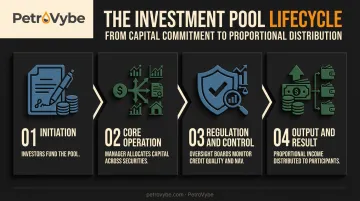
Regardless of type, most pools run through a repeatable sequence: capital intake, allocation, ongoing monitoring, and distribution of results. Here's how each stage plays out.
Initiation
Participation begins when an investor or entity deposits funds into the pool. This typically follows signing a participation or investment management agreement and meeting eligibility requirements, such as accreditation status or governmental authorization.
Entry timing varies by pool type: continuous entry allows daily deposits and withdrawals, common in LGIPs, while scheduled entry offers quarterly or periodic windows, typical of private or endowment pools.
Core Operation
The pool's manager invests aggregated capital according to a stated investment policy, spreading it across multiple securities or assets instead of concentrating in one holding. This might mean purchasing government obligations, commercial paper, or mutual fund shares.
Each participant's proportional share gets tracked through NAV or unit accounting. The Government Finance Officers Association ties a pool's maturity structure, diversification limits, and credit quality parameters directly to its yield and volatility.
Stretch maturities longer, and you generally chase more return while accepting more price sensitivity. Tighten them, and you trade yield for stability.
Regulation and Control
Oversight boards, treasurers, or trustees monitor the pool's holdings against its stated policy, watching credit quality and maturity restrictions closely. Corrective mechanisms keep the pool on track:
- Mark-to-market reviews - independent valuation, recommended at least quarterly
- Credit rating monitoring - tracking issuer and portfolio credit quality
- Rebalancing - adjusting holdings to maintain a stable or target NAV
Without active oversight, a pool risks NAV instability or losses. That's why most rated pools submit to independent credit rating agency review, often earning ratings like AAAf for credit quality paired with an S1 score for market-risk sensitivity.
Output and Result
The pool produces periodic income distributions, interest, dividends, or capital gains, allocated proportionally to each participant's share. Where that output goes depends on the pool:
Government pools funnel earnings into public budgets, while private pools distribute income to investors or reinvest it automatically.
Consistency matters here. NACUBO reports a 7.7% 10-year average return across 657 higher-education endowments through FY2025, which supported $33.4 billion in institutional spending that year. Stable, predictable output is what keeps participants confident their principal is protected.
Where Investment Pools Are Used
Investment pools show up wherever multiple parties need shared access to professional management. The most common applications:
- Municipal and government cash management - LGIPs handle daily operating funds for cities, counties, and states
- University endowment and reserve management - schools pool restricted gifts into one investment vehicle
- Mutual fund investing - retail investors buy shares for diversified market exposure
- Donor-advised charitable giving - pooled donor funds grow tax-free until granted
The right pool fits the time horizon and risk tolerance behind the money:
| Time horizon | Best-fit pool type | Priority |
|---|---|---|
| Short-term liquidity needs | Stable-NAV pools (LGIPs) | Safety, daily access |
| Long-term growth | Variable-NAV pools (endowments) | Higher return potential |
| Retail diversification | Mutual funds | Convenience, professional management |
Government pools operate under state statutes emphasizing safety and liquidity above all else. Private and alternative pools, by contrast, often pursue higher-yield strategies, accepting higher risk in exchange.
Investment Pools vs. Direct Development Partnerships: What Accredited Investors Should Know
Pooled funds offer diversification and professional management, but that convenience comes with a cost. You dilute your control, your tax benefits, and your direct exposure to any single asset's upside.
Direct investment structures work differently. In a working interest partnership, for example, an accredited investor holds a direct stake in a specific development project rather than a fractional slice of a broad, commingled portfolio.
The tax distinction is significant. Pooled fund distributions are typically taxed as ordinary income or capital gains with limited deductions available. Direct participation in natural gas development can offer something entirely different: substantial Intangible Drilling Cost (IDC) deductions that apply against active income, including W-2 wages and capital gains.
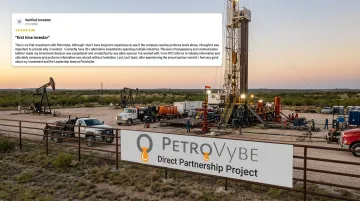
This is exactly how PetroVybe structures its partnerships for accredited investors in South Texas and the Gulf Coast Basin. A few specifics worth knowing:
- Minimum investment: $100,000 per unit, accredited investors only
- 2024 partners received a 94% tax deduction against active income; 2025 partners saw that adjust to 91%
- The project spans 400 acquired wells plus 57+ planned new wells across a 58,000-acre basin in Lavaca County, Texas
- Targeted returns run 2.2x to 5.8x MOIC with roughly 26% IRR over a 10-year hold period
| Feature | Pooled fund | Direct partnership (PetroVybe) |
|---|---|---|
| Control | Shared, no say over specific holdings | Direct stake in named project |
| Tax treatment | Ordinary income/capital gains, limited deductions | IDC deductions against active income |
| Liquidity | Often daily or periodic | Multi-year hold, less liquid |
| Minimum entry | Varies, often low | $100,000+, accredited investors only |
Pooled vehicles suit investors who prioritize liquidity and broad diversification. Direct partnerships suit accredited investors who want tax efficiency, asset-level transparency, and compounding returns tied to one professionally operated project rather than hundreds of anonymous holdings.
Conclusion
Investment pools work by aggregating capital, investing it under a defined policy, and distributing proportional returns to participants. The variations in NAV structure, oversight, and risk tolerance are what create real differences between an LGIP, a mutual fund, and an endowment pool.
If you're evaluating pooled options, direct asset-specific partnerships are worth understanding too. Accredited investors prioritizing tax efficiency and control might explore models like PetroVybe's natural gas development program, which offers direct equity instead of pooled shares.
Frequently Asked Questions
What is an investment pool?
An investment pool combines multiple investors' capital into a single, professionally managed portfolio. Each participant owns a proportional share tracked via NAV or unit accounting, rather than a specific underlying asset.
How much money do I need to invest to make $10,000 a month?
It depends largely on your vehicle's yield. Pooled funds typically target modest yields requiring larger capital bases, while private direct investments may target higher return structures. Consult a financial advisor for calculations specific to your situation.
How much will $10,000 invested be worth in 10 years?
At a 5% annual return, $10,000 grows to roughly $16,289; at 7%, about $19,672; at 10%, around $25,937. Private direct investments may target different MOIC or IRR outcomes entirely, so compare structures carefully.
Are investment pools regulated by the SEC?
Many government investment pools are exempt from SEC registration under the Investment Company Act's governmental exclusion, though some voluntarily follow SEC-like rules. Mutual fund pools, by contrast, are fully SEC-registered.
What is the difference between an investment pool and a direct investment?
Pools combine capital across many holdings for diversification and professional management. Direct investments, like working interest partnerships in oil and gas development, give you a specific ownership stake in one asset with distinct tax and control implications.
What are the main risks of participating in an investment pool?
Key risks include NAV volatility, limited SEC-level protections for government pools, and the fact that pooled funds carry no insurance or guarantee against loss. Always review a pool's specific policy and oversight structure before committing capital.