
Many investors default to a savings account simply because they don't know how to rank risk against reward across today's crowded menu of options. Others freeze entirely, worried that picking wrong means losing ground to inflation.
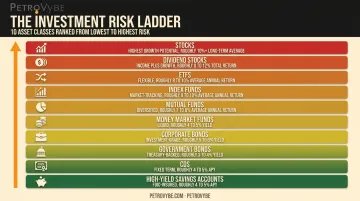
This guide ranks the 10 best traditional investments for 2026, ordered from lowest to highest risk, plus a lesser-known alternative asset class that accredited investors are using for tax efficiency and passive income.
Key Takeaways
- Investments range from low-risk savings to higher-risk stocks, matched to your timeline.
- The right mix depends on risk tolerance, time horizon, and tax situation, not headline returns.
- Private alternatives like natural gas development can boost after-tax returns and diversification.
- No single "best" investment exists; strong portfolios blend multiple options from this list.
Understanding the Investment Landscape in 2026
Investing means putting capital into assets today with the expectation that it grows over time. That's different from simply saving cash, which preserves value but rarely outpaces inflation on its own.
The Federal Reserve's June 2026 projections put the median federal funds rate at 3.8% for 2026, with core inflation still running around 3.3%, according to the Fed's Summary of Economic Projections. That's a restrictive backdrop that leaves little room for rapid easing.
Meanwhile, stocks have historically rewarded patience. The S&P 500 has returned roughly 15.51% annualized over the trailing 10 years through June 2026, though that figure reflects a specific bull period, not a guarantee.
Three major asset classes now offer distinct advantages:
- Cash equivalents are paying real yield again
- Bonds are more attractive than they've been in over a decade
- Equities still carry the highest long-term growth ceiling
The list below ranks the 10 best investments from most conservative to most aggressive, followed by a private alternative gaining traction among high-income investors.
10 Best Investments for 2026
This ranking moves from lowest-risk, most liquid options to higher-risk, higher-reward assets. Where you land depends entirely on your own goals, timeline, and stomach for volatility.
High-Yield Savings Accounts
High-yield savings accounts aren't technically an investment, but they're the right home for emergency funds and money you'll need within months, not years.
Online banks routinely beat traditional brick-and-mortar institutions on rate. As of July 2026, the national average savings rate sat at just 0.38%, while a leading online offer reached 4.15% APY, according to NerdWallet's savings account rankings. That difference adds up fast for anyone holding sizable cash reserves.
Certificates of Deposit (CDs)
CDs lock your money in at a fixed rate for a fixed term, making them ideal for money earmarked for a known future date, like a down payment in three years.
- Terms typically run 1, 3, or 5 years
- Early withdrawal usually triggers a penalty, often several months of interest
- Online banks and credit unions consistently beat national averages on rate
In July 2026, leading 1-year CDs clustered between 4.15% and 4.17%, while national averages sat closer to 2.00%. Shop around before locking in a rate.
Government Bonds (Treasurys)
Treasurys function as a virtually risk-free loan to the U.S. government. They won't make you rich, but they act as ballast when stocks stumble.
As of July 24, 2026, Treasury yields ranged from 3.96% at 3 months to 5.16% at 30 years. The trade-off is clear: lower returns than stocks in exchange for stability, which makes Treasurys a natural fit for conservative investors near or in retirement.
Corporate Bonds
Corporate bonds work like Treasurys but carry issuer credit risk. Investment-grade bonds trade at a modest spread over government debt, while high-yield ("junk") bonds pay considerably more to compensate for higher default risk.
In late July 2026, investment-grade spreads sat around 0.79% versus 2.77% for high-yield. That's roughly 3.5 times the credit-risk premium. Corporate bonds suit investors who want more yield than Treasurys offer and are willing to accept a bit more risk to get it.
Money Market Funds
Don't confuse a money market fund (a security) with a money market account (a bank deposit). Funds aren't FDIC-insured, though SIPC protects the securities themselves if a brokerage fails.
- Money market funds work well for cash earmarked for near-term investing
- They typically yield more than a standard savings account
- One example, Vanguard's federal money market fund, posted a 7-day yield of 3.59% in July 2026
- Redemptions are typically available within one business day, offering more liquidity than CDs
They're a smart parking spot for cash you'll deploy soon, not a long-term growth vehicle.
Mutual Funds
Mutual funds pool money from many investors into a single portfolio, offering instant diversification across stocks, bonds, or other assets without you needing to pick individual securities.
Minimums vary widely. Fidelity offers several retail index funds with no minimum, while many Vanguard funds require $1,000 to $3,000 to get started. Mutual funds suit retirement savers who want professional management and are comfortable with the higher fees active management often carries.
Index Funds
Index funds passively track a benchmark, like the S&P 500, rather than paying a manager to pick winners. That passive structure keeps costs low.
Morningstar's 2025 data shows asset-weighted fees averaging 0.57% for active funds versus just 0.09% for traditional index funds. That gap compounds meaningfully over decades. Index funds are especially well-suited to younger investors who can absorb short-term volatility in exchange for higher long-term stock exposure.
Exchange-Traded Funds (ETFs)
ETFs offer built-in diversification similar to mutual funds, but they trade on an exchange throughout the day like a stock.
- Many ETFs have no stated minimum and can be bought for the price of a single share, sometimes just $1 with fractional trading
- Compare that to the $1,000 to $3,000 minimums common among mutual funds
- Flexibility and lower entry costs make ETFs appealing to newer investors
Dividend Stocks
Dividend stocks combine steady cash payouts with growth potential, which appeals to income-focused investors at almost any age.
Qualified dividends are taxed at 0%, 15%, or 20%, depending on your income, while nonqualified dividends are taxed as ordinary income. Dividend growers, companies that raise payouts year after year, can also suit younger investors building long-term wealth alongside income.
Stocks
Individual stocks represent direct ownership in a company and offer the highest long-term growth potential among traditional assets, paired with the highest volatility.
Fidelity suggests keeping any single stock to no more than 5% of your total stock portfolio to avoid concentration risk. Stocks belong in the mix for investors with a long time horizon who can tolerate significant short-term swings in exchange for long-term compounding.
Spotlight: Alternative Investments for Accredited Investors — Natural Gas Development
Beyond this traditional list, a growing share of accredited investors are allocating capital to private alternatives, including real estate, private equity, and energy development, for diversification and yield that doesn't move in lockstep with public markets.
Cerulli found that high-net-worth households increased average alternative allocations from 7.7% in 2020 to 9.1% in 2022, and Cerulli's 2022 high-net-worth investor research shows advisors expected that figure to keep climbing. Natural gas development stands out within this expanding alternative-asset landscape, thanks to a tax advantage few other options can match.
Why Natural Gas Development Stands Apart
Direct natural gas development carries a tax mechanic unlike anything else on this list. Intangible Drilling Cost (IDC) deductions can offset active income, including W-2 wages and capital gains, not just passive income. That's a meaningful distinction under IRC 469(c)(3), which excludes qualifying working interests from the passive-activity rules that limit most other tax shelters.
PetroVybe, a private Texas-based natural gas development company, gives accredited investors direct entry-point access to development projects across South Texas and the Gulf Coast Basin. The region is positioned to help fuel AI-driven electricity demand as data centers strain the grid.
The company's investor-facing figures include:
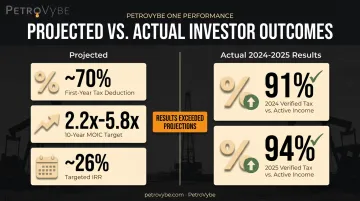
- Up to ~70% first-year tax deduction against active income
- A 10-year target MOIC of roughly 2.2x to 5.8x
- A targeted IRR of about 26%
Notably, PetroVybe's actual 2024 and 2025 partners reported verified tax deductions of 91% and 94% respectively against active income, backed by K-1 documentation, figures that exceed the standard forecast range.
Team Credibility and Third-Party Validation
PetroVybe's Chief Geophysicist brings a 48-year track record with a cited 75.2% well success rate, compared to an industry peer average below 40%. Independent third-party engineering has validated project reserves at roughly $48 million (PV-09), and the company underwent a clean 2025 audit across its ~400-well, 58,000-acre Lavaca County position.
A balanced caveat: this asset class requires accredited investor status, ties up capital for a multi-year hold with limited liquidity, and carries drilling and commodity-price risk. Evaluate it alongside a financial or tax advisor before committing capital.
How to Choose the Best Investment for Your Goals
Picking the right investment means matching the vehicle to your financial situation, timeline, and tax exposure rather than chasing a single "best" option.
Consider these four factors before committing capital:
- Match risk tolerance to time horizon: Money needed within five years belongs in conservative vehicles like savings, CDs, or bonds. Longer horizons can absorb stock or alternative-asset volatility.
- Factor in your tax situation: High W-2 earners or those with recent capital gains often benefit more from tax-advantaged accounts or deduction-generating alternatives, such as energy development partnerships, than from taxable brokerage growth alone.
- Diversify across asset classes and risk tiers: Don't concentrate in a single investment type, even one you feel confident about.
- Confirm liquidity needs first: CDs and private alternatives lock up capital for defined periods, so make sure you have accessible cash reserves before committing.
Conclusion
There's no universal "best" investment for 2026. The strongest portfolios blend several options from this list, matched to your goals, risk tolerance, and tax bracket.
If you're an accredited investor carrying a heavy tax burden from W-2 income or capital gains, natural gas development deserves a serious look. PetroVybe partners saw 91-94% tax deductions against active income in 2024, making it a powerful diversification and tax-efficiency tool. Connect with the PetroVybe team to discuss whether it fits your 2026 strategy.
Frequently Asked Questions
What is the best way to invest money?
The best approach depends on your risk tolerance, timeline, and goals. For most people, that means diversifying across savings, bonds, funds, and stocks rather than picking one option.
How much do I need to invest to make $1,000 a month?
It varies widely by asset type and current rates. At a 4% dividend yield, you'd need roughly $300,000 invested; at a 5% bond yield, closer to $240,000.
What's considered a "good" investment return?
Savings and CDs currently pay around 4-4.35% at leading online rates, while the S&P 500 has averaged roughly 10% annually over its long-run history. "Good" depends heavily on the asset class and time period.
How do I know which investment is best for me?
Start with your risk tolerance, time horizon, and liquidity needs. A financial professional can help translate those factors into a specific allocation.
What is the safest investment for beginners?
High-yield savings accounts and CDs are strong starting points since they're FDIC-insured and protect your principal, making them ideal for money you can't afford to lose.
Can accredited investors get tax benefits from alternative investments like oil and gas?
Yes. Direct natural gas development investments can generate substantial Intangible Drilling Cost (IDC) deductions against active income, including W-2 wages and capital gains, a benefit not typically available through stocks or bonds.