
Many high-net-worth individuals (HNWIs) struggle with a specific problem: their wealth has outgrown retail investment tools, but they don't have institutional-level access to private markets. Global HNWI wealth hit a record $98.3 trillion in 2025, with the global HNWI population reaching 25.3 million individuals — a pool of investors all facing the same complexity.
This guide breaks down the top investment options HNWIs are using in 2026, from private equity to tax-advantaged energy development, and how to decide which ones actually fit your portfolio.
Key Takeaways
- HNWIs are moving beyond 60/40 portfolios into private equity, real estate, hedge funds, and alternative energy
- Tax efficiency, from municipal bond exemptions to intangible drilling cost (IDC) deductions, drives allocation decisions
- Liquidity needs, accreditation status, and time horizon determine which vehicles fit your portfolio
- Natural gas development pairs passive income with inflation protection and outsized first-year tax deductions
Overview of the HNWI Investment Landscape
A high-net-worth individual generally holds $1 million or more in investable assets, excluding a primary residence, collectibles, or vehicles. Ultra-high-net-worth individuals (UHNWIs) clear the $30 million threshold. The U.S. added 736,000 new millionaires in 2025 alone — a 9.2% jump in the domestic HNWI population.
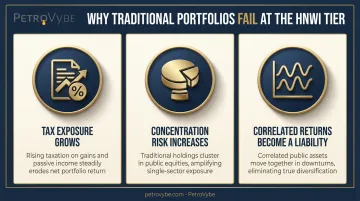
Standard stock/bond allocations start breaking down at this wealth tier for three reasons:
- Tax exposure grows disproportionately. A portfolio generating $200,000 in ordinary income gets taxed very differently than one structured around capital gains or deductions.
- Concentration risk increases. Wealth tied up in one business, stock position, or property type leaves little room for diversification.
- Correlated returns become a liability. When everything moves with the S&P 500, there's no ballast during a downturn.
Family offices reflect this shift directly. The average family office allocation to alternative assets hit 44% in 2024, up from 42% the year before. That allocation now sits at the top of the wealth pyramid, not on its fringes.
The following section breaks down six investment categories HNWIs use to solve these problems, along with what sets each one apart.
Top Investment Options for High-Net-Worth Individuals
Each option below is evaluated through the same lens: tax efficiency, return potential, liquidity/time horizon, and accreditation requirements. Not every vehicle fits every investor, but understanding the trade-offs makes portfolio construction far easier.
Private Equity and Venture Capital
Private equity and venture capital involve taking direct stakes in private companies or early-stage startups, rather than buying shares on a public exchange. For HNWIs, the appeal is straightforward: access to deal flow historically reserved for institutions, plus returns that don't move in lockstep with public markets.
Private capital partnerships typically run a 10-year life span, with capital deployed over the first three to five years. Early performance often dips, a pattern known as the J-curve, before management fees and write-downs give way to exit gains.
| Factor | Details |
|---|---|
| Typical Minimum Investment | Direct deals and fund-of-funds often start around $250,000+; co-investment structures can lower entry points for select LPs |
| Liquidity/Time Horizon | Multi-year lockups are standard, often the full 10-year fund life |
| Key Tax/Return Consideration | Gains are typically taxed as long-term capital gains; investors are compensated with an illiquidity premium, historically estimated near 3% over public markets |
Direct Real Estate Investment
Commercial, multifamily, and international real estate give HNWIs income generation and an inflation hedge that public REITs can't fully replicate. Direct ownership also brings control over asset management decisions, something you lose the moment you buy a REIT share.
Two tax mechanics make this asset class especially attractive:
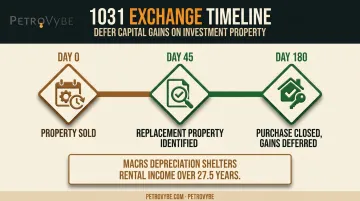
- Depreciation. Residential rental property depreciates over 27.5 years under MACRS, sheltering rental income from taxes.
- 1031 exchanges. Investors can defer capital gains by rolling proceeds into a replacement property, provided they identify it within 45 days and close within 180 days.
| Factor | Details |
|---|---|
| Typical Minimum Investment | Direct ownership requires full purchase capital; syndications often start at $50,000–$100,000 |
| Liquidity/Time Horizon | Illiquid; properties typically held 5-10 years before sale or exchange |
| Key Tax/Return Consideration | Depreciation shelters income; 1031 exchanges defer gains; rental income is taxed as ordinary income unless offset |
Hedge Funds and Alternative Strategies
Hedge funds pursue returns across market conditions using long-short, macro, and event-driven strategies. Because they're accessible primarily to accredited investors, they offer diversification beyond the standard equity/bond mix, albeit at a price.
Fee structures matter here. Most funds charge 1-2% in annual management fees plus a 15-20% performance fee on profits. Redemptions are often limited to a few windows per year, and lock-up periods of a year or more are common. Managers can also suspend redemptions entirely during market stress.
| Factor | Details |
|---|---|
| Typical Minimum Investment | Fund minimums vary widely; accredited investor status required (net worth over $1M excluding primary residence, or income over $200,000 individually) |
| Liquidity/Time Horizon | Lock-ups of one year or more; redemptions often limited to four windows annually |
| Key Tax/Return Consideration | Gains generally taxed as capital gains; management and performance fees can substantially reduce net returns |
Municipal Bonds and Tax-Exempt Investments
Municipal bonds generate interest income that's generally exempt from federal tax, and sometimes state tax too, depending on where you live and where the bond was issued. That exemption becomes more valuable as your tax bracket climbs.
For 2026, the top federal individual rate remains 37% for single filers earning above $640,600 (or married couples above $768,700). At that bracket, the tax-equivalent yield on a muni bond can meaningfully outperform a comparable taxable bond. Tax-equivalent yield is calculated by dividing the tax-exempt yield by one minus your marginal tax rate.
| Factor | Details |
|---|---|
| Typical Minimum Investment | Individual bonds often require $5,000+; bond funds offer lower entry points |
| Liquidity/Time Horizon | More liquid than most alternatives on this list, though secondary market pricing can vary |
| Key Tax/Return Consideration | Interest is federally tax-exempt (and often state-exempt); capital gains on sale remain taxable |
Alternative Energy Investments: Natural Gas and Oil Development
Direct participation in oil and natural gas development gives HNWIs something rare: tangible asset ownership, passive income, and a substantial first-year tax deduction, all in one vehicle. The mechanism is the intangible drilling cost (IDC) deduction: a provision letting investors deduct drilling-related expenses like wages and fuel as a current business expense rather than capitalizing them over time.
PetroVybe, a Texas-based natural gas development company, illustrates how this works in practice. Through its flagship PetroVybe ONE partnership, accredited investors take direct working-interest positions in South Texas and Gulf Coast Basin projects.
The flagship asset is a proven 58,000-acre basin in Lavaca County, backed by roughly 400 acquired wells and 57+ planned new wells. In 2024-2025, PetroVybe partners received a 91-94% first-year tax deduction against active income, with a 10-year target MOIC of ~2.2-5.8x and a targeted IRR of ~26%.
What sets IDC-based investing apart from most passive tax strategies is that the deduction can offset active income, including W-2 earnings and capital gains, not just passive income from other investments. That's a meaningful distinction for high-earning professionals or business owners with concentrated tax exposure.
There's also a demand-side tailwind. Natural gas is forecast to supply 39% of U.S. electricity generation in 2026, driven partly by surging electricity demand from data centers and AI infrastructure, a trend PetroVybe's leadership has been vocal about positioning around.
| Factor | Details |
|---|---|
| Typical Minimum Investment | Accredited investor status required; typical entry point is $100,000+ per unit |
| Liquidity/Time Horizon | Illiquid; hold period tied to well development and production life, often a minimum of 2-3 years before first distribution, with a 10-year target horizon |
| Key Tax/Return Consideration | IDC deductions typically cover 90%+ of invested capital in Year 1 for PetroVybe partners; target MOIC of 2.2-5.8x and ~26% IRR over 10 years |
How to Choose the Right Investment Option for Your Portfolio
The most common mistake HNWIs make is chasing headline returns without weighing liquidity needs or tax bracket impact. A 26% target IRR means nothing if you need that capital back in 18 months.
Before allocating capital to any of the options above, run through these factors:
- Confirm accreditation status. Most alternatives on this list (hedge funds, private equity, oil and gas partnerships) require accredited investor status under SEC rules.
- Match time horizon to the vehicle. A 10-year private equity fund or energy partnership isn't the place for money you'll need in three years.
- Check correlation to existing holdings. If your net worth is already concentrated in real estate or a single business, adding more of the same doesn't reduce risk.
- Vet the sponsor's track record. Look for third-party engineering reports, independent audits, and verified investor reviews — not just projected returns on a slide deck.

Once you've cleared those four checks, the next question is structure. Combining strategies tends to outperform relying on a single vehicle. A portfolio blending tax-exempt municipal income, private equity growth, and alternative energy's upfront deductions is more resilient than betting everything on one asset class.
Conclusion
No single investment option fits every high-net-worth portfolio. The right mix depends on your liquidity needs, tax bracket, risk tolerance, and legacy goals. That mix will look different for a 45-year-old executive than for a 65-year-old business owner planning an exit.
Before committing capital to any alternative investment, evaluate the sponsor's track record and transparency. Ask for engineering reports, audited financials, and verified investor reviews — not just projected numbers.
With that due-diligence framework in hand, accredited investors exploring tax-advantaged natural gas development can connect with PetroVybe to review current opportunities in South Texas and the Gulf Coast Basin.
Frequently Asked Questions
Where do high-net-worth individuals keep money above the $250,000 FDIC insurance limit?
Common strategies include:
- Spreading deposits across multiple FDIC-insured banks
- Using cash management/sweep accounts that automatically diversify across institutions
- Allocating excess cash into short-term Treasuries or money market funds
How much interest will $1,000,000 earn in a year?
It depends entirely on the vehicle. At a 4-5% high-yield savings or Treasury rate, $1 million could generate roughly $40,000-$50,000 annually, though rates and yields fluctuate with market conditions.
What is the 70/30 investment rule for high-net-worth individuals?
It's a simplified allocation concept — roughly 70% to growth-oriented assets and 30% to income or stability-focused holdings. It's a starting point for discussion, not a fixed formula every HNWI should follow.
What qualifies someone as a high-net-worth individual?
Generally, $1 million or more in investable assets, excluding your primary residence. Ultra-high-net-worth status starts at $30 million in investable assets.
What percentage of a portfolio should high-net-worth investors allocate to alternative investments?
There's no universal number, but many HNW portfolios and family offices allocate somewhere in the 20-40% range to alternatives, depending on risk tolerance, liquidity needs, and time horizon.
Are oil and gas investments a good tax-efficient option for accredited investors?
Direct working-interest oil and gas investments can offer some of the largest available deductions against active income through IDCs, with firms like PetroVybe reporting partner deductions as high as 91-94% in a single tax year. That said, they're illiquid and carry real production and commodity price risk.