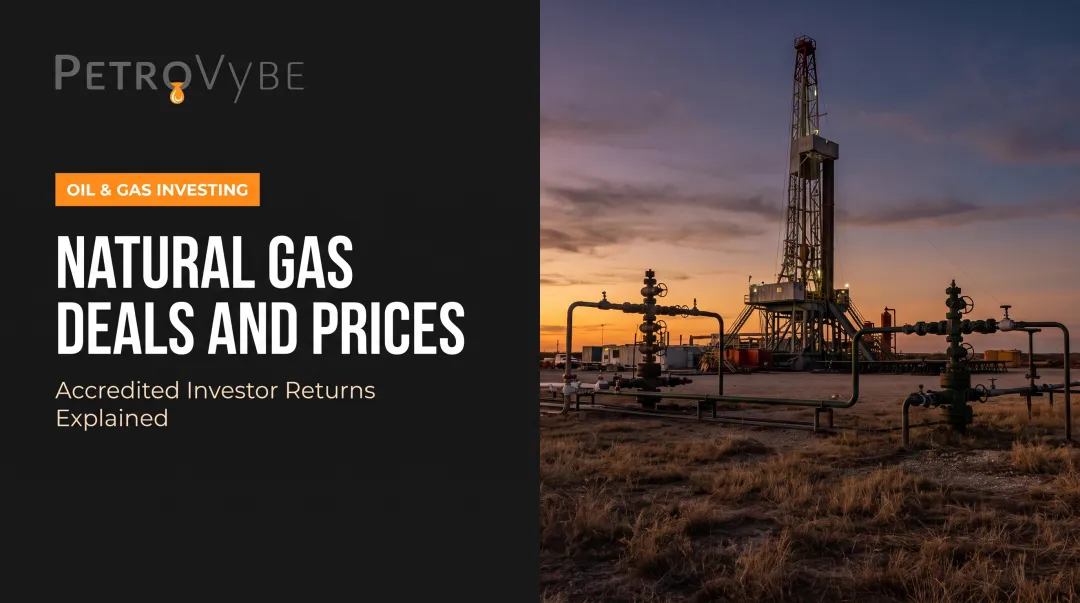

Understanding where this gas comes from, and where demand is headed, matters more than ever. Investors, businesses, and utilities are all watching the same trends: shale output, LNG exports, and a data center boom that's rewriting electricity demand forecasts.
TL;DR
- US natural gas production hit record highs in 2024, driven by the Permian, Haynesville, and Marcellus shale plays
- Natural gas has overtaken coal as the top fuel for US electricity generation
- AI data centers and LNG exports are now major demand drivers
- Texas, Pennsylvania, Louisiana, West Virginia, and New Mexico dominate domestic production
- Technology gains and rising power demand support continued production growth
Current State of US Natural Gas Production
US dry natural gas production averaged roughly 103 Bcf per day in 2024, an all-time high. The country has held the title of world's largest producer every year since 2009, according to the EIA.
Four shale basins do most of the heavy lifting:
- Permian Basin (West Texas/New Mexico): oil-driven, with massive associated-gas output
- Haynesville (Louisiana/East Texas): dry-gas play tied to Gulf Coast LNG demand
- Marcellus/Utica (Appalachia): the largest gas-producing formation in the country
- Eagle Ford (South Texas): mature, still-significant liquids-rich play
Together, Marcellus, Permian, and Haynesville supplied about 55% of US dry gas production in recent years. That concentration matters: when Haynesville drilling slowed from 57 rigs to 37 rigs between 2023 and 2024, it showed how quickly LNG-linked supply can shift.

Why Five States Matter So Much
Texas, Pennsylvania, Louisiana, West Virginia, and New Mexico produced roughly 70% of all US dry gas in 2023. Texas alone accounted for nearly 26% of the national total, driven largely by horizontal drilling and hydraulic fracturing that unlocked reserves vertical wells could not reach.
PetroVybe’s natural gas liquids projects sit in this same corridor—South Texas and the Gulf Coast Basin—where national output growth is concentrated.
Sources and Supply Chain: From Wellhead to Consumer
Natural gas moves through three distinct stages before it reaches a stove, a power plant, or a data center.
Upstream covers exploration and extraction: seismic surveys, drilling wells, and bringing the raw resource to the surface. This is the highest-risk stage of the business, and it's where companies like PetroVybe operate—developing multi-well assets rather than processing or transporting gas.
Midstream is next. Raw gas contains water, sulfur compounds, and natural gas liquids (NGLs) that must be stripped out before the gas meets pipeline quality standards.
Downstream handles distribution: pipelines, underground storage, and final delivery to residential, commercial, and industrial customers.
Why NGLs Are a Bigger Deal Than They Used To Be
Those same NGLs—ethane, propane, butane, and natural gasoline—are separated during midstream processing. Unlike dry gas, they often command premium pricing at lower production cost, which is why more developers target liquids-rich acreage instead of pure dry-gas plays. That economics is a big reason PetroVybe's Texas development focuses on oil and natural gas liquids (NGLs).
Key Demand Trends Reshaping the Market
Power Generation Overtaking Traditional Uses
Natural gas has become the dominant fuel for US electricity generation, supplying about 42% of the power mix in 2024, per EIA's Short-Term Energy Outlook. Coal, by contrast, keeps shrinking.
Since 2011, 103 of 121 repurposed coal plants have been converted or replaced with natural gas, adding nearly 30 gigawatts of gas-fired capacity in the process. The AEO 2026 outlook projects coal's generation share could fall to just 1% by 2050 in most scenarios.

The AI and Data Center Boom
This is the newest and most disruptive demand driver. Global data center electricity use is projected to more than double to roughly 945 TWh by 2030, according to the IEA's Energy and AI report. In the US, data centers could account for nearly half of all electricity demand growth through 2030.
Natural gas already supplies more than 40% of US data center electricity, the largest single source, ahead of renewables and nuclear.
As CEO Peter A. Snell puts it: "AI requires data centers, and data centers require one thing above all else: energy." PetroVybe's Texas development feeds directly into that expanding electricity market.
LNG Export Growth
Gulf Coast LNG terminals shipped 11.9 Bcf/d of exports in 2024, making the US the world's top LNG exporter. Europe took 53% of those volumes; Asia took 33%. And this is still early innings:
- US LNG capacity is set to grow from 15.4 Bcf/d to roughly 28.7 Bcf/d by 2029
- That's more than half of all expected global LNG capacity additions through the decade
- Recent long-term supply deals, including Japan's Jera agreeing to buy up to 5.5 million tonnes annually, show demand isn't slowing

Natural Gas as a Grid Stabilizer
Wind and solar are intermittent. Natural gas plants aren't. They can ramp up or down on demand, which is why utilities lean on gas to complement renewables rather than replace them outright.
The AEO 2026 outlook projects natural gas plus solar and wind combined will supply about 80% of US generation by 2050, up from roughly 60% today.
Regional Production and Price Variations
Gas prices and production levels vary widely by state. The gap is driven by a few structural factors:
- Proximity to producing basins
- Pipeline takeaway capacity
- Local demand from power, industry, and heating
States near major basins, such as Texas or the Appalachian Basin, face different pricing dynamics than net-importing states farther from the wellhead. Those importing regions often pay a basis premium when pipeline constraints or longer haul distances raise delivered cost.
Texas remains the top producing state and a hub for Gulf Coast development. That concentration shows up clearly in south-central Texas. Lavaca County, in the Gulf Coast Basin corridor, is one active example—PetroVybe holds roughly 58,000 acres there, pairing about 400 acquired legacy wells with 57+ planned new vertical wells.
What's Driving Long-Term Growth in US Natural Gas
Drilling efficiency keeps improving. Average Permian lateral lengths grew from under 4,000 feet in 2010 to over 10,000 feet by 2022, and horizontal wells now account for 92% of US natural gas production. Every foot of extra lateral length lowers the cost per unit of gas extracted.
Regulation remains a moving target. EPA's 2024 methane rule set new emissions standards for oil and gas operations, though Congress repealed the implementing fee structure in early 2025. Utilities are watching this closely, since compliance costs directly affect which fuel sources get built out.
The Investment Angle
Lower extraction costs and shifting compliance rules shape which projects get funded. For accredited investors, entry-level natural gas development—especially NGL-focused projects—offers:
- Exposure to an industry with tailwinds from AI-driven electricity demand
- IDC deductions that can offset up to 100% of invested capital against active income
- Long-term compounding potential through reinvested cash flow
PetroVybe partners saw this play out directly: 2024 partners received a 94% tax deduction against active income, and 2025 partners received 91%, combining IDC and depletion allowances.
The company's Lavaca County project also carries a third-party engineered reserves valuation of $48 million (PV-09), audited by Weaver in 2025.
Future Outlook for US Natural Gas
The EIA's projections show production climbing from about 103 Bcf/d in 2024 to over 115 Bcf/d by 2027, with LNG exports nearly doubling over the same window. Electrification and AI infrastructure buildout are the main forces behind that curve.
A few signals worth watching over the next 1-3 years:
- New LNG terminal approvals: FERC and DOE have continued authorizing projects like Port Arthur Phase II and Commonwealth LNG
- Methane rule revisions: EPA proposed further changes in late 2024 and again in 2026, keeping compliance costs in flux
- Basin consolidation: expect continued M&A activity as operators chase scale in the Permian and Haynesville
If current trends hold, natural gas will likely extend its lead over both coal and oil in the domestic energy mix. Data center power demand keeps climbing faster than the grid can otherwise supply it.
Frequently Asked Questions
How many years of natural gas are left in the United States?
US proved natural gas reserves stood at 583.9 Tcf at the end of 2024. At current production rates, that represents well over a decade of supply, and drilling advances keep extending recoverable estimates.
Does the United States have enough natural gas?
Yes. The US produces nearly all the natural gas it consumes domestically and remained a net exporter in 2024, with the world's largest LNG export volumes. Current reserves are sufficient for decades under existing technology.
What states produce the most natural gas?
Texas, Pennsylvania, Louisiana, West Virginia, and New Mexico are the top five producing states, together accounting for roughly 70% of total US dry gas production in 2023.
Why is natural gas replacing coal for electricity generation?
Natural gas burns cleaner, is cheaper for power generation in many regions, and offers flexible, on-demand power output that coal plants can't easily match. Over 100 coal plants have been converted or replaced with gas since 2011.
How is AI growth affecting natural gas demand?
Data centers need enormous, reliable baseload power, and natural gas already supplies more than 40% of US data center electricity. As AI infrastructure expands, this demand source is projected to keep growing through 2030 and beyond.
What is the difference between natural gas and natural gas liquids (NGLs)?
Dry natural gas is the processed, pipeline-ready fuel left after NGLs are removed. NGLs, like ethane, propane, and butane, are separated out during processing and typically command premium pricing due to cleaner-burning properties and higher-value end uses.