Many investors chase performance without asking: what will I actually keep after taxes? That gap between gross and net returns compounds over decades. This guide walks through account strategies, tax-loss harvesting, asset location, and lesser-known tools like oil and gas development deductions.
Key Takeaways
- Texas has no state income tax, but federal planning decides how much of that edge you keep
- Asset location can raise after-tax returns by up to 0.3% a year, per Vanguard research
- Holding past 12 months and harvesting losses can cut the rate you pay on gains
- Oil and gas deals can deduct against active W-2 income and capital gains for accredited investors
Why Austin Residents Have a Unique Tax Advantage
Texas has no state income tax, according to the Tax Foundation. That single fact separates Austin residents from peers in California or New York, who often lose 8-13% of income to state taxes on top of federal obligations.
But "no income tax" doesn't mean "no taxes." Texans still pay:
- Federal income tax — unavoidable regardless of state
- Sales and use tax — 6.25% state rate, with local add-ons pushing the combined ceiling to 8.25%, per the Texas Comptroller
- Property tax — an effective rate around 1.4% on owner-occupied homes, per the Tax Foundation
- Payroll (FICA) taxes and federal capital gains tax — same as any other state
Why This Matters More in Austin Specifically
Austin's tech sector employed nearly 196,000 workers in 2022, up almost 10% from the prior year, according to the Austin Chamber of Commerce. Wage growth in that sector has outpaced the broader tech industry. As a result, more Austin residents are hitting high federal brackets, managing RSU vesting events, and realizing capital gains from equity compensation.

Federal tax efficiency is what decides whether that edge sticks. You already have the Texas advantage. The question is whether poor account structure and timing decisions are giving it back.
Foundational Tax-Efficient Account Strategies
Before chasing exotic strategies, get the basics right. Account type and asset placement do most of the heavy lifting.
401(k)s and traditional IRAs let you deduct contributions now while investments grow tax-deferred.
2025 contribution limits (per the IRS):
- 401(k): $23,500 ($24,500 in 2026), plus a $7,500 catch-up if you are 50 or older
- IRA (combined): $7,000 ($8,000 if 50+)
Roth IRAs grow tax-free and come out tax-free in retirement. HSAs add a triple benefit: deductible contributions, tax-free growth, and tax-free withdrawals for qualified medical expenses. 2025 HSA limits are $4,300 (self-only) and $8,550 (family).
Asset Location: Where You Hold Matters as Much as What You Hold
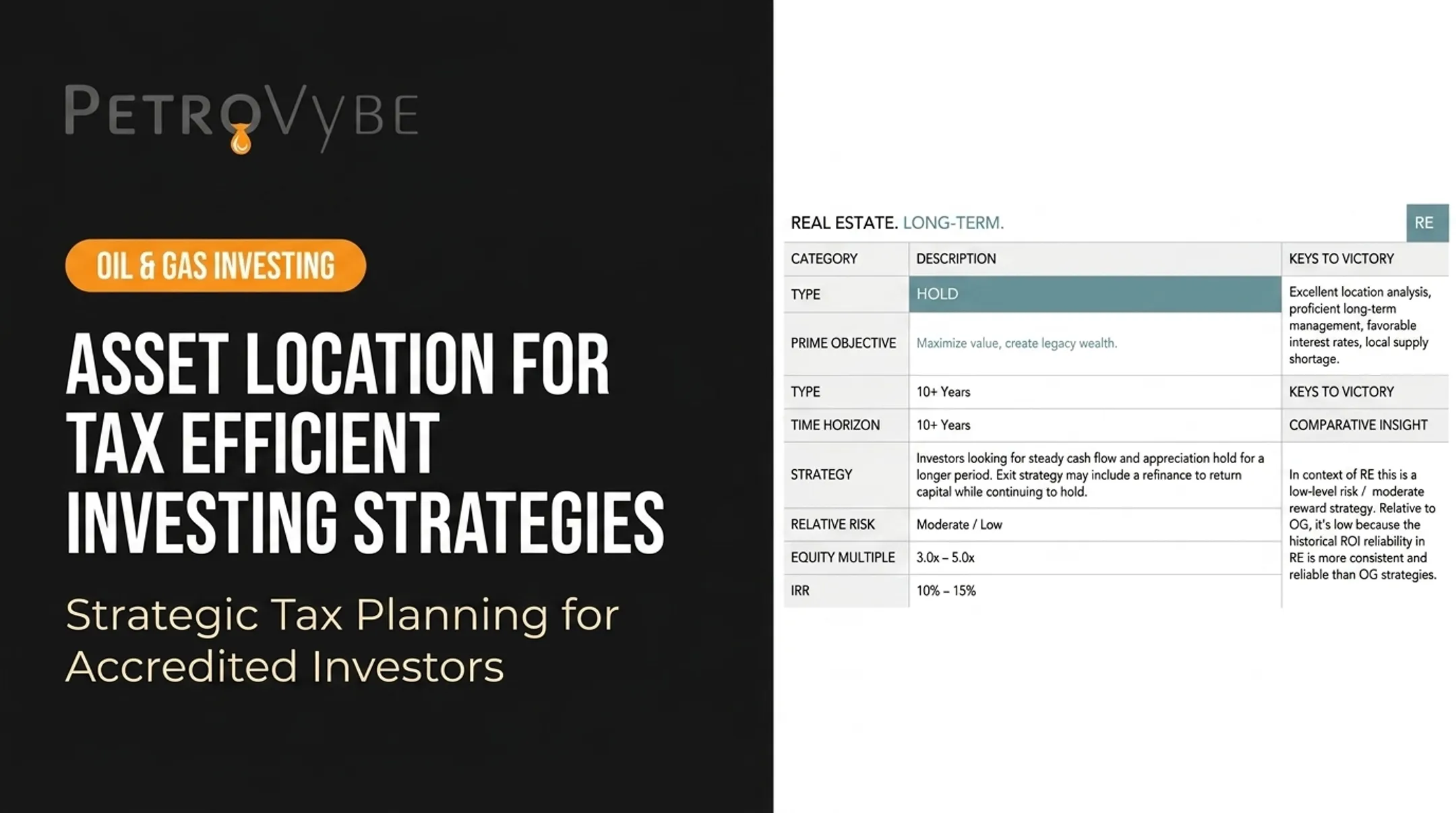
Placing the wrong assets in the wrong accounts erodes returns over time. General rule:
- Tax-advantaged accounts (401k, IRA): high-turnover funds, REITs, high-yield bonds
- Taxable brokerage accounts: index ETFs, municipal bonds, growth stocks held long-term
For high-bracket Austin earners, municipal bond interest is generally exempt from federal tax, per IRS Publication 550—useful even without a state tax deduction angle.

ETFs vs. Mutual Funds in Taxable Accounts
ETFs typically trigger fewer capital gains distributions because of their in-kind redemption structure. When shares trade, the fund usually is not forced to sell holdings and realize gains, unlike a mutual fund that may liquidate securities to meet redemptions.
In a taxable brokerage account, that difference compounds year over year.
Advanced Tax Optimization Moves for High-Income Earners
With core account and contribution choices set, these tactics can cut the tax bill further—especially for high earners in Austin’s upper brackets. Tax-loss harvesting. Sell losing positions to offset gains. Up to $3,000 of excess losses can offset ordinary income each year, with the rest carried forward indefinitely, per IRS Topic 409. Watch the wash-sale rule: buying a "substantially identical" security within 30 days before or after the sale disallows the loss. Custodians often call this the 61-day window (30 days before, the sale date, and 30 days after). Holding period matters. Gains on assets held over one year qualify for long-term rates: 0%, 15%, or 20%, depending on income. Short-term gains get taxed as ordinary income, which for high earners can mean 32–37%. Rate contrast at a glance:
- Short-term (≤1 year): Taxed as ordinary income — often 32–37% for high earners
- Long-term (>1 year): 0%, 15%, or 20% capital gains rates Quick example: A single Austin engineer selling $50,000 in gains after 11 months might pay a 32% ordinary rate, around $16,000. Wait one more month into long-term territory, and the same gain could be taxed at 15%, roughly $7,500. That's an $8,500 difference for waiting 30 days. Dividends aren't all equal. Qualified dividends get taxed at long-term capital gains rates; non-qualified (ordinary) dividends get taxed at your regular income rate, per IRS Topic 404. That is another reason asset location matters. Dividend-heavy holdings often fit better in tax-advantaged accounts than in a taxable brokerage. Withdrawal sequencing. In retirement, the order you tap taxable, tax-deferred, and Roth accounts can hold your bracket steady across decades instead of spiking it in one year. A common approach is to use taxable assets first (especially lots with losses or low gains), then tax-deferred accounts, and preserve Roth for later or high-bracket years—always modeled against your projected IRMAA and RMD timeline.

Alternative Investments: Oil & Gas Development for Outsized Tax Deductions
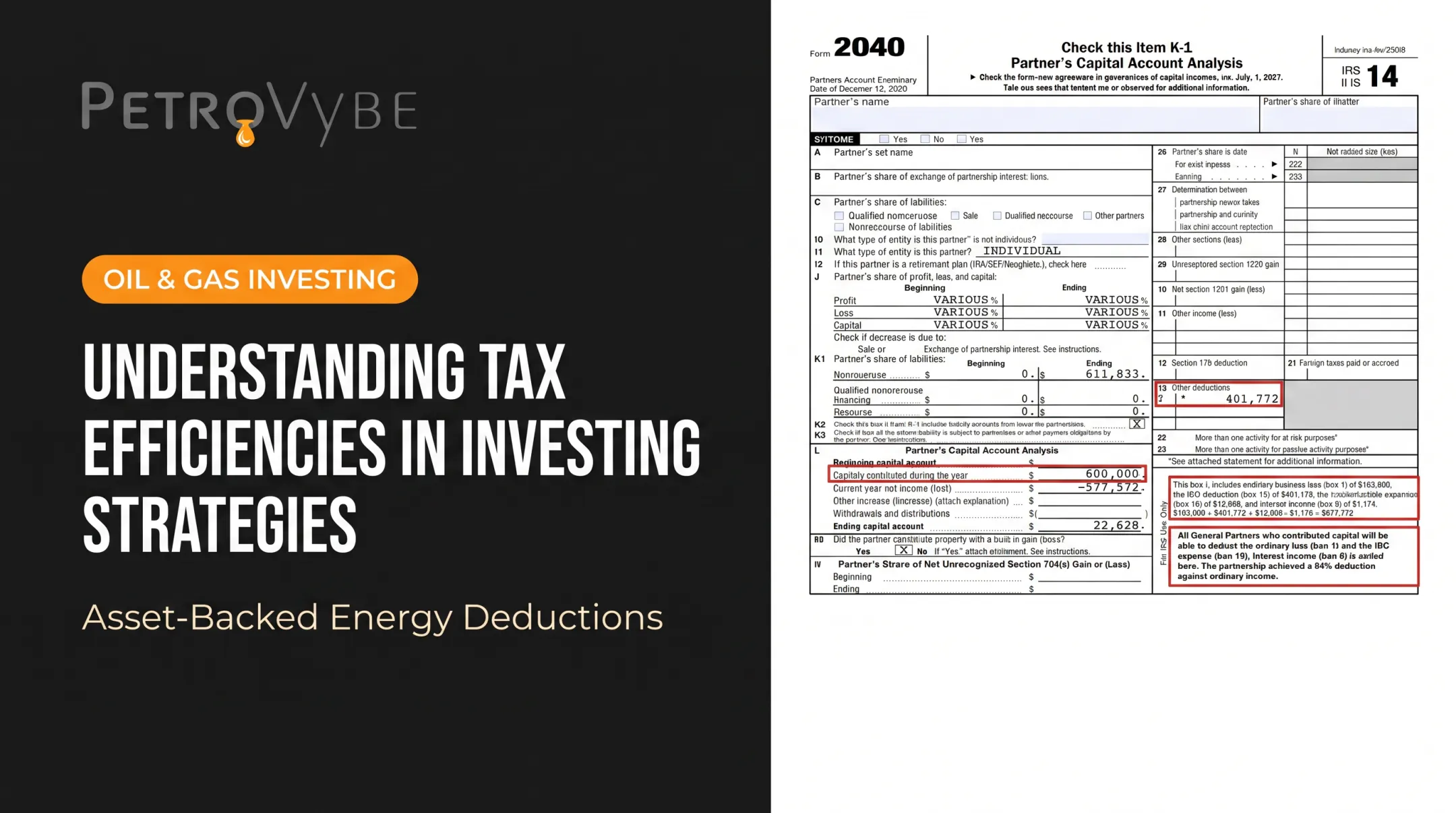
Stocks, bonds, and rental property cover most portfolios. But accredited investors with substantial W-2 income or capital gains often need a strategy that can offset active income—not just passive losses. Intangible Drilling Cost (IDC) deductions are the core tax mechanism. Unlike most passive investment losses limited by passive-activity rules, working interests in oil and gas wells get a specific carve-out. Per IRS Publication 925, a working interest held without limited liability isn't subject to the usual passive-loss restrictions. Those deductions can offset active income, including W-2 wages and capital gains. PetroVybe, a Texas-based natural gas development company, structures partnerships around this mechanism. 2024 and 2025 partners reported deductions of 94% and 91% against active income, respectively. The company targets roughly 70% in year one and up to 100% total. Those figures are driven largely by IDCs—typically 60-80% of invested capital in a new drilling project—plus depletion allowances. If you're evaluating an oil and gas development partnership, start with these filters:
- Accredited investor status required: net worth over $1M (excluding primary residence), or income over $200,000 individual / $300,000 joint for two consecutive years
- Minimums typically start around $100,000 in liquidity
- Diversification beyond stocks and bonds, with potential long-term passive income and asset growth
- PetroVybe's program: ~400 acquired wells, 57+ planned wells, 58,000 acres in Lavaca County, with third-party engineering validation A necessary caution: this isn't a fit for everyone. Oil and gas development carries drilling and commodity-price risk, long hold periods, and illiquidity. Review any offering’s private placement memorandum with a CPA or financial advisor first—high deduction percentages do not remove investment risk.

Common Mistakes Austin Investors Make
Texas has no state income tax, so federal tax drag matters more—not less. Even sophisticated investors still trip over avoidable errors:
- Chasing gross returns only. A fund that returns 10% pre-tax but distributes short-term gains annually may lag a "boring" 8% index fund after tax.
- Mismanaging asset location. Holding municipal bonds inside an IRA wastes their federal exemption; withdrawals are still taxed as ordinary income.
- Treating tax-loss harvesting as a December chore. Waiting until year-end ignores losses that showed up in March or July.
- Overlooking sector-specific deductions. Direct oil and gas participation can unlock intangible drilling cost (IDC) write-offs against W-2 income and capital gains.
Frequently Asked Questions
What are the best areas to invest in Austin, Texas?
It depends on your goals: local real estate, broad market portfolios, or tax-advantaged alternatives can all fit. Prioritize account type, asset location, and holding period so after-tax returns drive the decision, not just the asset class.
What tax do Texans not pay?
Texas has no state personal income tax, so residents avoid state-level taxation on wages, investment income, and capital gains. Federal income tax, sales tax, and property tax still apply.
How much can tax-loss harvesting actually save me?
You can offset up to $3,000 of ordinary income annually with excess capital losses, with any remainder carried forward to future years. Actual savings vary based on your portfolio's volatility and tax bracket.
Are alternative investments like oil and gas right for every investor?
No. They typically require accredited-investor status, $100,000+ in liquidity, and a higher risk tolerance. They suit investors who want tax efficiency and diversification beyond stocks, bonds, and real estate.
Should I use a financial advisor for tax-efficient investing or do it myself?
Coordinating account types, wash-sale rules, and withdrawal sequencing gets complex fast. Professional guidance is often worth the cost, especially for high earners with equity compensation or multiple income sources.
What's the difference between short-term and long-term capital gains tax rates?
Assets held over one year qualify for long-term rates of 0%, 15%, or 20%. Assets held one year or less are taxed at ordinary income rates, which can run as high as 37% for top earners.