
This article is general education, not investment, tax, or legal advice. Buying a "unit" (a condo or apartment) is one of the most accessible ways to break into real estate investing. Prices are lower than single-family homes, and rental demand in most U.S. metros keeps climbing.
But here's the catch: results vary wildly. Location, financing terms, HOA fees, and your long-term strategy all shape whether a unit becomes a reliable income stream or a slow-motion headache.
This guide walks through whether a unit fits your goals, what you need before buying, the exact steps to follow, and the mistakes that trip up first-time investors.
Key Takeaways
- Units cost less upfront than single-family homes but appreciate more slowly
- Location, HOA fees, financing terms, and tenant profile determine your real returns
- Skipping HOA financial due diligence is the most common, and costly, mistake
- Natural gas development programs can balance real estate risk and cut tax exposure
How to Invest in a Unit
Step 1: Confirm Eligibility, Goals, and Capital
Oil and gas partnership units are private placements. Start with fit, not a pitch deck.
- Accredited investor status. Under SEC rules, you generally need sufficient income or net worth to qualify. Non-accredited investors are out of scope for these offerings.
- Primary objective. Tax reduction against W-2 or capital-gains income, long-term passive distributions, portfolio diversification beyond stocks and real estate — or a blend.
- Deployable capital. Many direct working-interest or LP unit offerings set a floor around $100,000 per unit. Size the check so it does not strain liquidity you need elsewhere.
Write down your hold horizon and what “success” looks like in year 1 (deduction), years 2–5 (distributions), and years 5–10 (MOIC / exit). That checklist keeps later diligence honest.
Step 2: Vet the Sponsor, Assets, and Structure
You are buying a claim on wells, reserves, and operator execution — not a ticker symbol.
- Operator track record: prior development results, technical leadership, and how they report to partners
- Asset base: acreage position, producing wells vs. planned drills, basin focus (for example south-central Texas NGL-weighted gas)
- Third-party support: independent engineering (PV reserves), audits, and clear use of proceeds
- Economics: profit split, distribution timing, fee load, and 10-year return framework (IRR / MOIC ranges)
Compare at least two sponsors the same way you would compare two private real-estate GPs: alignment of incentives, transparency, and downside controls matter as much as upside slides.
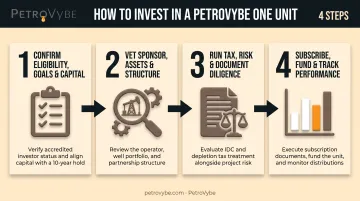
Step 3: Run Tax, Risk, and Document Diligence
This is where weak deals get filtered out.
- Model the tax angle with your CPA. Intangible drilling costs (IDC) and depletion can offset active income in ways passive real-estate losses often cannot — but only if the structure and your facts support it.
- Read the PPM, subscription docs, and risk factors. Note hold period, transfer limits, capital call language, and what happens if wells underperform.
- Stress commodity and ops risk. Price decks, decline curves, workover assumptions, and operator contingency plans should be explicit — not implied. This treatment requires the investor to elect general partner status in the Subscription Agreement and may be limited in a given year by the excess business loss limitation under IRC §461(l).
Forecasts are not guarantees. Treat projected cash-on-cash, peak quarterly distributions, and multi-year ROI as scenarios to pressure-test, not promises to underwrite at face value.
Step 4: Subscribe, Fund, and Track Performance
Once diligence clears, the process is administrative — then ongoing.
- Complete accreditation verification and subscription paperwork with the sponsor
- Wire funds per instructions and retain K-1 / tax packages for your advisor
- Track quarterly or quarterly distributions, production updates, and reserve revisions against your original goals
Revisit the position on a set cadence (for example annually). If tax benefits, cash yield, or asset growth diverge from the plan you wrote in Step 1, decide deliberately whether to hold through the full development cycle or pursue any liquidity path the partnership allows.
PetroVybe’s partnership units follow this same arc: accredited minimums, Texas upstream NGL-focused development, upfront tax-advantaged structure, and a multi-year production and distribution window rather than a short flip.
When Should You Invest in a Unit?
Units aren't automatically the right move. The decision comes down to tax profile, liquidity, and time horizon.
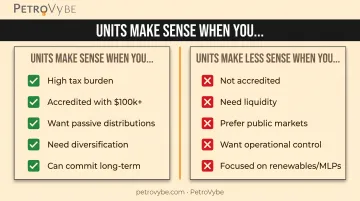
Oil and gas partnership units make sense when you:
- Carry a high tax burden on W2 income or capital gains and want IDC and depletion deductions against active income
- Are an accredited investor with $100,000+ in deployable capital
- Want passive quarterly distributions without operating wells yourself
- Need diversification beyond stocks, bonds, and real estate
- Can commit to a multi-year hold (typically around 10 years) aimed at compounding production value. This treatment requires the investor to elect general partner status in the Subscription Agreement and may be limited in a given year by the excess business loss limitation under IRC §461(l).
Units make less sense when you:
- Are not an accredited investor or cannot meet the minimum commitment
- Need short-term liquidity or may need to exit before the hold period ends
- Prefer publicly traded securities you can sell any day
- Want hands-on control over operations, drilling decisions, or day-to-day asset management
- Are focused on renewable energy, MLPs, or commodity trading rather than direct upstream development
If your priority is liquid public markets or active deal control, partnership units are a poor fit. If you want tax-advantaged exposure to producing natural gas assets and can stay invested for the full cycle, a unit is built for that profile.
What You Need Before Investing in a Unit
Preparation shapes outcomes more than almost any other variable. Here's what actually moves the needle before you subscribe to an oil and gas partnership unit.
Investor and Capital Readiness
- Accredited investor status: SEC rules require meeting income or net-worth tests before you can participate
- Minimum capital: Direct partnership units often start at $100,000 per unit—confirm you can deploy that without straining liquidity
- Tax posture: High W-2 or capital-gains liability is where IDC and depletion deductions create the most value
- Hold-period fit: Plan for a multi-year production window, not a short flip. This treatment requires the investor to elect general partner status in the Subscription Agreement and may be limited in a given year by the excess business loss limitation under IRC §461(l).
Project and Operator Diligence
- Review the private placement memorandum, subscription agreement, and risk factors end to end
- Confirm third-party engineered reserves, independent audits, and clear title on leases and wells
- Assess operator track record: drilling results, LOE control, and how distributions have been reported to partners
- Align with a CPA or tax counsel on how intangible drilling costs and depletion apply to your return
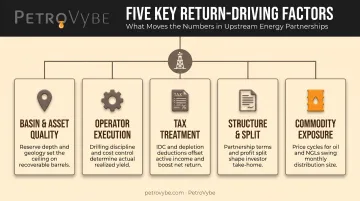
Key Parameters Affecting Returns
| Factor | Why It Matters |
|---|---|
| Basin and asset quality | Proven acreage, well inventory, and NGL mix drive production durability |
| Operator execution | Workovers, new drills, and cost control determine whether forecasts hold |
| Tax treatment | Upfront IDC deductions can offset active income and change year-one net cost |
| Structure and split | Hold period, profit split, and distribution timing shape cash-on-cash and MOIC |
| Commodity exposure | Gas and NGL pricing, plus offtake access, influence quarterly cash flow This treatment requires the investor to elect general partner status in the Subscription Agreement and may be limited in a given year by the excess business loss limitation under IRC §461(l). |
Common Mistakes When Investing in a Unit
Partnership units are not stocks, rentals, or a quick flip. Most costly errors come from treating them like something they are not—or skipping diligence that only shows up after capital is committed.
Common mistakes include:
- Skipping operator and management track record (prior exits, production history, and how results were verified)
- Misreading tax treatment—assuming IDC and depletion work like a generic “write-off” without confirming active-income eligibility and your own tax situation
- Accepting return forecasts without third-party engineered reserves, independent audits, or clear assumptions
- Ignoring hold period and liquidity—units are typically long-duration and not freely tradable
- Overlooking project structure: profit split, distribution timing, well inventory, and what happens if production lags
- Confusing accreditation and minimums after you are already deep in the process
Each of these is preventable with document-level review before you sign. None of them are rare in private energy deals.
Alternatives to Investing in a Unit
Real estate units aren't the only path to passive income and portfolio diversification.
Single-Family Rental Homes
Better suited for investors prioritizing long-term capital appreciation through land value. The trade-off: higher entry cost and typically lower rental yield than a comparable unit.
REITs and Real Estate Funds
Ideal for investors who want real estate exposure without tenant screening, maintenance calls, or HOA board meetings. FINRA describes REITs as a way to access real estate exposure without directly owning property. You give up direct control, but you gain liquidity and hands-off simplicity.
Natural Gas and Energy Development Units
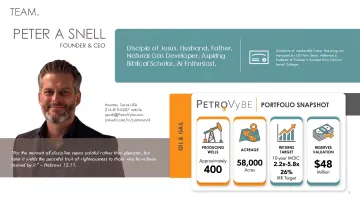
For accredited investors, direct participation units in natural gas development projects offer a different kind of diversification entirely: one built around tax efficiency rather than rental income. Companies like PetroVybe structure these as limited partnership units in upstream natural gas projects, not property. PetroVybe partners received tax deductions of 94% against active income in 2025, driven by Intangible Drilling Cost (IDC) and depletion allowances. Prior result; not a promise of any future deduction. Unlike real estate depreciation, IDC deductions can offset active income, including W-2 wages and capital gains, not just passive rental income. Snapshot of the current portfolio:
- Roughly 400 producing wells across 58,000 acres in Lavaca County, Texas
- Targeted 10-year MOIC of 2.2x–5.8x and a 26% IRR
- Backed by a $48 million third-party engineered reserves valuation
- Thesis tied to rising electricity demand from AI and data centers The trade-off: accredited investor status is required, and returns carry commodity market risk unlike the steadier mechanics of collecting rent. This treatment requires the investor to elect general partner status in the Subscription Agreement and may be limited in a given year by the excess business loss limitation under IRC §461(l).
Conclusion
A unit works best when your strategy, location, and financing line up with realistic cash flow numbers — not the pitch on the listing page. Most losses trace back to skipped due diligence or underestimated ongoing costs, not bad luck.
Before you commit, lock in three checks:
- Model cash flow with conservative rents, vacancy, and reserves — not the listing pro forma
- Verify title, HOA rules, insurance, and exit liquidity before you wire funds
- Stress-test total cost of ownership, including taxes, maintenance, and special assessments
Pairing real estate units with other assets — a REIT for liquidity, or a natural gas development partnership for tax efficiency — builds a portfolio less tied to any single market. For accredited investors who want that energy sleeve with upfront IDC deductions and long-term production income, PetroVybe offers direct partnership units in U.S. natural gas development. Run the numbers first; only then decide which unit structure fits your goals.
Frequently Asked Questions
How much do I need to invest in units to make $3,000 a month?
This depends entirely on your gross rental yield and financing costs. It generally requires multiple units or a substantial down payment on a single high-performing property. Run personalized cash flow projections before setting a target.
Is investing in units a good investment?
Units can deliver solid cash flow and lower entry costs, but they typically appreciate more slowly than single-family homes. It depends on whether your priority is income or long-term equity growth.
What is the 2% rule for properties?
The rule of thumb suggests monthly rent should equal roughly 1-2% of the purchase price to signal strong cash flow potential. It's a quick screening tool, not a guarantee. Always run full numbers.
What credit score is needed to finance a condo or unit?
Fannie Mae's manual underwriting baseline is 620 for fixed-rate loans and 640 for ARMs, though automated underwriting has no fixed minimum. Higher scores typically unlock better interest rates.
Are HOA fees tax deductible on an investment unit?
Yes. HOA fees on a rental unit are generally deductible as an ordinary business expense, unlike on a primary residence. Special assessments for improvements work differently and may need to be depreciated instead.
Can non-real estate investments offer similar tax benefits to owning a rental unit?
Yes. Oil and gas development programs, such as PetroVybe's, can offer significant upfront deductions against active income through IDC and depletion allowances, a different mechanism than standard real estate depreciation. This treatment requires the investor to elect general partner status in the Subscription Agreement and may be limited in a given year by the excess business loss limitation under IRC §461(l).
Informational requests only. PetroVybe projects are offered solely to verified accredited investors. Submitting this form does not create an investment or advisory relationship.