
Introduction
Imagine money landing in your account while you're asleep, on vacation, or simply living your life. That's the promise of passive income, and heading into 2026, more people are chasing it than ever.
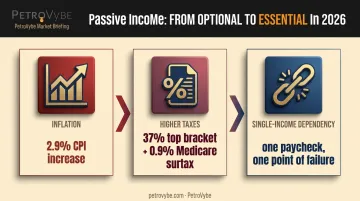
Paychecks aren't stretching the way they used to. Consumer prices climbed 2.9% year-over-year as of December 2024, according to the Bureau of Labor Statistics.
High-income W2 earners also face a top marginal tax rate of 37% plus an additional 0.9% Medicare surtax, making a single paycheck feel riskier by the year.
This article breaks down what passive income means under IRS rules and outlines the four main categories you can choose from, including a lesser-known alternative asset class many investors overlook. You'll also learn how to match the right stream to your goals, capital, and tax situation.
Key Takeaways
- Passive income requires upfront capital, time, or skill, then effort drops sharply
- Four categories exist: investing, real estate, digital business, and alternative assets like energy royalties
- Your ideal stream depends on capital, risk tolerance, tax bracket, and time
- Diversifying across categories smooths cash flow and lowers overall risk
What Is Passive Income and Why It Matters for Cash Flow in 2026
What Is Passive Income?
The IRS draws a clear line between active and passive income. Publication 925 defines passive activities as trades or businesses where you don't materially participate, plus nearly all rental activity regardless of participation level. Wages, freelance income, and business profits you actively manage all count as active income instead.
True passive income isn't free money. It requires one of three inputs upfront:
- Capital - buying dividend stocks or a rental property
- Time - building a course, blog, or content library
- Specialized skill - developing intellectual property or a product
What makes it "passive" is what happens after setup: minimal day-to-day involvement while income keeps flowing. One notable exception matters here: a working interest in an oil or gas well held without limited liability isn't classified as passive under IRS rules, even without material participation. This detail becomes relevant for tax planning later in this article.
Why Passive Income Matters More in 2026
Three forces are pushing passive income from a nice-to-have into a necessity.
Inflation keeps chipping away at take-home pay. The Consumer Price Index rose 2.9% from December 2023 to December 2024. When raises don't outpace that number, real purchasing power shrinks year after year.
High earners face a steepening tax curve. The top federal bracket sits at 37% for taxable income above $626,351 (single filers) or $751,601 (married filing jointly) in 2025, with an additional 0.9% Medicare tax above $200,000 in wages. Passive income streams with favorable tax treatment, such as IDC deductions or long-term capital gains, become far more valuable at this income level.
Single-income dependency creates fragility. Without a second stream, a layoff or market downturn hits your entire financial picture at once. You also miss out on compounding: cash sitting idle isn't working nearly as hard as capital deployed into dividend stocks, rental units, or a development project.
Types of Passive Income
Passive income isn't one-size-fits-all. Each category demands a different mix of capital, risk tolerance, and upfront effort before the checks start arriving on their own.
| Category | Typical Capital Needed | Liquidity | Hands-On Effort |
|---|---|---|---|
| Investment-based | Low to moderate | High | Minimal |
| Real estate | Moderate to high | Low to moderate | Moderate |
| Digital/business | Low | Varies | High upfront |
| Alternative/energy | $100,000+ (accredited) | Low | Minimal after setup |
Investment-Based Passive Income
Dividend stocks, index funds, bonds, and interest-bearing accounts generate recurring payouts without you lifting a finger after the initial purchase. The S&P 500 delivered a 25.02% total return in 2024, while the Morningstar US Core Bond Index gained a more modest 1.36% over the same period.
This category relies entirely on liquid financial markets rather than physical assets or products you build yourself.
Best for: Investors with capital who want low-maintenance, highly liquid income.
Strengths:
- High liquidity - sell shares or withdraw funds within days
- Minimal ongoing effort once positions are set
- Easy to automate through dividend reinvestment
Limitations:
- Savings accounts and CDs often trail inflation
- Market volatility can swing portfolio value significantly
- Dividends and capital gains are taxable in the year received
Real Estate Passive Income
Rental properties, REITs, and crowdfunded real estate deals turn a physical property, or a share of one, into monthly income. ATTOM's 2025 analysis projected a 7.45% average gross rental yield across 361 counties for three-bedroom rentals, measured before vacancy and operating costs. The national rental vacancy rate sat at 6.9% in Q4 2024.
This path ties your income to a tangible, appreciating asset rather than paper investments.
Best for: Investors with larger capital willing to manage, or outsource, a property.
Strengths:
- Consistent monthly rent checks
- Rising rents act as a built-in inflation hedge
- Equity growth as the property appreciates
Limitations:
- High upfront costs for down payment and reserves
- Ongoing maintenance and tenant turnover risk
- Gross yield doesn't reflect true net cash flow after expenses
Digital and Business-Based Passive Income
Online courses, e-books, apps, affiliate marketing, print-on-demand stores, and monetized content trade capital for creativity and time. US affiliate marketing spend hit $13.62 billion in 2024, up nearly 50% from 2021, while creator-economy ad spend was projected at $37 billion for 2025.
This path is built from skills or content rather than large sums of money, scaling at almost no marginal cost once created.
Best for: People with expertise or free time but limited investment capital.
Strengths:
- Low startup cost, sometimes under $100
- Full creative control over the product
- Potential for exponential scaling once an audience grows
Limitations:
- Labor-intensive to launch and slow to gain traction
- Income is inconsistent in the early months or years
- Requires real marketing and SEO skill to stand out
Alternative Asset and Energy-Backed Passive Income
A lesser-known category is gaining traction among high-income earners: private royalty and development programs in natural gas and oil production. Instead of stocks, bonds, or property, this income comes from real commodity production tied to demand like the electricity needed to run AI data centers.
The IEA projects natural-gas-fired generation will expand by 175 TWh in the US alone to meet that load, linking this asset class to physical growth rather than market sentiment.
Best for: Accredited investors, high W-2 earners with heavy tax burdens, and anyone with $100,000+ in liquidity seeking diversification beyond stocks, bonds, and real estate.
Strengths:
- IDC elections let operators expense 60-80% of invested capital in the year incurred, unlike most real estate deductions
- Deductions offset active income, including W-2 wages and capital gains, not just passive income
- PetroVybe partners received a 94% deduction in 2024 and 91% in 2025, with distributions projected above $10,000/month
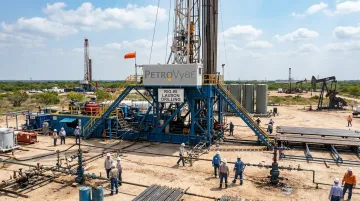
- Backed by ~400 producing wells and 57+ planned wells across a 58,000-acre Texas basin, with $48M in verified reserves supporting 2.2x-5.8x MOIC and ~26% IRR targets
Limitations:
- Typically restricted to accredited investors under SEC Regulation D
- Less liquid than public stocks; capital is often locked up for years
- Requires careful vetting of the operator's engineering and production track record
How to Choose the Right Passive Income Stream for You
The "right" passive income stream has nothing to do with what's trending on social media. It depends on your personal goals, available capital, and how much complexity you're willing to manage.
Factors to Consider
Before committing capital or time, run through these questions:
- Purpose: Are you supplementing income, or aiming to eventually replace a salary?
- Capital and risk tolerance: How much can you invest, and how much illiquidity can you handle?
- Time commitment: Most "passive" streams require real upfront work before they become hands-off.
- Tax situation: High W2 earners or those with large capital gains bills often benefit most from tax-advantaged structures like IDC (Intangible Drilling Cost) deductions.
- Skill or expertise: Do you already have it, or will you need to build it first?
- Liquidity needs: Can you access this money quickly in an emergency, or is it locked up for years?
Common Mistakes to Avoid
Even experienced investors trip up on the same issues:
- Chasing the highest advertised return without understanding the underlying risk or illiquidity
- Ignoring how a stream is taxed until after the money is already committed
- Underestimating setup work; almost nothing labeled "passive" is effortless from day one
- Concentrating all capital into a single stream instead of spreading it across categories
Diversification doesn't guarantee profit or eliminate risk, but spreading capital across investment, real estate, digital, and alternative assets smooths out the bumps any single category will hit.
Conclusion
Heading into 2026, passive income functions as a hedge against inflation, tax exposure, and the fragility of relying on one paycheck. Whether that's dividend stocks, a rental property, a digital product, or a stake in a natural gas development project like PetroVybe's, each category rewards a different type of investor.
The categories differ sharply: liquidity versus lock-up, market risk versus commodity demand, minimal capital versus $100,000 minimums, and tax treatment ranging from ordinary capital gains to deductions against active W-2 income. Start with one stream that matches your capital, timeline, and risk tolerance. Even a small first step, taken with a clear understanding of the tradeoffs, sets up a stronger financial position for the years ahead.
Frequently Asked Questions
What is the most profitable passive income?
Profitability depends heavily on capital invested and risk tolerance. Historically, real estate, dividend investing, and certain alternative asset programs like energy royalties have delivered some of the strongest long-term returns for investors who qualify.
What's the easiest passive income idea to start with little or no money?
Content creation, affiliate marketing, and selling digital templates require time and skill rather than large capital. They're accessible starting points, though income typically builds slowly in the first year or two.
Is passive income taxed differently than regular income?
Yes, tax treatment varies by type: capital gains, rental income, and royalties each follow different rules. Consult a tax professional before committing capital to understand your specific liability.
How much money do I need to start earning passive income?
It ranges widely, from under $100 for a Treasury bill or savings account to $100,000 or more for real estate or accredited alternative investments like private energy development programs.
Can passive income really replace a full-time job?
It's possible, but it typically takes years of reinvestment and diversification across multiple streams to reach that scale. Most people start by supplementing income rather than replacing it outright.
What's a good passive income option for high-income earners with a large tax bill?
Tax-advantaged alternative assets, including private natural gas development programs like PetroVybe, offer upfront IDC deductions against active income alongside long-term monthly cash flow potential. Accredited investors can schedule a discovery call to review specific projections.