Introduction
You open the Stash app to check your investments, and there it is: a "Portfolio Cash" balance sitting next to your stocks and ETFs. It's your money. It's just not invested. And you're left wondering if it's doing anything for you at all.
This happens more than most investors realize. Deposits, dividends, and round-ups pile up as cash before they ever touch a security. This guide breaks down what portfolio cash actually is, how it moves through your Stash account, and whether letting it sit idle is costing you money without you noticing.
We'll also cover a question that comes up once your balance grows: at what point does a small-balance investing app stop being enough, and what higher-yield, tax-advantaged options exist beyond it?
Key Takeaways
- Portfolio cash is uninvested money in your Stash account awaiting allocation to stocks or ETFs
- Cash offers safety and liquidity but has historically trailed inflation
- Withdrawing portfolio cash involves a short in-app request followed by a multi-day ACH transfer
- Whether Stash's Smart Portfolio is "worth it" depends heavily on your balance size and fee structure
- Investors with larger capital or high tax burdens often turn to alternative asset classes for growth and tax efficiency
What Is Portfolio Cash?
Portfolio cash is the uninvested money sitting inside a brokerage or investing account: money that hasn't yet been put to work in a security. It's a holding zone within your existing portfolio, not a separate account.
Morningstar's framework treats "cash" as a broad category, not just physical currency. It includes checking and savings balances, money market funds, and Treasury bills. According to Morningstar's analysis of the asset class, cash historically trails inflation over most trailing periods, a detail that matters more than most investors assume.
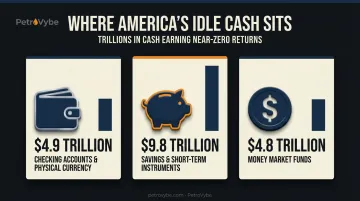
The scale of idle cash across the US is substantial, with households currently holding:
- Roughly $4.9 trillion in checking accounts and physical currency
- Approximately $9.8 trillion in savings and short-term instruments
- Close to $4.8 trillion in money market funds
Portfolio cash typically comes from a handful of sources:
- New deposits waiting to be invested
- Dividend payouts before reinvestment
- Proceeds from recently sold assets
- Round-up features common to micro-investing apps like Stash
What Does Portfolio Cash Mean in Stash Specifically?
In Stash, Personal Portfolio Cash represents money you've deposited or generated (through round-ups, referral bonuses, or dividends) that hasn't yet been swept into an investment, essentially a waiting area rather than a permanent parking spot.
This cash typically sits within Apex's FDIC-insured sweep program, where dormant balances get distributed among participating banks. It doesn't automatically chase the best rate available in the broader market.
Why Do Brokerages and Apps Hold Uninvested Cash?
A few operational reasons explain why your money doesn't instantly become stock:
- Settlement periods: most securities transactions settle one business day after the trade (T+1), so proceeds aren't immediately available
- Minimum thresholds: Stash requires at least $5 to open a Smart Portfolio, so small amounts may sit until they clear that bar
- Safety buffers: apps hold cash to process withdrawals and rebalancing without disrupting your existing holdings
How Portfolio Cash Works: Deposits, Interest, and Withdrawals
Cash enters your Stash-style account through several channels: manual deposits, auto-invest contributions pending allocation, dividends waiting for reinvestment, and round-ups slowly accumulating from everyday purchases. None of it becomes an investment instantly.
Does it earn interest? Sometimes, but not much. Stash's disclosures indicate client cash can receive up to 0.10% through its bank sweep program — a modest figure compared to what money market funds have historically offered. Rates on sweep accounts can also change without much notice, so the number on your statement today may not match next quarter's.
How to Withdraw Portfolio Cash from Stash
Pulling your cash out follows a simple in-app path:
- Navigate to your account or banking section
- Select Withdraw
- Choose your linked bank account as the destination
- Confirm the amount and submit
According to Stash's own FAQ on Personal Portfolio transfers, external bank transfers generally take 2–3 business days. If you're withdrawing from a Smart Portfolio, add up to one business day for the sale to settle, plus the standard delivery window after that.
A few restrictions worth knowing:
- Cash tied to a recently sold investment may need to clear settlement first
- Recent deposits can face a temporary holding period before they're available to withdraw
- Rejected withdrawals get held for five business days before you can retry
Does Letting Cash Sit Idle Cost You Money?
Yes, in most cases, since idle cash carries a real opportunity cost. Cash earning close to nothing while prices rise means your purchasing power steadily erodes. Morningstar's trailing 20-year comparison places cash at the lowest risk among major asset classes, but also near the bottom for return.
That's the tradeoff. Cash protects your principal today while doing little to grow it over time.
Pros, Cons, and Ideal Cash Allocation in a Portfolio
Cash isn't useless — it just has a narrow job description.
Advantages of holding cash:
- Protects principal with no market volatility
- FDIC insurance covers deposits up to $250,000 per depositor, per bank, per ownership category
- Provides liquidity for emergencies or short-term needs without selling investments
Disadvantages of holding cash:
- No capital appreciation potential
- Historically weak long-term returns compared to stocks and bonds
- Loses real value during periods of high inflation
Cash does have its moment, though. Rising rate environments are where it performs best relative to other assets. As of mid-2026, short-term Treasury bill rates were sitting between roughly 3.70% and 3.99% across 4-week, 13-week, and 26-week maturities, a far better yield environment than a decade prior.
How much cash should you actually hold? It depends on your stage:
- Long-term investors with an emergency fund already in place need very little sitting idle
- Investors within five to ten years of retirement often build a larger cash cushion to reduce sequence-of-returns risk
- Retirees are often advised to hold one to two years of living expenses in cash
A quick comparison of common cash vehicles:
| Vehicle | Liquidity | FDIC Insured | Best For |
|---|---|---|---|
| Savings account | High | Yes | Emergency fund |
| Money market deposit account | High | Yes | Short-term flexibility |
| CD | Fixed term | Yes | Locking in a known rate |
| Money market fund | High | No | Slightly higher yield, quick access |
| Treasury bill | Moderate | N/A (backed by US Treasury) | Rising-rate environments |
Is Stash's Smart Portfolio Worth It? Can You Actually Make Money?
Smart Portfolio works like a simplified robo-advisor. Based on your risk tolerance and goals, Stash builds a diversified allocation across ETFs covering US equities, foreign stocks, and bonds, then monitors and rebalances it automatically. It's built for beginners who want a hands-off, small-contribution approach to investing.
Fees matter more than people expect. Stash's current plan runs $12 monthly ($108 annually), plus a 0.25% AUM fee on managed accounts above certain thresholds. On a small balance, a flat monthly fee eats a much bigger percentage of your money than it would on a larger one. Stash itself acknowledges this tradeoff in its own disclosures.
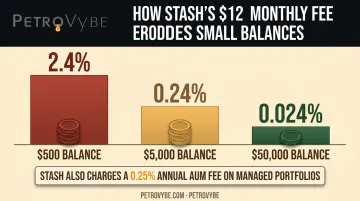
Idle portfolio cash compounds the problem. If a chunk of your balance sits uninvested earning close to nothing, your effective returns take a second hit beyond the subscription fee alone.
Can you actually make money on Stash? Yes — but only through the same mechanism that drives any investing platform: market performance plus consistent contributions over time. There's no shortcut. Gains require:
- Regular deposits, not one-time contributions
- Time in the market, not attempts to time it
- Patience through normal market volatility
Here's the natural ceiling: apps built for accessibility and small balances aren't designed to deliver the tax efficiency or passive income scale that higher-net-worth or accredited investors eventually need. This is simply the boundary of any low-fee platform built for beginners.
Accredited investors chasing that kind of scale typically look toward direct investment vehicles, such as oil and gas development partnerships like PetroVybe, built specifically for tax-advantaged passive income.
Beyond Idle Cash: Smarter Alternatives for Growing Your Wealth
Idle portfolio cash isn't the only thing losing ground to inflation. Standard stock and ETF portfolios can leave high-income earners exposed too, especially once capital gains taxes take a bite out of returns. For investors with meaningful income and a real tax bill, cash and conventional portfolios both fall short on efficiency.
This is where accredited investors increasingly diversify into asset classes outside the usual stock-bond-cash trio. Private energy development is one example: a tax-advantaged, income-generating category that behaves nothing like a brokerage sweep account.
PetroVybe is a case in point. It's a Texas-based natural gas development company that gives accredited investors direct access to early-stage development projects across South Texas and the Gulf Coast Basin. The structure is built around two things most idle cash and index portfolios can't offer:
- Upfront tax deductions against active income, including W-2 earnings and capital gains, driven by Intangible Drilling Costs that typically represent 60–80% of invested capital
- Long-term passive income targets once projects reach production, structured around a 10-year hold period
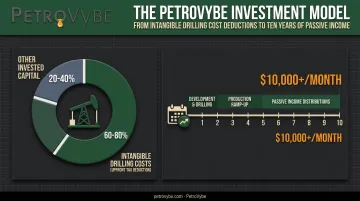
This isn't a fit for every investor. PetroVybe's model targets people with $100,000 or more in accessible liquidity, a genuinely high tax burden, and enough patience to wait through PetroVybe's decade-long hold period before distributions begin.
Someone actively managing a small Stash balance likely won't qualify. This structure suits investors who've outgrown that stage and are now weighing how to deploy real capital more efficiently.
Frequently Asked Questions
How do I withdraw portfolio cash from Stash?
Go to your account or banking section, select Withdraw, choose your linked bank account, and confirm the amount. External transfers typically take 2-3 business days to arrive.
What does portfolio cash mean in Stash?
It's uninvested money sitting in your account from deposits, dividends, or round-ups that hasn't yet been allocated to an investment. It functions as a temporary holding balance, not a separate product.
Is Stash's Smart Portfolio worth it?
It depends on your goals, balance size, and how the fee structure affects your returns. It's generally best suited for beginners building consistent investing habits with smaller, regular contributions.
Can you actually make money on Stash?
Yes, but returns depend entirely on market performance, how consistently you contribute, and the fees you pay. It's not a fast or guaranteed profit tool; growth takes time and discipline.
Does portfolio cash earn interest?
It depends on the platform. Some apps offer a modest yield on uninvested cash through bank sweep programs, while others provide no interest at all.
How much cash should I keep in my investment portfolio?
Long-term investors who already have an emergency fund need very little cash sitting idle. Those approaching or in retirement are often advised to hold one to two years of expenses in cash.