Many investors struggle to tell the difference between an interest rate that sounds good on a bank homepage and one that actually beats inflation and taxes. A 4% APY feels great until you realize inflation has been running hot enough to erase most of that gain.
This guide breaks down the 10 best interest and income-generating investments for 2026. We'll cover everything from FDIC-insured savings tools to higher-yield alternatives built for accredited investors who want more than a modest APY.
Key Takeaways
- HYSAs, CDs, and Treasuries offer safety but often lag behind inflation after taxes
- Corporate bonds and annuities currently post some of the highest rates among traditional options
- TIPS and municipal bonds solve specific problems: inflation protection and tax efficiency
- Accredited investors can access private energy development for materially higher target returns
- The right mix depends on your liquidity needs, tax bracket, and time horizon, not yield alone
Overview of Interest Investments in the 2026 Market
Interest investments are vehicles that pay you a fixed or variable return in exchange for lending your money or depositing it somewhere. That's different from equity investing, where returns come from ownership and price appreciation, not a contractual rate.
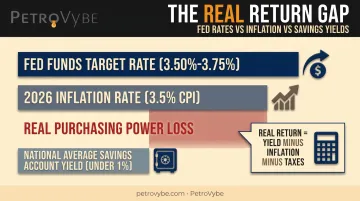
The Federal Reserve held its target rate at 3.50%-3.75% as of its June 17, 2026 policy decision, while consumer prices climbed 3.5% year-over-year. That inflation figure is the real hurdle every interest investment on this list needs to clear.
Most traditional interest investments protect your principal but don't protect your purchasing power. A savings account paying under 1% isn't keeping pace with 3.5% inflation. That gap is exactly why this list includes both conservative cash tools and higher-yield alternatives further down.
Top 10 Best Interest Investments for 2026
This list runs from the safest, most liquid cash equivalents to higher-yield, less liquid income assets. Each entry weighs the same three questions: how much does it pay, how safe is it, and how easily can you get your money back?
FDIC national averages, pulled from the FDIC's July 2026 rate tables, tend to run well below what top online banks advertise, so we've noted both where relevant.
| Investment | Typical Yield (2026) | Risk Level | Liquidity |
|---|---|---|---|
| High-Yield Savings Account | Up to 4.15% APY (national avg. 0.38%) | Very low, FDIC-insured | High, some withdrawal limits |
| Certificate of Deposit | 1.38%-1.68% avg (top offers near 4.30%) | Low, FDIC-insured | Low, early withdrawal penalty |
| Money Market Account/Fund | 0.65% avg bank MMA; ~3.46% money fund | Low | High, minimum balances |
| Treasury Bills/Notes/Bonds | 3.86%-5.11% | Very low | High for bills; tradable |
| TIPS | 2.05%-2.35% real yield | Very low | Moderate, best held to maturity |
| Investment-Grade Corporate Bonds | ~5.32% average | Low-to-moderate | Moderate |
| Municipal Bonds | ~2.87% tax-exempt (10-yr AAA) | Low-to-moderate | Moderate |
| Fixed Annuities | 5.25%-7.65% quoted range | Low, insurer-dependent | Very low, surrender charges |
| Dividend Stocks/REITs | 2.49%-4.02% | Moderate-to-high | High, publicly traded |
| Private Natural Gas Development | ~26% target IRR / 2.2-5.8x MOIC (10-yr) | Higher, execution-dependent | Low, long-term hold |
High-Yield Savings Accounts (HYSAs)
Online banks skip the branch overhead and pass the savings on as higher rates, which is why top HYSA offers sit near 4.15% APY while the national average lingers around 0.38%. These accounts carry FDIC insurance up to $250,000 per depositor.
Best for: emergency funds and short-term goals. Don't count on a HYSA to outpace inflation over the long haul.
Certificates of Deposit (CDs)
CDs lock in a fixed rate for a fixed term, and laddering, buying several CDs with staggered maturities, lets you capture periodic liquidity while keeping money working. National averages run 1.38% to 1.68% for shorter terms, with the best promotional offers pushing past 4%.
Best for: money you know you won't need until a specific future date. Early withdrawal typically costs 60 to 365 days of interest.
Money Market Accounts & Funds
Bank money market accounts are FDIC-insured and often include check-writing privileges, paying around 0.65% on average nationally. Money market mutual funds are a different animal entirely. They're SIPC-eligible securities, not deposits, and they invest in short-term debt, currently yielding closer to 3.46%.
Best for: investors who want higher yield than a savings account without giving up quick access to cash.
Treasury Bills, Notes & Bonds
Treasuries are direct obligations of the U.S. government, ranging from 4-week bills to 30-year bonds. The Federal Reserve's H.15 release showed yields spanning 3.86% at 3 months to 5.11% at 30 years.
Best for: investors who want the closest thing to a risk-free rate. Bills are highly liquid; longer notes and bonds can be sold early, but the price will move with rates.
Treasury Inflation-Protected Securities (TIPS)
TIPS adjust their principal value with the Consumer Price Index, so your investment keeps pace with inflation rather than losing ground to it. Real yields currently run 2.05% at 5 years and 2.35% at 10 years.
Best for: investors specifically worried about inflation eroding fixed-income returns. TIPS work best held to maturity.
Investment-Grade Corporate Bonds
These are loans to financially healthy companies. In exchange for taking on modest credit risk, you earn more than government bonds pay, currently around 5.32% on the broad investment-grade index, with longer-maturity Baa-rated bonds yielding above 6%.
Best for: investors comfortable with some credit risk who want meaningfully higher income than Treasuries.
Municipal Bonds
Muni bond interest is generally exempt from federal income tax, and often state tax too if you buy bonds from your home state. The 10-year AAA muni benchmark sits near 2.87%, but the taxable-equivalent yield can be significantly higher for investors in top brackets.
Best for: high-income earners who care more about after-tax return than the sticker-price yield.
Fixed Annuities
A fixed annuity converts a lump sum into a guaranteed stream of income, insulated from market swings. Quoted rates currently range from 5.25% to 7.65% depending on term and carrier, though returns depend entirely on the issuing insurer's ability to pay claims.
Best for: retirees who want predictable income and don't need access to the lump sum. Surrender charges make early withdrawal expensive.
Dividend-Paying Stocks & REITs
REITs must distribute at least 90% of taxable income to shareholders, which is why they currently yield around 4.02%. Dividend Aristocrats, companies with 25+ years of consecutive dividend increases, yield less (2.49%) but bring more stability.
Best for: investors who accept market volatility in exchange for higher income potential and daily liquidity.
Private Natural Gas Development
For accredited investors, private energy development sits in a different category entirely. PetroVybe offers direct participation in early-stage natural gas development across South Texas and the Gulf Coast Basin, an alternative to fixed-yield instruments built around tangible, producing assets rather than a paper interest rate.
PetroVybe's flagship project targets a 10-year MOIC of roughly 2.2x to 5.8x and an IRR near 26%, figures the company reports as forecasts, not guarantees.
Investors also gain access to Intangible Drilling Cost deductions, which can offset up to 100% of invested capital against active income, including W-2 wages and capital gains. Passive real estate losses can't offset active income the same way.
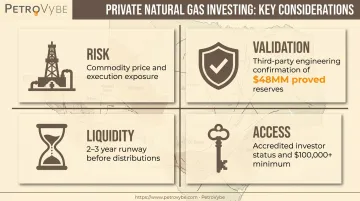
- Risk: higher than traditional fixed income, tied to commodity prices and drilling execution
- Validation: third-party engineering confirms $48MM in proved reserves, backed by a Chief Geophysicist with a 75.2% career hit rate on well selection
- Liquidity: low. This is patient capital with a projected 2-3 year runway before distributions begin
- Access: requires accredited investor status and $100,000+ in liquidity
Best for: high-income investors who want a tax-advantaged complement to, not a replacement for, their traditional interest holdings.
How We Chose the Best Interest Investments for 2026
We evaluated every option on this list against four filters: safety and insurance backing, current yield competitiveness, liquidity terms, and tax treatment.
The most common mistake investors make is chasing the highest advertised yield without checking the lock-up period or the risk sitting underneath it. A 7% annuity rate means nothing if you need that cash in year two and get hit with surrender charges.
We also weighted:
- FDIC and SIPC coverage where applicable, and government backing for Treasuries
- Third-party validation for alternative assets, since private investments don't come with a regulator's safety net
- Accessibility, distinguishing retail-available products from those requiring accredited investor status
- Real, inflation-adjusted return, since several "safe" options in this guide can lose purchasing power year over year
That last filter matters most. A HYSA paying 4% looks fine until you subtract 3.5% inflation and taxes on the interest. Suddenly your real return is closer to zero.
Conclusion
There's no single "best" interest investment for 2026. The right answer depends on your liquidity needs, your tax bracket, and how much illiquidity you can tolerate in exchange for a higher return.
A smart approach means layering safety tiers: FDIC-insured cash for emergencies, Treasuries or TIPS for stability, and higher-yield alternatives for the portion of your portfolio built for growth. Revisit this mix as rates continue shifting through 2026.
For that growth portion, accredited investors seeking tax-advantaged diversification beyond bonds and savings accounts may want to examine PetroVybe's natural gas development projects in South Texas and the Gulf Coast Basin. Reach the team at info@petrovybe.com or 972.634.1937 to start the conversation.
Frequently Asked Questions
How much money do I need to invest to earn $3,000 a month?
At a 4% HYSA or CD yield, you'd need roughly $900,000. Higher-yield alternatives targeting 20%+ returns could require closer to $180,000, though results vary and aren't guaranteed. Always check current rates before running your own math.
What investment has the highest interest rate?
Among traditional options, fixed annuities and investment-grade corporate bonds currently post some of the highest published rates, up to 7.65% and 6.21% respectively. Alternative investments like private natural gas development target materially higher returns for accredited investors willing to accept illiquidity.
What is the safest interest investment in 2026?
FDIC-insured HYSAs, CDs, and U.S. Treasuries top the safety list. Treasuries carry the full backing of the federal government, while bank deposits are protected up to $250,000 per depositor, per institution.
Is a CD or a high-yield savings account better right now?
CDs make sense if you know exactly when you'll need the money and want to lock in today's rate. HYSAs work better if you need flexibility, since rates float and there's no penalty for withdrawing.
How does inflation affect interest investments?
Fixed low yields can lose real purchasing power when inflation runs hot, even while your account balance grows. TIPS adjust principal with the CPI, and higher-yield alternatives can offer a bigger buffer against inflation erosion.
Can accredited investors access higher-yield alternatives to traditional interest investments?
Yes. Accredited investors can participate in private placements like natural gas development, which target far higher IRR and MOIC than bonds or savings accounts, along with substantial tax deductions unavailable through retail-only products.