

Today's environment makes this more urgent than ever. U.S. inflation rose 2.9% from December 2023 to December 2024, and market volatility spiked hard, with the VIX recording its largest one-day jump on record, 180% on August 5, 2024. Add in rising tax burdens and the growing case for diversifying beyond traditional stocks and bonds, and it's clear why a real strategy matters.
This guide defines what an investment strategy actually is, breaks down the main types investors use, and gives you a practical framework for choosing the right one for your situation.
Key Takeaways
- An investment strategy is a plan for selecting assets based on your goals, risk tolerance, and time horizon.
- No single "best" strategy exists — the right approach depends on your unique financial picture.
- Common types include active, passive, growth/value, income, and tax-advantaged strategies.
- Choosing wisely means weighing your goals, risk appetite, tax exposure, and liquidity needs over trends.
What Is an Investment Strategy?
An investment strategy is a set of rules or principles that guides how, when, and where you allocate capital to meet specific financial goals. It's not a single decision you make once and forget.
Think of it as an ongoing operating system for your money. A real strategy covers:
- Asset selection: which securities, funds, or assets you buy
- Timing: when you enter, add to, or exit positions
- Account structure: which account types (taxable, tax-deferred, or private placements) hold which assets
This framework applies regardless of what you're investing in—public stocks, municipal bonds, rental property, or private/alternative assets like direct energy development interests. The same underlying question applies: does this decision fit your plan, or are you just reacting to headlines?
Why Is Having an Investment Strategy Important?
A defined strategy connects everyday investment decisions to long-term outcomes: wealth creation, capital preservation, or tax efficiency. Without that connection, decisions get made in isolation, which quickly becomes costly.
What Goes Wrong Without One
Investors without a strategy tend to fall into predictable traps:
- Emotional decision-making: buying after a rally, selling during a dip
- Inconsistent asset selection: a portfolio that looks like a random collection of tips from friends and forums
- Missed tax or income opportunities: leaving deductions and cash flow on the table because no one was looking for them
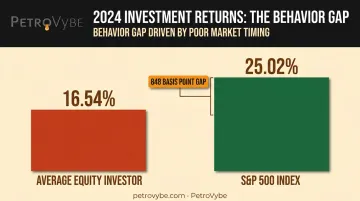
The data backs this up. DALBAR's 2025 investor behavior report found that the average equity investor earned 16.54% in 2024, while the S&P 500 returned 25.02%, a gap of 848 basis points. This is a behavior problem, driven largely by poor timing and an unwillingness to stay invested through volatility.
A written strategy with documented rules for contributions, withdrawals, and rebalancing doesn't eliminate risk. It does, however, remove the guesswork that causes investors to sabotage their own returns.
Types of Investment Strategies
Investment strategy isn't one-size-fits-all. It varies based on your goals, risk tolerance, time horizon, and tax situation. Many investors blend several strategy types across different portions of a single portfolio: a passive core paired with an active satellite, for example, or a growth allocation balanced by income-producing alternatives.
Active Management Strategy
Active management means a fund manager or individual investor handpicks securities with the explicit goal of beating a benchmark index.
Best suited for: Hands-on investors comfortable with research, higher fees, and the pursuit of above-market returns.
Strengths and limitations: The upside is real but rare in practice. According to S&P's SPIVA U.S. Scorecard for year-end 2025, 78.78% of active U.S. large-cap funds underperformed the S&P 500 over one year, climbing to 88.96% over five years and 85.59% over ten years.
Active equity funds also carry higher costs, averaging a 0.64% expense ratio versus a fraction of that for index alternatives. The potential to beat the market exists, but the odds and the fees work against most investors who try.
Passive Management Strategy
Passive management structures investments to replicate the performance of a market index using index funds or ETFs, rather than trying to beat it.
Best suited for: Cost-conscious, long-term investors who prefer a hands-off, buy-and-hold approach.
Strengths and limitations: Low fees and built-in diversification are the main draw: index equity mutual funds carry an average expense ratio of just 0.05%. Passive investing has grown accordingly; indexed funds and ETFs held roughly $21.82 trillion as of early 2025. The trade-off is simple: you'll never outperform the market, because you are the market, fees included.
Growth and Value Investing
Growth investing targets companies with above-average earnings potential. Value investing targets stocks trading below their intrinsic worth, often with strong dividend yields.
Best suited for:
- Growth suits investors with longer time horizons and higher risk tolerance
- Value suits patient investors seeking discounted, dividend-paying stocks
Strengths and limitations: Growth offers higher return potential paired with more volatility. Value offers stability and income, but it can lag badly during strong bull markets. Vanguard's research notes that value stocks have historically performed well during economic recoveries, though leadership between the two styles shifts with the economic cycle. Past performance in one regime doesn't guarantee the same result in the next.
Income and Tax-Advantaged Alternative Strategy
This strategy focuses on generating steady cash flow, tax efficiency, or both — through dividends, bonds, real estate, or private alternative assets such as direct oil and gas development interests.
Best suited for:
- High-income earners facing heavy tax burdens
- Retirees seeking passive income
- Investors wanting diversification beyond public markets
Strengths and limitations: This category can deliver strong tax deductions and inflation-hedged passive income, but it typically comes with less liquidity and requires accredited investor status. Alternative allocations aren't a niche anymore, either: BlackRock's 2025 Global Family Office Survey found alternatives made up 42% of family office portfolios, up from 39% the year prior.
Direct oil and gas partnerships are a concrete example of how this works in practice. Companies like PetroVybe offer accredited investors direct positions in natural gas development that combine upfront tax deductions with long-term passive income.
PetroVybe's 2024 partners, for instance, received a **94% tax deduction against active income**, meaning it offset W-2 earnings and capital gains, not just passive income. That's a distinctive feature of Intangible Drilling Cost (IDC) deductions under the tax code: unlike real estate deductions, they aren't restricted to passive income. The trade-off is a 10-year hold period, a $100,000 minimum, and mandatory accredited investor verification: liquidity and access constraints that come with the territory.

How to Choose the Right Investment Strategy
The "right" strategy depends on your individual circumstances, not trends or popularity. Before committing capital, walk through these factors:
- Financial goals: Are you building wealth, preserving capital, generating income, or saving for a major purchase?
- Risk tolerance: How much volatility can you actually stomach, not just how much you think you can?
- Time horizon: Are you investing for a short-term need or a multi-decade goal like retirement?
- Tax situation: Are there tax-efficient structures, such as IDC deductions or tax-advantaged accounts, you should be using?
- Liquidity needs: Do you have emergency funds set aside before locking up capital in less liquid assets?
- Diversification goals: Do you want exposure beyond traditional stocks, bonds, and real estate?
FINRA frames this well: asset allocation should reflect your objectives and the time available to reach them, while distinguishing your willingness to accept loss from your actual financial ability to absorb it. Those are two different questions, and conflating them is a common mistake.
Common Mistakes to Avoid Before Finalizing a Strategy
- Chasing a "hot" strategy that doesn't match your skill level or the time you can realistically commit
- Ignoring the trade-offs of your chosen strategy type, such as illiquidity or benchmark risk
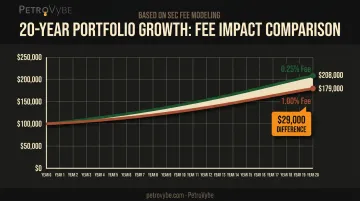
- Overlooking tax implications and long-term costs: SEC modeling shows a $100,000 portfolio growing at 4% annually for 20 years reaches $208,000 with a 0.25% fee, but only $179,000 with a 1.00% fee
- Failing to revisit and rebalance the strategy as your goals, income, or market conditions change
Conclusion
An investment strategy turns financial goals into consistent, disciplined action instead of reactive guesswork. Different strategy types exist to serve different needs, risk levels, and tax situations — there's no universal winner.
Understanding these differences, and periodically reviewing your own approach as circumstances change, is what separates investors who compound wealth steadily from those who chase returns and fall behind. Whether that means a passive index core, a value tilt, or an allocation toward tax-advantaged alternatives like PetroVybe's direct energy development partnerships, the plan matters more than the product.
Frequently Asked Questions
What is an investment strategy?
An investment strategy is a structured plan that guides asset selection based on your goals, risk tolerance, and time horizon. It covers what you buy, when you buy it, and which accounts hold it.
What are the main types of investment strategies?
The main types are active management, passive management, growth and value investing, and income or alternative/tax-advantaged strategies. Most investors combine elements of several across their portfolio.
What is an example of an investment strategy?
A passive index-fund approach that tracks the S&P 500 is one example. An income strategy using dividend stocks, bonds, or direct energy development investments offering tax deductions against active income is another option for accredited investors.
How do I choose the best investment strategy for me?
Base your choice on your financial goals, risk tolerance, time horizon, and tax situation — not on what's currently popular. Liquidity needs and diversification goals matter too.
Can I combine multiple investment strategies?
Yes, blending strategies across a portfolio is common and often beneficial. A passive core paired with alternative income assets, for example, balances low-cost growth with tax efficiency.
What is the difference between active and passive investment strategies?
Active strategies involve hands-on security selection aiming to beat a benchmark, typically at higher cost. Passive strategies replicate an index at low cost, accepting market returns rather than trying to exceed them.