

Introduction
The paycheck lands. The rent gets paid, the groceries get bought, the credit card gets its minimum. Then, somehow, by the 28th of the month, the account is running on fumes again.
Sound familiar? You're not alone, and you're not bad with money. You're just missing a system for tracking where your cash actually goes.
This guide breaks down what personal cash flow means, how to calculate it in a weekend, proven strategies to improve it, and how to responsibly put your surplus to work. Because before you chase higher-yield, tax-advantaged income strategies, you need a handle on the cash flow you already have.
Key Takeaways
- Positive cash flow lets you save and invest, while negative cash flow demands immediate action.
- Track inflows and outflows for 2-3 months minimum to account for irregular expenses.
- Budgeting frameworks like 50/30/20 or 70/20/10 give structure, but neither works for everyone.
- A 3-6 month emergency fund keeps a single bad month from spiraling into new debt.
- Idle surplus cash loses value to inflation; deploy it with intention, not by accident.
What Is Personal Cash Flow?
Personal cash flow is the net movement of money into and out of your accounts over a set period, whether that's a week, a month, or a year. It answers a simple question: did more money come in than went out?
- Positive cash flow: inflow exceeds outflow, meaning you have surplus to save, invest, or pay down debt faster.
- Negative cash flow: outflow exceeds inflow, meaning you're likely draining savings or leaning on credit.
This is different from a net worth statement, which is a snapshot of your assets minus your liabilities at a single point in time. Net worth tells you where you stand; cash flow tells you where you're heading.
You need both for a complete financial picture, but cash flow is what determines whether your net worth is climbing or shrinking month to month.
Understanding your cash flow matters before any major decision: buying a home, ramping up investment contributions, or setting a retirement date. Skip this step and you're planning on guesswork.
The scale of the problem is bigger than most people assume. According to PYMNTS Intelligence and LendingClub's 2024 paycheck-to-paycheck report, 62% of U.S. consumers were living paycheck to paycheck as of January 2024. Even among people earning more than $200,000 a year, 36% reported the same. High income doesn't automatically mean high cash flow awareness.

How to Calculate Your Personal Cash Flow
Calculating cash flow isn't complicated; it just requires being thorough, especially with expenses that don't show up every month.
Step 1: List All Cash Inflows
Gather your pay stubs, investment statements, and any side-income records. Inflows include:
- Salary and wages (after tax, since that's what actually hits your account)
- Freelance or side-hustle income
- Rental income
- Dividends and interest payments actually received in cash
- Bonuses and commissions
Leave out reinvested earnings, such as dividends automatically rolled back into a fund. That money never became available cash, so it doesn't count as inflow for this exercise.
Step 2: List All Cash Outflows
Separate spending into two buckets:
- Essential: housing, utilities, groceries, insurance, minimum debt payments
- Discretionary: dining out, entertainment, subscriptions, impulse purchases
Don't skip small recurring charges: a $12 app subscription feels invisible until you find six of them.
Step 3: Apply the Net Cash Flow Formula
Once both lists are complete, the math is straightforward:
Net Cash Flow = Total Cash Inflows − Total Cash Outflows
A positive number means you have room to save and invest, while a negative number means something needs to change now, not eventually.
For the most accurate picture, track inflows and outflows over 2-3 months, especially if your income varies. The Consumer Financial Protection Bureau recommends reviewing several months of spending so you don't accidentally exclude less-frequent costs like insurance premiums, medical bills, or seasonal expenses.
Proven Strategies to Improve Your Cash Flow
Once you know your numbers, the real work starts: making that number better, month over month.
Choose a Budgeting Framework That Fits Your Life
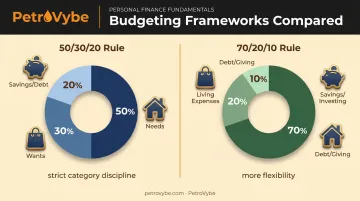
The 50/30/20 rule, popularized by Elizabeth Warren in All Your Worth, splits take-home pay into 50% needs, 30% wants, and 20% savings or debt repayment. It's simple and widely used as a starting point.
The 70/20/10 rule works differently: roughly 70% goes to living expenses (needs and wants combined), 20% to savings and investing, and 10% to debt repayment or giving. Some higher earners prefer this structure because it doesn't force a rigid split between needs and wants.
That said, combining fixed and flexible spending into one bucket can make it harder to see exactly where your money leaks. Neither framework is objectively better. The right one depends on whether you need strict category discipline or more flexibility.
Cut Expenses and Boost Income Simultaneously
Improving cash flow works from both directions at once.
On the expense side:
- Audit every subscription. According to C+R Research, consumers underestimate monthly subscription costs by $133 on average, with actual spending closer to $219.
- Call and negotiate recurring bills like insurance, internet, and phone plans.
- Refinance high-interest debt where possible, especially with credit card APRs running historically high right now.
On the income side:
- Ask for a raise using documented performance results, not just tenure.
- Start a side hustle that monetizes an existing skill, not a new hobby you're still learning.
- Rent out unused assets, from spare rooms to equipment sitting in storage.
Then automate the gains. Set up an automatic transfer that moves a fixed percentage of every paycheck to savings before you can spend it — paying yourself first, without relying on willpower.
Building a Cash Reserve for Financial Stability
A cash reserve is what keeps one bad month from becoming six bad months.
The standard recommendation is 3-6 months of essential expenses kept in an accessible emergency fund, according to FINRA. That covers housing, utilities, groceries, insurance, and minimum debt payments — not your full lifestyle budget.
A tiered approach balances access with earning potential:
- Immediate cash: checking account funds for the next few weeks of expenses
- High-yield savings: liquid, same-day or next-day access, earning meaningfully more than a standard savings account
- Short-term instruments: CDs or money market funds for reserve dollars you won't need in the next month or two
Without this buffer, a single emergency (a car repair, a medical bill) can turn a positive cash flow month into a negative one, forcing you onto a credit card you didn't plan to use.
Making Your Excess Cash Flow Work for You
Once your budget is set, debt is under control, and your emergency fund is funded, surplus cash flow shouldn't just sit there. Idle cash loses purchasing power every single year.
Consumer prices rose 2.9% from December 2023 to December 2024, and 2.7% from December 2024 to December 2025, according to the Bureau of Labor Statistics. A savings account yielding less than that isn't growing your money; it's slowly losing ground.
This is where high-income earners often look beyond basic savings accounts toward assets designed to outpace inflation and reduce tax exposure at the same time. For W-2 earners and investors carrying capital gains, tax-advantaged passive income vehicles can serve both goals at once.
One example: PetroVybe's natural gas development projects in South Texas and the Gulf Coast Basin, structured for accredited investors with $100,000 or more in liquidity.
Through Intangible Drilling Cost (IDC) deductions, a tax break for upfront drilling expenses, PetroVybe's structure delivers:
- A 94% tax deduction against active income in 2024, dropping to 91% in 2025
- Deductions that apply directly to W-2 wages and capital gains, not just passive income
- Projected monthly distributions during the production phase
- A way to convert surplus cash into inflation-resistant, tax-efficient long-term assets
It's not for everyone; accreditation and a long investment horizon are required. But for the right investor, it's worth a look after the fundamentals are locked in.

Common Cash Flow Mistakes to Avoid
Even disciplined budgeters trip over the same few issues repeatedly.
- Ignoring irregular expenses. Insurance premiums, car maintenance, and annual subscriptions don't show up every month, so they get left out of the plan entirely, then blindside you when they hit.
- Never revisiting the plan. A new job, a marriage, a growing family: these change your numbers completely, yet many people keep running last year's budget on autopilot.
- Treating surplus as free money. A positive cash flow month feels like a green light to spend more. Without a specific savings or investment target, that surplus disappears into discretionary purchases.
Fidelity recommends an annual financial review tied to major life events, covering goals, insurance, and asset allocation. Building that check-in into your calendar now saves a scramble later.
Frequently Asked Questions
What does personal cash flow mean?
Personal cash flow is the net movement of money in and out of your finances over a set period, typically a month. It reveals whether your income is outpacing your expenses right now, not just what you've built up over time.
How do you calculate personal cash flow?
Subtract your total cash outflows from your total cash inflows: Net Cash Flow = Inflows − Outflows. A positive result means you have surplus; a negative result means you're spending more than you earn.
What is the 70/20/10 rule?
It splits take-home pay into 70% living expenses, 20% savings and investing, and 10% debt repayment or giving. It's often compared to the 50/30/20 rule, which separates needs and wants more strictly.
What's the difference between cash flow and net worth?
Cash flow tracks the movement of money over time, showing whether you're gaining or losing ground. Net worth is a point-in-time snapshot of what you own minus what you owe.
How often should I review my personal cash flow statement?
Monthly reviews work well for most people. Increase the frequency during periods of income change, a new job, a side hustle ending, or major expense shifts like a move or new baby.
What's considered a healthy amount to save from monthly cash flow?
Retirement-focused guidelines from Fidelity and Vanguard suggest 12-15% of pre-tax income, including employer contributions. Your ideal savings rate depends on your goals, debt load, and timeline.