But "investing in oil" isn't one thing. It's five or six distinct approaches with radically different risk profiles, capital requirements, and tax outcomes. An energy ETF and a direct development partnership both offer oil exposure — but they share almost nothing else. Choosing the wrong vehicle doesn't just mean lower returns. It can mean trapped capital, unexpected tax bills, or commodity losses that your investment structure made no attempt to hedge.
This guide covers every major method for investing in oil, what each requires to access, the variables that drive returns, the mistakes beginners consistently make, and a straightforward framework for matching your profile to the right approach.
Key Takeaways
- Oil investing spans public instruments (stocks, ETFs, futures) and private vehicles (direct partnerships), each suited to a different investor profile
- Commodity ETFs like USO underperform actual oil prices over time due to contango and roll yield drag — weak as long-term holds
- IDC deductions from direct investment can offset W-2 income and capital gains, not just passive income — a distinction most investors miss
- Accredited investor status ($200K+ income or $1M+ net worth) unlocks the highest-return, highest-deduction structures
- AI-driven electricity demand is creating a structural tailwind for domestic natural gas production that goes beyond traditional price cycles
Ways to Invest in Oil
No single method is universally "best." The right vehicle depends on your capital, tax situation, risk tolerance, and whether you want passive or active exposure. Here are the five major approaches.
Oil Stocks and Energy ETFs
Buying shares of publicly traded oil companies — ExxonMobil, Chevron, Shell — or sector ETFs like XLE (Energy Select Sector SPDR, with $37.6B in assets and a 0.08% expense ratio) or VDE (Vanguard Energy ETF, $11.8B) is the most accessible entry point. Standard brokerage account. No special qualifications.
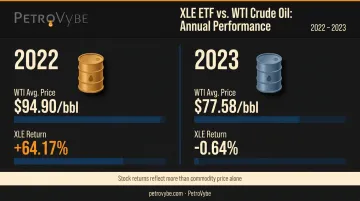
The trade-off: stock returns reflect company fundamentals, management decisions, and market sentiment — not just oil prices. In 2022, when WTI averaged $94.90/barrel, XLE returned 64.17%. In 2023, when WTI averaged $77.58/barrel, XLE returned -0.64%. The correlation is positive but imperfect, and varies significantly by business model.
ETFs reduce single-stock risk through diversification, but don't mistake diversification for protection. Sector ETFs still fall when oil falls — and they add a layer of company-specific risk that pure commodity investors don't carry. Investors who want to remove that company-layer entirely typically look at futures or commodity funds instead.
Oil Futures and Options
Futures contracts obligate the buyer to purchase a set quantity of oil at a fixed price on a specific date. One standard NYMEX WTI contract represents 1,000 barrels. CME's current initial margin requirement runs approximately $7,805 for near-term contracts — but that margin is a performance bond, not a cap on losses. The CFTC is explicit: a trader can lose all deposited funds and may owe additional amounts.
This method offers the most direct commodity price exposure and high liquidity. Over 1 million WTI futures and options contracts trade daily on CME. But it requires margin account approval, broker suitability review, and genuine fluency with leverage.
Options give the right — not the obligation — to buy or sell at a set price, providing slightly more flexibility and defined downside. They're often used as hedges. Both require active monitoring and are generally inappropriate for beginners without prior derivatives experience.
Commodity ETFs and ETNs
Commodity ETFs like USO invest in oil futures rather than oil company equities, offering retail investors price exposure without trading futures directly. The problem is structural: contango — when near-month futures are priced below later contracts — forces USO to roll into more expensive contracts repeatedly, eroding returns over time.
USO's own SEC filing confirms this. From inception through September 30, 2025, USO's NAV showed an average daily change of -0.009% versus +0.002% for its benchmark oil futures contract. That gap compounds significantly over years, making commodity ETFs better suited for short-term tactical positions than long-term holding.
ETNs (like iPath OIL) are unsecured debt instruments issued by banks — Barclays, in OIL's case — that track oil prices without holding futures directly. They eliminate tracking error but introduce counterparty credit risk: if the issuer defaults, investors may receive nothing. One tax advantage: capital gains on ETNs are deferred until sale, unlike ETFs taxed on annual distributions.
Master Limited Partnerships (MLPs)
MLPs are publicly traded partnerships typically operating energy infrastructure — pipelines, storage, processing. They pass most income to investors as regular distributions and carry less oil price sensitivity than upstream producers, since they earn fees on volume moved rather than on commodity prices. Energy Transfer, for instance, describes its earnings as predominantly fee-based.
The catch is tax reporting. MLP investors receive Schedule K-1 forms — not standard 1099s. K-1s allocate income, deductions, and basis adjustments, and they typically arrive in March or April, which complicates tax preparation. For investors who want predictable energy-sector income without the complexity of futures, MLPs are a reasonable middle ground — but they're still subject to sector downturns and aren't particularly tax-efficient for high-income investors.
Direct Oil and Gas Development Partnerships
Accredited investors can participate directly in oil and gas drilling through private development partnerships — owning an actual working interest or limited partnership stake in physical wells. Returns are driven by production revenue, not stock prices or fund performance. The risk profile is also structurally different: operator expertise determines outcomes more than market sentiment.
The standout tax benefit: under IRC 263(c), Intangible Drilling Costs (IDCs) — labor, fuel, supplies, and other drilling costs without salvage value — can be elected for full deduction in the year incurred. Critically, under IRC 469(c)(3), a working interest held through a structure that doesn't limit liability can be treated as nonpassive, meaning IDC deductions can offset active income including W-2 earnings and capital gains. This is the opposite of most passive investment deductions.
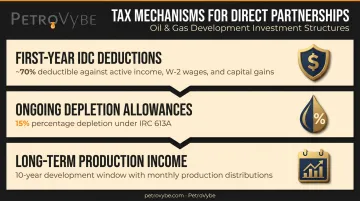
Companies like PetroVybe structure these programs specifically for accredited investors, with three distinct tax mechanisms working in combination:
- First-year IDC deductions of approximately 70% against active income (W-2 and capital gains)
- Ongoing depletion allowances under IRC 613A — 15% percentage depletion for qualifying producers
- Long-term production income across a 10-year development window
What You Need Before Investing in Oil
Preparation determines which methods are actually open to you. Most beginners skip it and discover too late they're locked into a structure — futures margin calls, illiquid private placements — that doesn't fit their capital, timeline, or tax situation.
Eligibility and Capital Requirements
| Method | Minimum Capital | Accredited Status Required? |
|---|---|---|
| Energy stocks / ETFs | Cost of one share | No |
| Futures | ~$7,805+ margin per contract | No (broker approval required) |
| Commodity ETFs / ETNs | Cost of one share | No |
| MLPs | Cost of one unit | No |
| Direct development partnerships | $50,000–$100,000+ | Yes |
Accredited investor status under SEC Rule 501(a) requires one of:
- Individual income above $200,000 (or $300,000 jointly) in each of the past two years
- Net worth above $1 million excluding primary residence
- A Series 7, 65, or 82 license in good standing
Three Questions to Answer Before You Invest
- What's my time horizon? Oil investments range from same-day futures trades to 10-year development programs. Your answer eliminates most mismatches immediately.
- Do I have liquidity I won't need near-term? Private investments are illiquid. Entering without a clear exit timeline can trap capital when personal needs arise.
- What's my tax situation? High-income W-2 earners and investors with capital gains can unlock substantial deductions through direct investment — advantages ETF or stock investors can't access. If your tax burden is low, direct investment structures offer little benefit over a simpler ETF.
Work through these three before comparing investment types — your answers will narrow the field considerably.
Key Factors That Affect Oil Investment Returns
Supply, Demand, and the AI Tailwind
Oil prices are fundamentally set by global supply and demand. OPEC's 12 member countries represented approximately 37% of world crude output in 2024 — enough production weight to move prices noticeably. The October 2022 OPEC+ cut of 2 million barrels per day pushed WTI to $88.45/barrel in a single session.
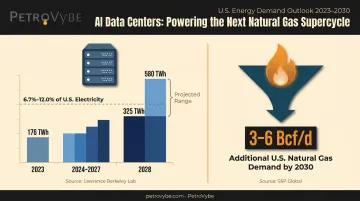
A less-discussed demand driver is emerging: AI infrastructure. According to the Lawrence Berkeley National Laboratory's 2024 U.S. Data Center Energy Usage Report, U.S. data centers used 176 TWh of electricity in 2023 and could reach 325–580 TWh by 2028, representing 6.7%–12.0% of total U.S. electricity consumption.
S&P Global Ratings projects that translates to 3–6 Bcf/d of additional U.S. natural gas demand by 2030. Natural gas already supplies the largest share of U.S. grid power, so this demand surge creates a structural tailwind for domestic producers regardless of where traditional oil price cycles land.
Commodity Price vs. Asset-Level Returns
This distinction matters more than most beginners realize:
- Price-linked vehicles (ETFs, futures): returns track commodity price movement. Flat or declining prices mean flat or declining returns.
- Asset-linked vehicles (direct partnerships, mineral rights): returns are driven by production volume and cash flow. An asset can generate strong returns even in a flat price environment if production grows, costs decrease, or reserves expand.
Natural Gas Liquids (NGLs) are a practical example of asset-level return logic: liquids command premium pricing over dry gas while sharing similar production costs, which compresses the gap between revenue and margin. PetroVybe's South Texas operations in Lavaca County are structured around this liquid-weighted production profile, targeting higher per-unit returns without proportionally higher extraction costs.
Tax Treatment
The tax structure of an oil investment can shift net returns by 10–20 percentage points depending on how the investment is structured:
- ETF / stock gains: capital gains tax at sale; dividends taxed as ordinary income
- Royalty income: ordinary income rates, with 15% depletion deduction under IRC 613A
- Direct working interest: first-year IDC deductions that can offset active income, reducing your effective cost basis before a single barrel is produced
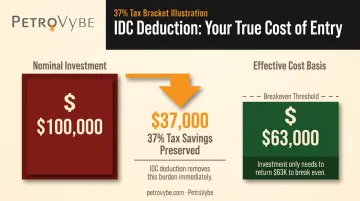
For a high-income investor in the 37% bracket, a $100,000 IDC deduction represents $37,000 in preserved capital before any production revenue. At that point, the investment only needs to return $63,000 to break even — a threshold that's meaningfully easier to clear than the full $100,000 nominal cost.
Common Mistakes to Avoid When Investing in Oil
- Commodity ETFs are easy to buy — and easy to hold too long. Contango drag makes them structurally poor long-term vehicles, a fact buried in USO's own SEC filings. Choose your vehicle based on your goal, not your brokerage's one-click access.
- Enter private investments only with a clear liquidity plan. Direct partnerships and working interests have no active secondary market — capital committed for 10 years must be capital you genuinely won't need before then.
- Get the tax consultation before you invest, not after. IDC deductions must be structured correctly upfront to be applied correctly — a post-investment conversation with a CPA often comes too late.
- In direct oil investment, the operator's well selection accuracy is the single biggest variable separating profitable programs from dry holes. PetroVybe's Chief Geophysicist Michael Stamatedes carries a documented 75.2% career hit rate across 48 years, compared to an industry peer average below 40%. Don't overlook who's picking the wells.
Which Oil Investment Method Is Right for You?
For Beginners With Limited Capital or Low Risk Tolerance
Energy stocks or sector ETFs. No qualifications required, highly liquid, broadly diversified. The trade-off is limited tax efficiency, indirect commodity exposure, and no participation in production upside. These are appropriate starting points — just not long-term wealth-building vehicles for most investors.
For Experienced Investors Seeking Steady Income
MLPs or royalty-producing mineral rights. Less sensitive to commodity price swings than upstream producers, with regular income distributions. Mineral rights require due diligence on production curves and reserve life. MLPs require comfort with K-1 tax forms and sector-level risk.
For Accredited Investors Seeking Tax Efficiency and Long-Term Wealth
Direct oil and gas development partnerships are built for high-income investors who want to:
- Offset significant W-2 income or capital gains with first-year IDC deductions
- Generate long-term passive income from producing wells
- Build tangible asset value over a 10-year horizon
This method is illiquid and operator-dependent. Returns come directly from production output, not from how the market feels about energy stocks on any given day.
If this investor profile fits your situation, structured development programs give you a direct stake in the asset itself. PetroVybe's programs in South Texas and the Gulf Coast Basin are built around this model — partners in 2024 and 2025 achieved 91–94% tax deductions against active income.
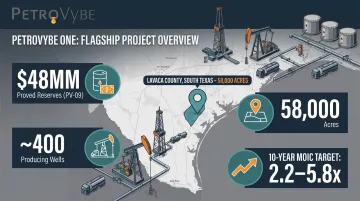
The flagship PetroVybe ONE project holds $48MM in third-party-validated proved reserves (PV-09), operates across ~400 producing wells on 58,000 acres in Lavaca County, and targets a 10-year MOIC of approximately 2.2–5.8x with a ~26% IRR.
Frequently Asked Questions
Is investing in oil a good idea?
Oil is a legitimate investment for diversification and inflation protection — but whether it fits your portfolio depends on how you access it. Public options suit beginners. Direct investment suits accredited investors with specific tax goals and a long time horizon.
How much money do you need to start investing in oil?
Energy ETFs can be purchased for the cost of a single share. Futures require margin account funding (roughly $7,805+ per contract at current CME levels). Direct development partnerships typically require $50,000–$100,000 minimum and accredited investor status.
What are the tax benefits of investing in oil and gas?
Three key advantages apply to direct investors:
- Percentage depletion: a 15% deduction for royalty and mineral rights owners
- IDC deductions: Intangible Drilling Costs can offset active income, including W-2 earnings
- Front-loaded timing: most of that deduction is available in year one, reducing taxable income immediately
Is oil a good hedge against inflation?
Historically, yes. Energy prices tend to rise alongside broader consumer prices, and Federal Reserve research confirms statistically significant oil price pass-through to inflation. Direct asset ownership adds another layer: the tangible asset itself retains value when currency purchasing power falls.
What is the difference between oil stocks and direct oil investment?
Oil stocks expose you to a company's overall performance (management decisions, earnings reports, and market sentiment) alongside oil price movement. Direct investment places capital into actual wells or development projects, aligning returns more closely with production outcomes and offering larger tax advantages alongside higher illiquidity risk.
Do you need to be an accredited investor to invest in oil?
Most public oil investments (stocks, ETFs, futures) don't require accredited status. Private direct development partnerships are restricted to accredited investors under SEC rules, which requires individual income above $200,000 (or $300,000 jointly), net worth above $1 million excluding your primary residence, or qualifying professional licenses.