
If you're an accredited investor, you've probably heard the term "co-investment" tossed around at a conference or in a fund pitch deck. Fewer people can actually explain how it differs from writing a check to a blind-pool fund, or from sourcing a deal entirely on your own.
This article breaks down how co-investments work, their real benefits and risks, how they stack up against fund investing and fully direct deals, and what to weigh before committing capital — including options for investors who don't have existing institutional LP relationships.
Key Takeaways
- Co-investments let you invest directly in a single company alongside a PE fund's deal, often fee-free
- They carry higher concentration risk than a diversified fund, but more transparency and control
- Access is usually gated behind existing LP status at large institutional funds
- Alternatives like direct energy partnerships offer similar alignment without that gatekeeping
How Do Co-Investments Work? The Anatomy of a Deal
A co-investment is a minority, passive stake made directly into a specific portfolio company, alongside a private equity fund's main investment, though structurally separate from it. Unlike committing to a blind pool where the GP later decides what to buy, you know the exact company before you wire capital.
The Key Players: GP, LP, and Co-Investor
Three roles drive every deal:
- General Partner (GP): Sources, underwrites, and executes the transaction. The GP typically continues to control monitoring and exit even after co-investors join.
- Limited Partners (LPs): Investors who've already committed capital to the GP's main fund.
- Co-Investors: Usually existing LPs (sometimes select new investors) invited to put additional capital into one specific deal, on top of their fund commitment.
The catch: participation is invitation-only, and invitations tend to flow toward LPs with strong existing relationships or side-letter rights baked into their fund documents.
The SPV Structure: How Capital Is Pooled and Deployed
GPs typically ring-fence co-investment capital through a Special Purpose Vehicle (SPV): a separate legal entity created to hold just that one asset. Cambridge Associates notes the co-investor is generally passive once capital is deployed, with most funds called and invested almost immediately.
Why does this legal separation matter?
- Isolates a single deal's risk from the fund's other holdings
- Keeps reporting and accounting cleaner for both GP and investor
- Preserves negotiated rights (information access, tag-along, limited veto) without touching the main fund's governance
Sponsors typically retain drag-along rights, meaning a passive co-investor usually exits when the GP exits, not on their own timeline.
The Co-Investment Process: From Offer to Execution
The lifecycle generally runs like this:
- Expression of interest: Often formalized through a subscription agreement or side letter tied to the main fund.
- Selective offer: The GP extends the opportunity based on relationship depth and strategic fit, not a public process.
- Expedited due diligence: Investors review terms and materials on a compressed timeline.
- Capital deployment: Funds are called and invested, often within weeks.
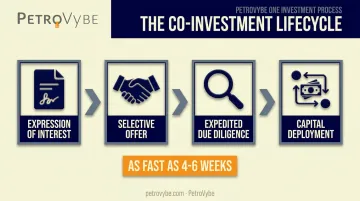
Cambridge Associates describes syndication windows as short as 4-6 weeks, and co-underwriting decisions in as little as five business days in some cases. That speed rewards investors who already have diligence infrastructure in place, leaving everyone else at a disadvantage.
Benefits of Co-Investments
Co-investments earned their reputation for a reason. Here's what draws institutional and high-net-worth capital toward them.
Enhanced return potential. By accessing hand-picked deals with reduced fee drag, co-investors can capture more attractive risk-adjusted returns than a typical blind-pool allocation. That eightfold growth in co-investment fundraising over the prior decade wasn't accidental. LPs chased the stronger economics.
Fee advantages. In Preqin's GP survey, 49% of respondents offered co-investments with no management fee, and another 36% charged a reduced fee. On carry, 48% charged none at all, compared to the standard 1.5%-2% management fee plus 20% carry on a typical fund commitment. The logic: the GP is already compensated through the main fund.
Portfolio diversification. Co-investing across different industries, geographies, and deal types spreads exposure beyond a single fund strategy, broadening your overall alternative-asset footprint.
Transparency and control. This is the biggest philosophical difference from fund investing. In a blind pool, you commit capital before knowing what it will buy. In a co-investment, you know exactly which company you're backing before you sign.
Institutional-grade expertise. Co-investors ride on the GP's due diligence and sourcing network, plus its value-creation playbook: resources most individual investors simply can't replicate solo.
Risks and Challenges of Co-Investments
The upside doesn't come free. Co-investments carry distinct risks that traditional fund investing largely diversifies away.
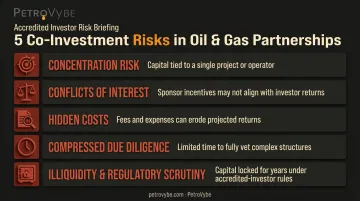
Concentration risk. Because capital lands in a single company, co-investments carry far more idiosyncratic risk than a diversified fund. Overexposure to one deal can distort an otherwise balanced portfolio.
Conflicts of interest. GPs may favor certain LPs when allocating access to the best deals. The SEC's Office of Compliance Inspections and Examinations found advisers that failed to follow disclosed allocation processes, sometimes favoring newer clients or those paying higher fees.
In one enforcement case, the SEC found KKR misallocated more than $17.4 million in broken-deal expenses to its flagship funds between 2006 and 2011 without sharing costs with co-investors who could have participated. KKR paid nearly $30 million to settle, including a $10 million civil penalty.
Hidden costs despite "no-fee" marketing. Even when management fees and carry are waived, investors may still face transaction, legal, or monitoring costs that erode the touted fee advantage.
Compressed due diligence timelines. Fast-moving offers can pressure investors into decisions with far less time for independent verification than a standard fund commitment allows.
Illiquidity and regulatory scrutiny. Co-investments are illiquid, often involve complex tax structures, and lack established secondary markets. Transfers are typically restricted by contract, and exit generally depends on the sponsor's timeline, not yours. Regulators have taken notice too — allocation fairness in co-investment deals remains an active area of SEC examination focus.
Co-Investments vs. Direct Investments vs. Traditional Fund Investing
Where does a co-investment actually sit on the spectrum? Here's a side-by-side comparison.
| Attribute | Traditional PE Fund | Co-Investment | Fully Direct Investment |
|---|---|---|---|
| Structure | LP commits to a blind-pool of multiple companies | LP invests in one GP-sourced company, usually via a single-asset SPV | Investor originates and executes the deal independently |
| Capital Source | Pooled LP commitments | LP capital plus main fund capital, same deal | Investor's own capital only |
| Flexibility | Low: GP picks all companies | Moderate: investor accepts or declines specific deals | High: investor controls sourcing and timing |
| Fees | 1.5%-2% management fee, 20% carry | Often reduced or waived, negotiated deal by deal | No GP fees, but investor bears all execution costs |
| Control | Passive, little say | Passive but deal-specific choice; limited negotiated rights | Full governance and execution responsibility |
The key distinction people mix up: a direct investment is sourced, diligenced, and executed entirely by the investor, with no GP involved. A co-investment rides alongside a GP's existing sourcing, underwriting, and negotiated deal terms.
In other words, co-investments occupy the middle ground: more transparency and control than a blind-pool fund, but far less sourcing burden than going fully solo.
Is Co-Investing Right for You? What Accredited Investors Should Consider
Here's the accessibility problem nobody likes to say out loud: most PE co-investment opportunities are reserved for existing LPs of large institutional funds. If you haven't already committed $1 million-plus to a GP's primary fund, that GP typically isn't calling you with a deal.
Before committing capital to any direct-style opportunity (co-investment or otherwise), run through this checklist:
- Manager track record: Has the team demonstrated repeatable success, not just one lucky deal?
- Third-party engineering or valuation review: Is there independent verification of asset value, not just the sponsor's own projections?
- Transparency in reporting: Will you receive regular, detailed updates, or vague quarterly summaries?
- Clarity on fee structure: Are all costs disclosed upfront, including the ones that survive a "no-fee" headline?
This is exactly the gap PetroVybe was built to close. Rather than requiring prior LP status in a large institutional fund, PetroVybe offers accredited investors direct ownership positions in specific natural gas development projects across South Texas and the Gulf Coast Basin.
Investors work alongside the operating team directly, not behind a fund wrapper. Access starts at $100,000 in liquidity, with no requirement to have previously invested in any fund.
The parallels to PE co-investing are intentional. PetroVybe's leadership brings the kind of underwriting rigor a GP typically provides:
- Track record: A Chief Geophysicist with a 75.2% career hit rate on well selection, against an industry average below 40%.
- Independent verification: Third-party engineered reserve valuations back every project claim.
- Aligned economics: An 80/20 profit split favors the investor, mirroring typical co-investment structures.
- Tax efficiency: Intangible Drilling Cost (IDC) deductions apply against active income, including W-2 earnings, a benefit real estate depreciation typically can't match.

Before committing capital to any single-asset or co-investment-style opportunity, weigh concentration risk honestly against potential return and tax benefits, and talk to a tax or financial advisor who understands your full portfolio picture.
Frequently Asked Questions
What is a co-investment fund?
A co-investment fund is a vehicle, often an SPV, that pools capital from select investors. It uses that capital to make a direct minority investment in one specific portfolio company alongside a lead private equity fund's main investment.
What is the difference between a co-investment and a direct investment?
A direct investment is sourced, diligenced, and executed entirely by the investor with no GP involved. A co-investment rides alongside a GP's existing sourcing, due diligence, and negotiated deal terms.
Who is eligible to participate in a co-investment?
Co-investments are typically offered to existing accredited or institutional LPs of a fund, though some newer platforms are expanding direct access to a broader base of accredited investors.
What fees are typically charged on a co-investment?
Management fees and carried interest are often waived or reduced since the GP is already compensated through the main fund. Transaction, legal, and monitoring costs may still apply.
How much capital is usually required to participate in a co-investment?
Minimums vary widely by deal and sponsor, with institutional checks often falling in the low-single to low-double-digit millions. Researching typical check sizes for your target asset class is worth the time.
Are co-investments riskier than traditional private equity fund investments?
Yes, in one important sense: capital is tied to a single deal rather than spread across a diversified portfolio. That makes independent due diligence and overall portfolio balance especially important before committing.