
Unplanned failures and reactive fixes are among the most common drivers of blown maintenance budgets. Manufacturers alone face an estimated $222 billion in annual costs and losses tied to machinery maintenance, according to NIST research.
Asset lifecycle planning is the structured process of forecasting and managing an asset's cost, performance, and risk from initial planning through disposal. Facilities managers use it. IT departments use it. So do infrastructure agencies — and increasingly, energy developers and investors evaluating long-hold capital projects like natural gas wells.
This guide walks through the five core stages, the measurable benefits of doing this well, and why the discipline matters even more when the asset in question is a producing well worth millions in future cash flow.
Key Takeaways
- Asset lifecycle planning is the strategic framework for managing an asset's value from acquisition to retirement
- Every asset moves through five stages: Plan, Acquire, Operate, Maintain, Dispose
- Disciplined planning cuts downtime, lowers costs, and extends useful life
- In oil and gas, planning quality determines whether a well captures its full value or loses it to preventable decline
What Is Asset Lifecycle Planning?
An "asset" is any resource of value to an organization. That's a broad category. It includes physical equipment, buildings, IT infrastructure, and, in the energy world, a producing well and the reservoir underneath it. Lifecycle planning narrows in on the physical and capital assets that require ongoing investment and upkeep to keep generating value.
Asset lifecycle planning is the forward-looking process of forecasting how an asset will perform, what it will cost, and what interventions it will need across its useful life. It's distinct from asset lifecycle management, which is the ongoing execution and tracking that happens after the plan is set.
Think of it this way:
| Stage | Focus |
|---|---|
| Planning | Budgeting, risk assessment, demand analysis, and strategy completed before or at the start of ownership |
| Management | Day-to-day monitoring, maintenance scheduling, and data tracking that follows |
The core objective is straightforward: **minimize total cost of ownership while maximizing performance and return** over a defined time horizon. This discipline shows up across facilities, IT, and infrastructure management, but the financial stakes climb sharply for high-value, high-risk assets like drilling and production projects.
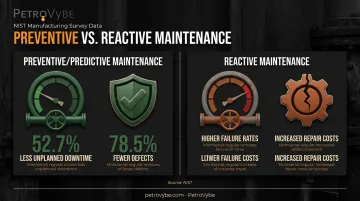
The data backs up why this matters. A 2021 NIST survey of manufacturing facilities compared reactive and proactive maintenance strategies. Plants leaning on preventive and predictive approaches reported 52.7% less unplanned downtime and 78.5% fewer defects than their reactive peers.
Planning ahead isn't a nice-to-have. It's the difference between predictable operations and constant firefighting.
The 5 Stages of Asset Lifecycle Planning
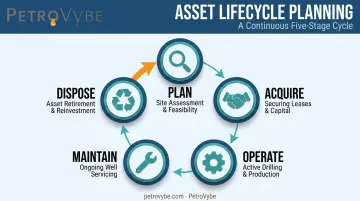
Most frameworks, including the Institute of Asset Management's widely referenced model, boil down to five practical stages: Plan, Acquire, Operate, Maintain, Dispose. The process is cyclical. Once an asset is retired, planning starts over for whatever replaces it.
Stage 1: Plan
Planning starts with identifying a genuine need, then running demand and risk analysis before committing any capital. Teams evaluate projected ROI, weigh alternatives, and build a business case.
In oil and gas development, this stage looks like geological evaluation and reserve estimation. Geoscience and engineering data have to indicate, with reasonable certainty, that a well can be economically produced, long before a rig ever shows up.
Stage 2: Acquire
Acquisition covers vendor or site evaluation, negotiation, purchase, and installation or deployment. This is also where teams budget for the often-underestimated costs of setup and integration — the expenses that don't show up on the initial price tag but hit the budget anyway.
Stage 3: Operate
This is where the asset starts earning its keep. Operating well means monitoring real-time performance data and choosing the right maintenance strategy — preventive, predictive, or routine — based on how the asset actually behaves, not just how it was designed to behave.
Stage 4: Maintain
Scheduled and condition-based maintenance keeps assets performing near peak levels and pushes off costly decline. This phase typically consumes the largest share of an asset's total lifecycle budget and time, making it the most resource-intensive stage in the entire cycle.
Stage 5: Dispose
Disposal decisions come down to a cost-benefit comparison: keep maintaining, or replace? For physical or natural resource assets, this stage can include decommissioning, workovers, or resale to another operator.
Once an asset is retired, the cycle doesn't end. It restarts at Plan for whatever comes next: asset lifecycle planning is a continuous process, not a one-time project.
Benefits of Asset Lifecycle Planning
Extended Asset Life
Timely, planned interventions meaningfully stretch usable life. The Federal Highway Administration found that applying the right preventive treatment to pavement at the right time can extend its life by 5 to 10 years (FHWA). The exact numbers vary by asset class, but the underlying principle holds everywhere: intervene early, and assets last longer, and that same early intervention pays off in the budget just as much as the lifespan.
Reduced Downtime and Lower Costs
Reactive repairs cost more than planned maintenance, almost universally. The Department of Energy estimates that a preventive maintenance program saves 12% to 18% compared to a reactive one (DOE). Reactive work also brings hidden costs:
- Demands overtime labor to fix urgent failures
- Costs more in repairs and replacements than scheduled work would
- Risks secondary equipment damage from cascading failures
- Wastes maintenance staff time on avoidable firefighting
These hidden costs also make it harder to judge when to repair versus replace, which is exactly where lifecycle data earns its keep.
Stronger Decision-Making
Lifecycle data turns repair-vs-replace decisions from guesswork into math. Teams with clean maintenance histories and performance benchmarks can spot a failing asset before it fails, and they can budget capital replacements years in advance instead of scrambling after a breakdown.
Asset Lifecycle Planning in Oil & Gas Development: Why It Matters to Investors
In oil and gas, "the asset" is the well and the reservoir beneath it. Its lifecycle (exploration, drilling, production, decline, workover or recompletion, and eventual plugging) directly shapes investor cash flow and Multiple on Invested Capital (MOIC) over the entire hold period.
Skipping geological due diligence or deferring workovers accelerates production decline and erodes investor returns. Disciplined planning, by contrast, compounds output over the life of the well.
This decline is well documented. EIA data shows Lower 48 production from wells online at the end of 2023 fell from about 11.0 million barrels per day to 6.7 million barrels per day just one year later, with new wells needed simply to offset that natural decline (EIA). That's the decline curve every operator is racing against.
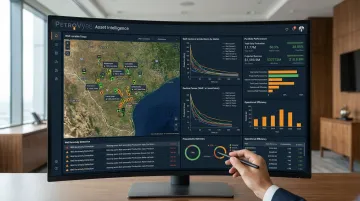
PetroVybe's operating approach illustrates lifecycle discipline applied to natural gas development in south-central Texas. A few examples:
- Chief Geophysicist Michael Stamatedes brings a 48-year career and a 75.2% hit rate on profitable well locations, nearly double the industry average of under 40%. This accuracy directly improves decline curve forecasting and long-term return reliability.
- Luke McIntosh, VP of Asset Intelligence & Performance, monitors production data to drive performance and optimization decisions across the portfolio.
- The PROTECT strategy targets legacy assets through workovers, while the SCALE strategy reinvests cash flow into new drilling identified through geological and production data.
PetroVybe's proved reserves have been valued at $48 million (PV-09) by a licensed third-party engineering firm, and its operating entity holds a Texas Railroad Commission operator license. Both serve as external validation supporting its stated 10-year targets of roughly 2.2x to 5.8x MOIC and 26% IRR.
For accredited investors comparing sponsors, lifecycle planning rigor is a legitimate due-diligence criterion. Questions worth asking include:
- How is the sponsor evaluating geology before committing capital?
- Who is monitoring production data once wells go online?
- Is legacy production being protected through workovers, or left to decline unmanaged?
Best Practices for Building an Asset Lifecycle Plan
Building a durable lifecycle plan doesn't require guesswork. A few practices separate organizations that manage assets well from those constantly playing catch-up:
- Track every asset in detail. Record acquisition cost, condition, and maintenance history for each asset. This data is what makes every later decision (repair or replace, extend or retire) defensible rather than reactive.
- Use performance KPIs. Benchmark asset health regularly and flag emerging problems before they become expensive failures.
- Adopt lifecycle management software, or partner with an operator who already has it figured out. For complex capital assets, such as energy development projects, partnering with an operator that has proven lifecycle processes in place can matter more than building the capability in-house.
These practices work well for internal fleets and facilities, but complex capital assets, like producing oil and gas wells, often need deeper expertise. PetroVybe's Chief Geophysicist has a 75.2% success rate over a 48-year career, and its asset intelligence team tracks production data to manage lifecycle needs from vetting through monitoring.
Frequently Asked Questions
What is asset lifecycle planning?
It's the process of forecasting and managing an asset's needs from acquisition through disposal, aimed at maximizing value and minimizing total cost of ownership over the asset's useful life.
What are the 5 stages of the asset lifecycle?
Plan, Acquire, Operate, Maintain, and Dispose. Once an asset is retired, the cycle repeats as planning begins for its replacement.
What is the difference between asset lifecycle planning and asset lifecycle management?
Planning is the forecasting and strategy phase: budgeting, risk assessment, demand analysis. Management is the ongoing execution and tracking that follows once the plan is in motion.
How does asset lifecycle planning affect investment returns?
Disciplined planning reduces unplanned costs and extends productive asset life. In capital-intensive projects, that directly protects and compounds returns such as MOIC over the hold period.
How often should an asset lifecycle plan be reviewed?
Reviews should happen at key milestones, such as annual budget cycles, major maintenance events, or performance deviations, rather than relying solely on a fixed calendar.
What industries rely most heavily on asset lifecycle planning?
Facilities and IT management, transportation infrastructure, manufacturing, and capital-intensive natural resource development such as oil and gas all depend heavily on this discipline.