Paper wealth has a blind spot. Stocks can crash. Bonds lose value to inflation. Cash sitting in a savings account quietly loses purchasing power every year. Physical assets, on the other hand, have carried intrinsic value through currency collapses, banking crises, and recessions for centuries.
This guide breaks down what physical wealth actually means, where it fits alongside other wealth-building frameworks, and how high-income earners and accredited investors build and protect it through real estate, precious metals, and energy development.
Key Takeaways
- Physical wealth means tangible assets with value independent of banks or markets.
- Real estate, precious metals, and natural resources each hedge inflation differently.
- Oil and gas working interests can offset active income, not just passive income.
- Diversification, independent valuation, and licensing checks guard against concentration risk.
What Is Physical Wealth? Defining Tangible Assets
Economists draw a clean line between two categories. Financial assets — stocks, bonds, cash — are claims backed by a counterparty's promise to pay. Physical (or "real") assets have no counterparty. Their value comes from the asset itself: a building, a piece of farmland, a reserve of natural gas in the ground.
The International Monetary Fund's (IMF) classification system treats buildings, equipment, land, and subsoil resources as nonfinancial assets, separate entirely from monetary instruments like stocks or bonds. That distinction matters because physical assets often keep functioning and holding value even when banks freeze, currencies devalue, or markets seize up.
Common Examples of Physical Wealth
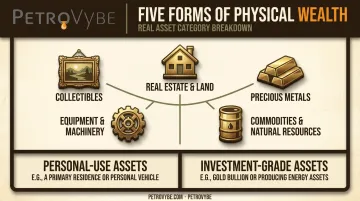
Physical wealth shows up in several recognizable forms:
- Real estate and land — homes, commercial buildings, undeveloped acreage
- Precious metals — gold, silver, and other stores of value
- Commodities and natural resources — oil, natural gas, and mineral reserves
- Equipment and machinery — productive business assets
- Collectibles — art, vintage vehicles, rare items with resale demand
Natural resource reserves deserve their own mention. Oil and natural gas in the ground are finite, extractable, and tied directly to global energy demand — a combination that sets them apart from a house or a gold bar. A property can sit idle; a producing well or a proven reserve generates cash flow tied to a global commodity market.
Beyond the type of asset, physical wealth also splits into two functional buckets based on purpose. Personal-use assets are things like the home you live in — they don't generate income on their own. Investment-grade assets, such as a rental property or a working interest in a producing well, are built specifically to generate income and appreciate over time.
The 5 (or 6) Types of Wealth: Where Physical Assets Fit
Sahil Bloom's The 5 Types of Wealth, published by Penguin Random House in February 2025, popularized a framework built around Time, Social, Mental, Physical, and Financial Wealth. In that model, "physical wealth" means your body and health, not your balance sheet.
Both definitions have merit. Health matters. But this guide focuses on the asset-based definition for a simple reason: it's actionable. You can build a plan around acquiring real estate or a working interest in a natural gas project. You can't "acquire" health the same way.
Here's the connection worth making: tangible asset wealth actively supports the other four categories.
- Financial wealth benefits from an inflation-resistant store of value.
- Time wealth grows when passive income replaces active work hours.
- Mental wealth improves with reduced financial anxiety.
- Legacy and social wealth extend through assets that can be passed down or sold.
Tangible assets aren't a replacement for the broader wealth framework. They're the durable foundation underneath it.
Why Physical Assets Are Essential for Wealth Building
Inflation Protection and Portfolio Diversification
A landmark study from the Federal Reserve Bank of San Francisco tracked returns across 16 advanced economies from 1870 to 2015. The result: housing produced a 7.05% real annual return, compared to just 0.98% for cash-equivalent bills over that 145-year span. That's over a century of evidence that tangible assets outrun currency erosion, not a short-term market fluctuation.
Gold tells a similar, if more nuanced, story. The World Gold Council's research finds gold to be a convincing long-run inflation hedge, though its short-term correlation to CPI is weaker than many assume. In other words: don't expect gold to track monthly inflation prints, but expect it to hold value over a decade or more.
Physical assets also tend to move independently of stocks and bonds. Commodities and gold, in particular, have historically shown low correlation to a traditional 60/40 portfolio, smoothing out volatility when equities drop.
Tax Advantages and Passive Income
This is where physical assets separate themselves from a typical stock portfolio:
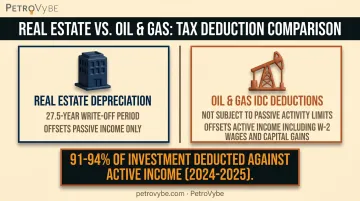
- Real estate depreciation lets owners write off a residential building's value over 27.5 years, though these deductions generally only offset passive income.
- Oil and gas Intangible Drilling Cost (IDC) deductions work differently: a working interest holder isn't automatically subject to passive activity limits, so eligible IDC deductions can offset active income, including W-2 wages and capital gains.
- Rental income, royalty income, and production revenue provide ongoing cash flow on top of appreciation.
PetroVybe partners, for example, saw 91-94% of their investment deducted against active income in 2024 and 2025, concrete proof of how directly this structure can offset tax liability.
Add the legacy angle: tangible assets can be passed to heirs, redeveloped, or sold outright for a lump-sum exit, flexibility that most financial instruments simply don't offer.
Building Physical Wealth Through Strategic Asset Classes
Not all physical assets behave the same way. Matching the asset class to your goals matters as much as owning tangible assets in the first place.
Four categories cover most of the physical wealth landscape:
- Real Estate: The most familiar entry point, offering appreciation, rental income, and depreciation-based deductions capped by passive loss rules (unless you qualify as a real estate professional).
- Precious Metals and Commodities: Gold, silver, and raw materials serve as stores of value during currency instability, though they don't generate income like a rental property or producing well.
- Business Equipment and Infrastructure: Owned equipment and infrastructure represent tangible business assets that build balance-sheet value, separate from goodwill or brand equity.
- Energy and Natural Resource Development: Oil and gas development combines direct ownership of a finite, tangible reserve with active-income tax deductions and strong cash flow, a combination real estate and metals can't fully replicate.
PetroVybe offers accredited investors a direct look at how this works in practice. The company develops Natural Gas Liquids projects across South Texas and the Gulf Coast Basin, structured so partners can access a first-year tax deduction of up to roughly 70% against active income, with a targeted 10-year MOIC range of approximately 2.2x to 5.8x and an IRR near 26%. Those figures illustrate what energy development can offer as a physical asset class — not a guarantee, but a real-world example of tangible reserve ownership paired with tax structuring.
Choosing among these classes comes down to your risk tolerance, liquidity needs, and, for private placements like oil and gas development, your accredited investor status.
Protecting Your Physical Wealth: Risk Management Strategies
Protecting Your Physical Wealth: Risk Management Strategies
Owning physical assets protects your wealth only when you actively manage the risks involved.
Diversification is the first line of defense. Putting everything into one rental property or one gold position creates the same concentration risk you're trying to escape by leaving paper assets. Spread capital across multiple asset classes, such as real estate, metals, and energy, so no single downturn wipes out your position.
Independent verification matters just as much. Reputable oil and gas operators commission third-party engineering firms to produce reserve reports (often called PV-09 reports) that validate a project's proved reserves and estimated value. This independent technical assessment lets investors confirm a project's stated reserves and value before committing capital.
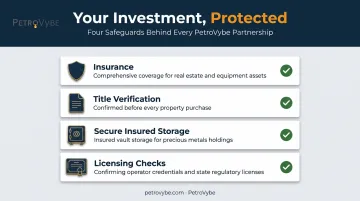
Practical protection measures round out the picture:
- Insurance on real estate and physical equipment
- Title verification before any property purchase
- Secure, insured storage for precious metals
- Licensing checks confirming operators hold proper state licenses, such as a Texas Railroad Commission operator's license for energy developers
None of these steps are optional extras. They're the difference between owning an asset and owning a liability with someone else's name on the paperwork.
Common Mistakes to Avoid When Building Physical Asset Wealth
Even experienced investors trip over the same few errors:
- Over-concentrating in one illiquid asset. A single property or a single well interest without an exit strategy can trap capital for years longer than planned.
- Skipping operator due diligence. Before committing capital to a private physical asset deal, check the operator's track record, credentials, and independent reviews. A platform like Invest Clearly, where verified investors leave public feedback, is a good starting point.
- Ignoring tax structuring. Physical assets like oil and gas development carry real deduction potential. That potential only holds if you work with a CPA or tax advisor who understands how IDC deductions, depreciation schedules, and at-risk rules apply to your specific situation.
Avoiding these mistakes just takes slowing down before you write a check.
Frequently Asked Questions
What are the 5 types of wealth?
The commonly cited framework includes financial, physical (health), time, social, and mental wealth, popularized by Sahil Bloom's 2025 book. Physical wealth is also increasingly defined as tangible asset ownership, such as real estate and natural resources.
What is an example of physical wealth?
Real estate, precious metals like gold and silver, and natural resource assets such as oil and natural gas reserves are all examples. Each offers intrinsic value independent of financial markets.
What's the difference between physical wealth and financial wealth?
Physical wealth consists of tangible assets with intrinsic value, such as land or metals. Financial wealth consists of paper claims, like stocks and bonds, that depend on a counterparty's promise to pay.
How does physical wealth protect against inflation?
Tangible assets tend to retain or increase in value as currency purchasing power declines, since their worth isn't tied to a dollar-denominated claim. Real estate and gold have historically outpaced cash returns across multiple inflationary periods.
Are natural gas and oil development considered physical wealth investments?
Yes. They involve direct ownership of a finite, extractable, tangible resource with real market value and cash-flow potential, placing them firmly in the physical asset category.
How can accredited investors gain access to physical asset investments like oil and gas?
Accredited investors can partner directly with private development companies like PetroVybe, which offers equity participation in energy development projects for qualified partners meeting SEC accreditation standards.