

Income optimization isn't just tax planning. It's the combination of budgeting, career growth, tax efficiency, and investment strategy working together. What moves the needle for someone earning $60,000 looks nothing like what works for someone earning $600,000.
This guide breaks down strategies by income level: foundational habits for early-career earners, advanced tax planning for high-income professionals, and the alternative investment tools accredited investors use to protect and grow wealth.
Key Takeaways
- Income optimization blends earning, saving, tax efficiency, and investing into one strategy
- Tactics must scale with income — a 401(k) match matters less once an investor maxes out tax-advantaged accounts
- Tax-advantaged accounts (401k, IRA, HSA) form the foundation at every income level
- Accredited investors can access deductions like Intangible Drilling Costs that offset active income
- Diversified passive income streams build resilience against inflation over time
What Is Income Optimization and Why Strategies Differ by Level
Income optimization means managing your earnings, tax exposure, and asset growth together to maximize long-term net wealth. It requires treating taxes, savings, and investments as one interconnected system, not three separate checkboxes.
Here's why a one-size-fits-all approach fails. Someone earning $70,000 and just starting to capture their 401(k) match needs a completely different playbook than someone sitting on $150,000 in liquid savings and facing a 32% marginal tax rate:
- Early-career earner ($70K, building savings): Needs behavioral discipline, such as automating contributions and closing the 401(k) match gap.
- High-income saver ($150K+ liquid, 32% bracket): Needs tax strategy, such as sheltering active income through vehicles like intangible drilling cost (IDC) deductions from direct energy investments.
Inflation makes this work urgent. Federal tax brackets are indexed to chained CPI-U, which widened brackets by roughly 7.0% for 2023 and another 5.5% for 2024. That indexing helps, but it doesn't fully protect everyone.
Pew Charitable Trusts found that bracket creep was especially damaging in the 15 states that hadn't indexed their own income tax brackets to inflation at the time of its analysis.
In plain terms: if your state doesn't adjust its brackets, a cost-of-living raise can push you into a higher tax bracket without actually improving your purchasing power. That's the trap income optimization is designed to avoid.
Income Optimization for Entry-Level and Early-Career Earners
Early career is when habits get set — for better or worse. The strategies here aren't flashy, but they compound hard over decades.
Budget Before You Optimize Anything
The 50/30/20 framework, popularized by Elizabeth Warren, splits take-home pay three ways:
- 50% toward needs (rent, groceries, utilities)
- 30% toward wants (dining out, subscriptions, travel)
- 20% toward savings and debt payments
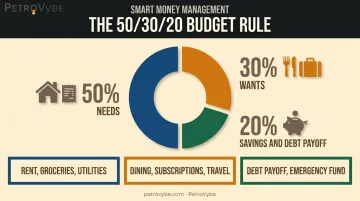
Track your actual spending against this split for 90 days. Most people are shocked by where their money actually goes versus where they think it goes.
As income rises, resist the urge to scale up every category proportionally: that's lifestyle inflation, and it's the single biggest reason raises don't translate into wealth.
Capture the Match Before Anything Else
If your employer offers a 401(k) match, contribute enough to get all of it before doing anything else with extra cash.
Vanguard's 2025 research found the average promised employer match sits at 4.6% of pay, with a median of 4.0%. That match is a guaranteed return: nothing in the market beats it consistently.
Build Your Foundation First
Before investing aggressively, lock down two things:
- Pay off high-interest debt. Credit card APRs routinely exceed 20%. No investment reliably beats that.
- Build a 3-6 month emergency fund. FINRA identifies this range as the benchmark for weathering job loss or unexpected expenses without derailing your finances.
Skip these steps and one bad month can force you to liquidate investments at the worst possible time.
Optimizing Income for Mid-Career and High-Income Earners
Once the basics are handled, the game shifts. At this stage, understanding your marginal tax bracket and using every available account becomes the priority.
Know Your Bracket, Time Your Moves
Your marginal rate, not your average rate, determines the value of every deduction and the cost of every extra dollar earned. Someone near a bracket threshold might benefit from deferring a bonus, accelerating a deduction, or timing a Roth conversion for a lower-income year.
Max Out What's Available
For 2026, the IRS increased contribution limits across the board:
| Account | 2026 Limit |
|---|---|
| 401(k)/403(b)/457/TSP elective deferral | $24,500 |
| 401(k) catch-up (age 50+) | $8,000 |
| 401(k) catch-up (ages 60-63) | $11,250 |
| Traditional + Roth IRA combined | $7,500 |
| HSA (self-only / family) | $4,400 / $8,750 |
Maxing these accounts isn't optional at this income level: it's the single largest lever most earners can pull before exploring anything more advanced.
Asset Location and Tax-Loss Harvesting
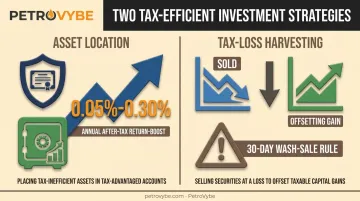
Asset location means placing tax-inefficient investments (like taxable bonds) inside tax-advantaged accounts, while keeping tax-efficient holdings (like index funds) in taxable brokerage accounts. Vanguard estimates this can add 0.05% to 0.30% in after-tax returns annually, modest per year but meaningful compounded over decades.
Tax-loss harvesting offsets capital gains by selling losing positions. Just watch the wash-sale rule: buying a substantially identical security within 30 days before or after the sale disallows the loss entirely.
Grow the Income Side Too
Optimization isn't only about defense. Salary negotiation, skill development, and understanding equity compensation (RSUs, stock options) directly increase what you have to optimize in the first place. A well-timed RSU vesting strategy can meaningfully change your tax picture for the year.
By this income level, the standard deduction alone often leaves real money on the table. Once retirement accounts are maxed, some high earners turn to direct alternative investments, such as oil and gas development partnerships like PetroVybe, which offer intangible drilling cost deductions against active W-2 income and capital gains.
Advanced Strategies for High Earners and Accredited Investors
Once you've maxed your 401(k), IRA, and HSA, those accounts stop moving the needle. There's only so much room in them. This is where accredited investors start looking at alternative asset classes.
Beyond Stocks, Bonds, and Mutual Funds
Alternative investments (private real estate, private equity, oil and gas development) offer diversification and tax treatment that traditional accounts can't match. Once retirement account limits are maxed out, these alternative vehicles become the primary lever for both continued growth and additional tax efficiency, especially for high-income earners with capital gains exposure. To qualify as an accredited investor, the SEC requires meeting one of the following thresholds, each of which opens access to tax-advantaged structures unavailable through standard brokerage accounts:
- Net worth over $1 million, excluding your primary residence
- Individual income over $200,000 (or $300,000 jointly) for two consecutive years
- Series 7, 65, or 82 licensing
The IDC Deduction: A Different Kind of Tax Break
Here's what makes oil and gas direct participation programs unique: Intangible Drilling Cost (IDC) deductions can offset active income, including W-2 wages and capital gains, not just passive income. That's a meaningful structural difference from most alternative investments, where deductions are typically restricted to passive income only.
This is the space PetroVybe operates in. As a Texas-based natural gas developer working the Lavaca County and Gulf Coast Basin region, PetroVybe offers accredited investors direct partnership positions in development projects. On PetroVybe ONE specifically:
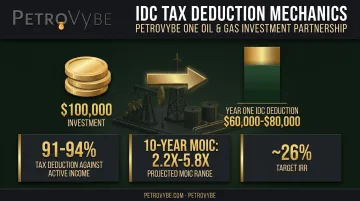
- Partners received 91-94% tax deductions against active income in recent years
- The project targets a 10-year MOIC of roughly 2.2x-5.8x with a ~26% target IRR
- Monthly passive distributions are projected to exceed $10,000/month per unit during peak production
A $100,000 investment might generate a $60,000-$80,000 deduction in year one alone through the IDC election, money that directly reduces your current-year tax bill on active income.
Eligibility matters. These programs require accredited investor status and typically $100,000+ in liquidity. Always consult a CPA or financial advisor before committing capital, since commodity pricing and production variability mean actual results can differ from projections.
For balanced context, real estate depreciation (27.5-year residential, 39-year commercial recovery periods) and Qualified Opportunity Zone funds offer their own tax advantages. Both, however, come with more restrictive rules around passive income treatment and holding periods.
Building Sustainable Passive Income Streams
Passive income means cash flow that continues with minimal ongoing effort. It's the piece that protects your wealth from inflation once your active income optimization is dialed in.
Common entry points include:
- Dividend-paying stocks: S&P Dow Jones Indices reported a 2.53% weighted dividend yield for paying issues in Q4 2025
- REITs: The FTSE Nareit All Equity REITs Index yielded 4.07% as of December 2025
- Rental real estate: Short lease terms allow rent repricing, offering some inflation protection, though results vary by market and financing structure
- Royalty-based investments: Natural resource royalties provide tangible-asset exposure tied to commodity markets
- Direct energy development partnerships: Accredited investors can take direct equity positions in oil and gas development projects, such as PetroVybe's natural gas partnerships, which target monthly passive distributions during production alongside first-year tax deductions of up to roughly 70% against active income
The common thread across research on portfolio resilience: diversification across asset classes, not concentration in one stream, is what cushions volatility. Relying on a single passive income source, even a strong one, leaves you exposed if that specific market softens.
Frequently Asked Questions
What is income optimization and how is it different from tax planning?
Income optimization covers earning growth, budgeting, and investing as a whole system. Tax planning is one component of that system, focused specifically on reducing what you owe the IRS.
What income strategies work best for someone just starting their career?
Start with the 50/30/20 budget, capture your full employer 401(k) match, and build a 3-6 month emergency fund. Advanced investing can wait until these fundamentals are solid.
How can high-income earners reduce their tax burden while growing wealth?
Max out retirement accounts and use tax-loss harvesting to offset gains. Accredited investors can also consider alternative investments, like oil and gas direct participation programs, for active-income deductions.
What's the difference between active and passive income optimization?
Active income optimization grows what you earn through salary, negotiation, or business income. Passive optimization builds income streams like dividends, royalties, and rental income that require minimal ongoing time.
Are alternative investments like oil and gas development suitable for tax optimization?
For accredited investors, intangible drilling cost (IDC) deductions can offset a significant portion of active income in the same tax year. These investments require real due diligence and professional guidance before committing capital.
Do I need a financial advisor to optimize my income?
You can self-direct basic budgeting and retirement contributions. Once your income, investments, and available deductions get more complex, a CPA or advisor typically pays for themselves.