That confusion has real consequences. Private credit alone reached $1.34 trillion in the U.S. and nearly $2 trillion globally by mid-2024, growing roughly fivefold since 2009, according to the Federal Reserve's analysis of bank lending to private credit. Knowing which structure you're actually buying matters for protecting your principal.
This article breaks down what asset-based investing means, how it differs from asset-backed securities, the main asset categories available (including natural resources), the benefits and risks, and how to evaluate a specific opportunity before writing a check.
Key Takeaways
- Ties returns to a tangible or contractual asset, not stock market speculation
- Asset-based means direct collateral; asset-backed means pooled, securitized claims
- Common categories include real estate, receivables, equipment, and oil and gas reserves
- Diversification, income generation, and select tax advantages set this category apart
- Returns hinge on asset quality, operator track record, and independent third-party validation
What Is Asset-Based Investing?
Asset-based investing means your capital is secured by or directly invested in a tangible or contractual asset with stand-alone value. Think real estate, equipment, receivables, or producing oil and gas wells rather than a slice of a company's stock price.
The core principle is collateral protection. If a specific venture underperforms, the underlying asset still holds intrinsic value. That's a meaningfully different risk profile than an unsecured equity position, where a bad quarter can wipe out shareholder value overnight with nothing tangible left to fall back on.
Asset-Based vs. Asset-Backed: Clearing Up the Confusion
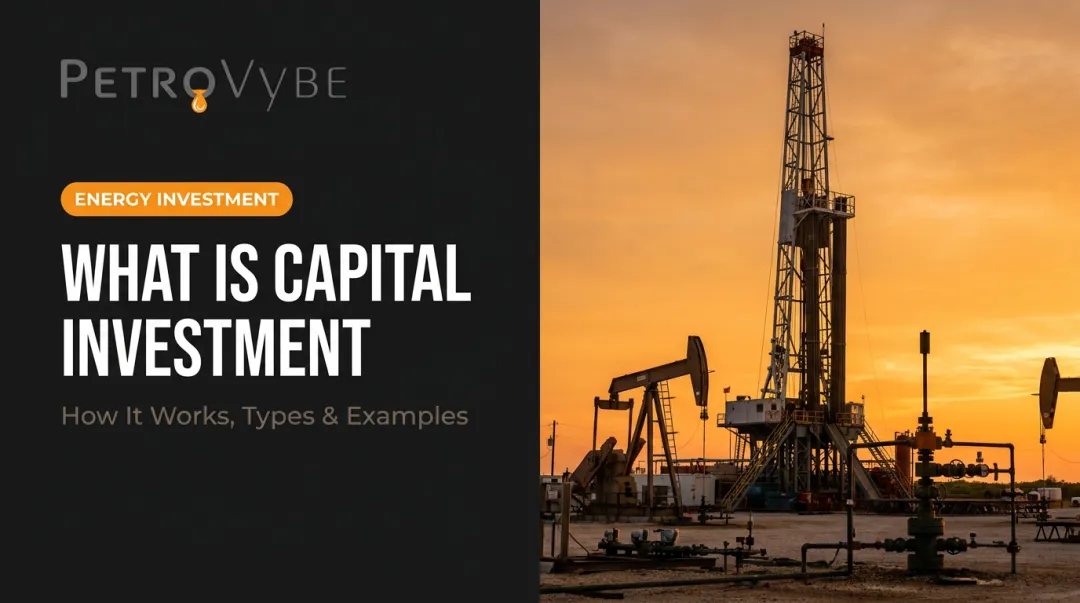
The Office of the Comptroller of the Currency draws a clear line here. Asset-based lending is a fully collateralized loan product where advances are tied to a specific "borrowing base," typically identifiable assets like receivables or inventory that the lender can point to directly.
Asset-backed securities work differently. These package interests in loans or receivables, pool them, and sell them through a bankruptcy-remote special purpose vehicle. A mortgage-backed security, for example, represents a claim on cash flows from an entire pool of mortgage loans, not any single mortgage.
Here's the practical contrast:
| Aspect | Asset-Based | Asset-Backed |
|---|---|---|
| Structure | Direct investment in one operating project, such as an oil and gas well | Security bundling thousands of loans or receivables |
| Return Driver | That specific project's wells and cash flow | Performance of the entire pooled portfolio |
| Control | You evaluate and track the actual asset directly | Managed through a payment waterfall you don't control |
This distinction isn't academic. Liquidity, due diligence steps, and risk exposure differ substantially between the two. A direct asset-based position lets you evaluate one specific asset. A pooled asset-backed structure requires trusting an entire portfolio's aggregate performance, often with far less visibility into individual holdings.
How Asset-Based Investing Works
The mechanics are straightforward: you commit capital directly tied to a specific income-producing asset. Returns come from that asset's cash flow or appreciation, not from broader market swings.
Three components typically drive the structure:
- The asset owner or operator: manages and develops the underlying asset, such as a property, a portfolio of receivables, or an oil and gas project
- The capital provider: that's you, the investor, contributing funds in exchange for a defined stake or return
- The governing agreement: spells out collateral rights, reporting obligations, and how returns get distributed
Because the agreement defines exactly what you own a claim against, due diligence tends to focus on the asset itself:
- Its condition and physical state
- Its cash-flow history
- Who's operating it
That's a very different process than analyzing a company's balance sheet and stock chart.
Common Types of Asset-Based Investments
Asset-based structures span several categories, each with distinct collateral and cash-flow characteristics.
Real Estate and Receivables
- Rental income properties: revenue-generating assets valued for steady cash flow
- Hard money loans: short-term loans secured by property value
- Commercial real estate debt: backed by appraised property value
- Accounts receivable: invoices leveraged as collateral in private credit deals
- Inventory: goods on hand used to secure working capital
- Equipment and machinery: hard assets pledged for growth capital
Natural Resources and Energy
Oil, natural gas, and mineral rights development represent another major category. Producing wells and proved reserves, validated by independent engineering reports, serve as the tangible, cash-flow-generating collateral.
Interest in natural gas specifically has picked up for a concrete reason: electricity demand. U.S. data centers represented 45% of global data-center electricity consumption in 2024, and the International Energy Agency projects U.S. data-center electricity use will rise roughly 130% by 2030.
Natural gas already supplies more than 40% of that electricity and is expected to add over 130 TWh of new annual generation through 2030 to help meet it.
That demand curve is why natural gas development has become a timely asset-based category. PetroVybe, a Texas-based natural gas development company, gives accredited investors direct access to producing wells and proved reserves across South Texas and the Gulf Coast Basin.
Its position spans approximately 58,000 acres in Lavaca County, backed by around 400 acquired wells plus more than 57 planned new wells.
Why Investors Choose Asset-Based Investments: Key Benefits
Diversification and Downside Behavior
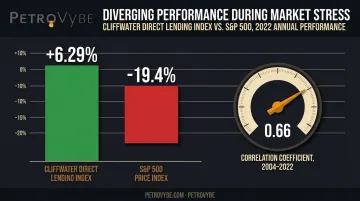
Alternative and hard-asset investments generally move differently than public equities. The Cliffwater Direct Lending Index showed a 0.66 correlation with the S&P 500 from September 2004 through December 2022, according to Cliffwater's Q4 2022 direct lending report — meaningful co-movement, but far from a 1-to-1 relationship.
That divergence showed up during the 2022 downturn. The CDLI returned 6.29% for the full year, while the S&P 500 price index fell 19.4%, its worst annual decline since 2008.
Consistent Income and Principal Protection
Because value is tied to a real asset, several benefits follow naturally:
- Income generation: rental payments, royalty checks, and interest arrive on a recurring schedule rather than depending solely on long-term appreciation
- Principal protection: a claim against collateral value remains even if a specific venture underperforms, unlike an unsecured stock position
- Lower downturn correlation shows up in the data too, since hard-asset and private-credit structures don't always fall in lockstep with equities
Tax Efficiency: A Standout Advantage in Natural Gas
These asset-backed benefits apply broadly across hard-asset investments. Natural gas development pushes the advantage further, offering one of the strongest tax tools available in any asset class: Intangible Drilling Costs (IDCs). Under IRC Section 263(c), operators can elect to deduct qualifying drilling costs immediately rather than capitalizing them over time, and this deduction isn't limited to passive income.
That's a real structural difference from real estate depreciation, which is generally restricted to offsetting passive income unless you qualify as a real estate professional. IDC deductions can offset W-2 wages and capital gains directly.
PetroVybe's 2024 partners received a 94% tax deduction against active income, with 2025 partners landing at 91%. On a $100,000 investment, IDC deductions typically run 60–80% of invested capital, meaning $60,000 to $80,000 in first-year deductions is realistic before any production income even arrives. (Individual results vary based on basis, at-risk limitations, and personal tax circumstances; a qualified tax advisor should confirm specifics.)
Risks and Considerations Before You Invest
No structure is without downsides, and asset-based investing carries its own set of considerations.
Liquidity risk. Most private asset-based investments involve multi-year hold periods. Private credit fund terms average around 8.5 years, and SEC guidance warns that restricted securities may need to be held indefinitely since no active secondary market may exist.
Operator and asset-quality risk. Returns depend heavily on the people managing the underlying asset. This is why independent verification matters:
- Third-party engineering reports validate reserve estimates
- Audited valuations confirm financial claims
- Track record checks reveal how an operator performed in prior cycles
PetroVybe, for instance, points investors toward its Invest Clearly reviews (5.0 rating across verified accredited investors), a clean audit from Weaver, and Texas Railroad Commission operator license records. All three are independently checkable rather than self-reported.
Market and structural risk. Interest rate shifts and valuation changes affect asset-based positions too. Always confirm whether you're looking at a direct asset-based position or a pooled asset-backed structure. The risk exposure, and your recourse if something goes wrong, differs significantly between the two.
How to Evaluate and Get Started with Asset-Based Investing
Getting into asset-based investing responsibly means working through a few concrete steps rather than jumping at the first attractive pitch deck.
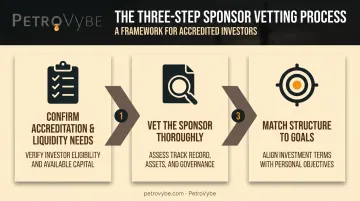
Confirm accreditation and liquidity needs. You need $200,000+ individual income ($300,000 joint) for two years, or $1 million+ net worth excluding your primary residence. Private offerings typically require 3-10 year commitments, so match this to your liquidity timeline.
Vet the sponsor thoroughly. Request independent engineering or valuation reports. Review the operator's history in prior ventures. Check third-party platforms like Invest Clearly for verified investor feedback rather than relying solely on marketing materials.
Match structure to your goals. Decide whether a direct asset-based position or a pooled vehicle fits your risk tolerance and tax situation. Natural gas development partnerships such as PetroVybe, for example, offer direct exposure to producing wells and proved reserves for accredited investors seeking tangible-asset, tax-efficient positions.
Frequently Asked Questions
What are asset-based investments?
They're investments secured by or tied to tangible or income-generating assets, such as real estate, equipment, or natural resources, rather than stock performance alone. The underlying asset carries stand-alone collateral value.
Where can I get a 10% return on my money?
Private credit and select natural resource development deals have historically targeted high-single to double-digit returns; the Cliffwater Direct Lending Index reports a 9.47% annualized return since inception. Actual returns depend heavily on asset class, structure, and sponsor, and none are guaranteed.
What is the smartest asset to invest in?
There's no universal answer. Investors commonly favor tangible, income-generating, diversifying assets like real estate, energy, and receivables for principal protection and inflation resistance, but the right fit depends on your risk tolerance and goals.
What's the difference between asset-based lending and asset-backed securities?
Asset-based lending is a direct, on-balance-sheet loan secured by specific identifiable collateral. A special purpose vehicle pools and securitizes these claims, holding them off-balance-sheet.
Is asset-based investing safe for accredited investors?
No investment is risk-free. Collateral backing generally offers more downside protection than an unsecured stock position, but thorough due diligence on the operator and asset remains essential.
How does oil and gas investing qualify as an asset-based investment?
Independent engineering reports verify producing wells and proved reserves as tangible, appraisable, cash-flow-generating assets. That makes direct working interests a legitimate form of asset-based investing, similar in structure to real estate or equipment financing.