

That's the risk every wealth management firm carries when marketing sits on the back burner. You've spent years mastering portfolio construction, tax strategy, and estate planning. But translating that expertise into a client-acquisition system that runs without your daily attention is a different skill entirely, and most advisors never learned it in business school.
This guide covers what actually works: building your audience foundation, choosing the right channels, earning trust that converts leads into clients, staying compliant, and applying a practical 3-3-3 framework to keep your efforts focused instead of scattered.
Key Takeaways
- HNW prospects respond to trust, exclusivity, and personalization, not mass-market messaging
- A documented niche and ideal client profile anchors every high-performing marketing plan
- Thought leadership and personal LinkedIn branding are the top channels for reaching HNW prospects
- The SEC Marketing Rule must guide campaigns from day one, not just the final review
- Referrals and client experience deliver the cheapest, most durable growth of any channel
What Is Wealth Management Marketing?
Wealth management marketing is the full-funnel process of promoting advisory services, from the moment a prospect first encounters your name to the moment they sign on as a client and beyond. It spans content, referrals, digital ads, events, and everything between, all aimed at one outcome: turning strangers into long-term, paying relationships.
Marketing to high-net-worth (HNW) and ultra-high-net-worth (UHNW) clients looks nothing like marketing a checking account or a robo-advisor app. Nurture cycles run longer, expectations for personalization run higher, and exclusivity often matters more than reach.
66% of HNW investors want more personalization from their wealth manager, yet only 33% say they're currently getting it, according to PwC's high-net-worth investor survey. That gap is where firms win or lose clients.
Three Challenges Unique to Wealth Managers
Wealth managers face marketing hurdles most industry playbooks don't address:
- A narrow, skeptical audience. HNWIs are pitched constantly and trust few of those pitches.
- Shifting generational expectations. Heirs research and select advisors on entirely different terms than their parents did.
- Thin digital infrastructure. Many firms still run on referrals alone, with no repeatable system behind them.
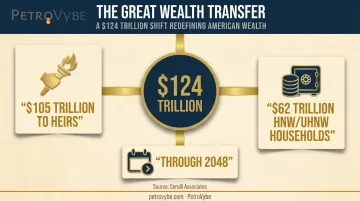
That second point carries real weight. Cerulli projects $124 trillion in wealth will transfer through 2048, with $105 trillion landing directly in heirs' hands and roughly $62 trillion tied to HNW and UHNW households alone.
Capgemini's research adds a sharper edge: a large share of next-gen heirs expect to leave their parents' firm within a year or two of inheriting, often following the relationship manager rather than the brand. Firms not marketing to the next generation now are marketing to a shrinking client base later.
Why Marketing Is No Longer Optional
Firms without a documented marketing plan are already falling behind. Competitors who've modernized their digital presence, built content libraries, and automated their nurture sequences are capturing the visibility and trust that used to belong to whoever had the best reputation at the country club. Referrals still matter. They just aren't enough on their own.
Building Your Marketing Foundation: Audience, Niche & Brand
Know Your Audience
Every high-performing marketing plan starts with a documented ideal client persona, built from real client data instead of assumptions:
- Demographics: age, income bracket, profession, family structure
- Financial goals: retirement timeline, business succession, wealth transfer
- Risk tolerance and investment philosophy
- Emotional pain points: outliving savings, legacy concerns, tax burden anxiety
Don't stop at spreadsheets. Ask your best clients why they chose you and what almost stopped them.
You also need to know where your audience spends time online. High-net-worth individuals (HNWIs) historically used at least three digital devices and spent five or more hours a day on them, according to Strategy&/PwC research — still one of the most specific HNW-focused figures available. Guessing which platform matters wastes ad spend fast.
Define Your Niche & Value Proposition
"We do tax planning" doesn't differentiate anyone anymore. It reads exactly like fifty other advisor websites. Sharper positioning tied to a specific client pain point performs far better.
Consider how alternative-asset specialists carve out a niche. Advisors who build real expertise in tax-advantaged energy investments, such as the oil and gas development partnerships offered by companies like PetroVybe, speak directly to a defined segment: high-income clients carrying a heavy active-income tax burden who want diversification beyond stocks, bonds, and real estate.
That specificity works because it names the exact pain (a six-figure W-2 tax bill) and the exact mechanism for solving it, an intangible drilling cost deduction that can apply against active income, not just passive gains. Generalist competitors can't make that same claim with the same precision.
Build a Consistent Brand Identity
Sophistication and trust get communicated visually before a single word gets read. That means:
- A professional logo, consistent color palette, and photography that reads as established
- A documented tone-of-voice guide so every advisor and staff member sounds like one firm
- Messaging calibrated to the sophistication level of your target clients
If your firm already has brand equity, refine it rather than rebuild from scratch. Clients respond to visual cues they already recognize, and a full rebrand can erode trust you've spent years earning.
Top Marketing Channels & Strategies for Wealth Managers
Content Marketing & Thought Leadership
Blogs, whitepapers, and case studies build the thought leadership authority HNW prospects look for before they'll take a meeting. The efficient move is repurposing: turn one cornerstone whitepaper into a blog series, a LinkedIn carousel, an email sequence, and a webinar script. One research investment, five pieces of content.
Timely topics connect directly to what's already worrying your prospects:
- Inflation's effect on retirement purchasing power
- Tariff-driven market volatility
- Tax-efficient alternative strategies, including how intangible drilling cost (IDC) deductions work in oil and gas development partnerships
IDC deductions typically run 60-80% of invested capital in new drilling projects, a detail few advisors explain clearly, which makes it a genuine content opportunity for firms serving high-tax-bracket clients.
Social Media (LinkedIn) & Video
LinkedIn usage among affluent audiences has historically run well ahead of the general population. Spectrem/CNBC data put millionaire LinkedIn usage at 41%, versus Pew's 23% figure for all U.S. adults, separate studies, but a directionally consistent signal.
Prioritize personal advisor accounts over the firm page. People trust people, not logos, and a founder posting consistently will usually outperform a corporate account.
SEO, PPC & Local Search
SEO takes time. Google itself says changes can take anywhere from a few hours to several months to show up, with no fixed guarantee. Budget for roughly three months before expecting meaningful traction, then let it compound.
Local search closes the gap for advisors serving specific markets. A complete Google Business Profile and a steady stream of client reviews improve visibility for city-based searches like "financial advisor near me."
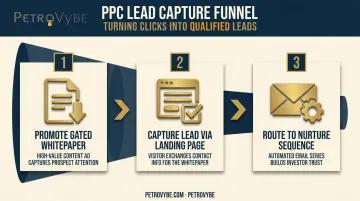
PPC fills the gap while SEO builds:
- Promote a gated whitepaper or tax-strategy guide
- Capture the lead through a dedicated landing page
- Route that lead into your nurture sequence
Email, Webinars & Automation
Most advisors have no shortage of marketing ideas. What they lack is time to execute them. Kitces research found advisors spend roughly 9 hours a week on business development overall, a category that includes marketing but isn't limited to it, meaning hands-on marketing time is often much thinner.
Automated nurture sequences, triggered emails and texts based on prospect behavior, solve this directly. Set it up once, and it runs whether or not you touched your CRM that week.
Webinars and lunch-and-learns add credibility automation can't replicate. A session on offsetting inflation or navigating tariff volatility does double duty: generating leads and demonstrating expertise in the same hour.
Building Trust, Client Experience & Referrals
Marketing gets a prospect to the door. Trust and experience decide whether they stay.
According to Cerulli research, communication quality has an outsized effect on whether affluent clients trust an advisor with their money, more than performance numbers alone. Capgemini's next-gen research backs this up: a lack of digital-channel services was a common reason heirs cited for leaving their parents' firm. Trust today is built through convenience as much as relationship.
What actually converts marketing-driven leads into long-term clients:
- Consistent branding from first ad click to first meeting
- A website that's easy to navigate, not a maze of tabs and jargon
- A smooth onboarding process that doesn't ask clients to chase paperwork
Get these fundamentals right, and satisfied clients become your best marketing channel, without a marketing budget attached. A referral network of centers of influence—estate attorneys, CPAs, real estate agents—multiplies your reach well beyond anything paid media delivers. These relationships take longer to build than an ad campaign, but they close at a higher rate and cost far less per client.
Marketing Compliance & The 3-3-3 Rule
The SEC Marketing Rule, In Plain English
The SEC Marketing Rule (206(4)-1), adopted in 2020, governs what registered investment advisers can say in advertisements and what they must disclose when they say it. Advisors can advertise, but not without guardrails.
An advertisement cannot:
- Make an untrue or misleading statement
- Present a claim without a reasonable basis for it
- Show performance results without balanced context
- Highlight benefits without disclosing material risks
Testimonials and endorsements are allowed, but only with proper disclosure of compensation, the promoter's relationship to the firm, and any conflicts of interest.
A Practical 3-3-3 Framework
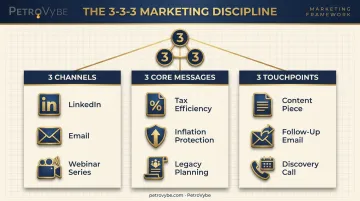
There's no single, industry-standard "3-3-3 rule" recognized by the SEC or major marketing bodies, despite how often the phrase circulates online. What's useful is adapting the concept as a working discipline: test 3 channels, with 3 core messages, across 3 touchpoints, before expanding further.
In practice:
- Pick three channels (LinkedIn, email, and a webinar series, for example) and commit real effort before adding a fourth
- Build three core messages tied to your niche (tax efficiency, inflation protection, legacy planning) and test which resonates
- Map three touchpoints per prospect (a content piece, a follow-up email, a discovery call) before judging whether a channel works
This keeps a small marketing team, often just the advisor and one assistant, from spreading thin across six platforms and mastering none of them.
Compliance review belongs in the workflow itself: every piece of content, whether a LinkedIn post or a paid ad, should pass a compliance check before it goes live. Bolting compliance on afterward is how firms end up rewriting entire campaigns or facing enforcement action.
Frequently Asked Questions
What is wealth management marketing?
It's the process of promoting advisory and wealth services across the entire client funnel. This spans everything from first attracting a prospect's attention to nurturing, converting, and retaining them as a long-term client.
Are financial advisors allowed to advertise?
Yes. The SEC Marketing Rule permits advertising, including testimonials and endorsements, provided advisors meet specific disclosure, oversight, and disqualification requirements.
What is the 3-3-3 rule in marketing?
There's no official, universally recognized version of this rule. Many wealth managers adapt it as a discipline: three channels, three core messages, and three touchpoints before expanding further.
How much should a wealth management firm budget for marketing?
Budget against your AUM and client growth targets, then track cost-per-acquisition against client lifetime value. Kitces research found growth-focused firms spend roughly 3.2% of revenue on hard-dollar marketing alone.
What is the SEC Marketing Rule?
Adopted in 2020, it governs what RIAs can claim in advertisements and sets disclosure requirements for testimonials, endorsements, and performance results.
How long does it take to see results from wealth management marketing?
SEO and content marketing typically need three or more months to gain traction, then compound over time. Paid ads and referral-based tactics can generate qualified leads much faster.