
Introduction
A condo board finds out the roof needs replacing two years earlier than expected. A nonprofit's biggest grant gets delayed by six months. An oil and gas operator needs cash on hand for a well workover before the next revenue check arrives.
What do all three have in common? None of them can raid the checking account meant for payroll, utilities, or landscaping.
That's what a reserve fund is for: liquid cash set aside specifically to cover costs that are big, predictable in category but not in timing, and completely separate from day-to-day operations.
Reserve funds show up everywhere, from condo associations to pension plans to capital-intensive industries like energy development. This article breaks down what reserve funds actually are, how the math behind them works, who uses them, and how to build one that actually holds up when the unexpected happens.
Key Takeaways
- A reserve fund sets aside liquid cash for unexpected costs or planned future needs
- It protects core operations by absorbing large, unplanned expenses
- Reserves can be restricted for specific purposes or left unrestricted for general use
- HOAs, nonprofits, corporations, governments, pension funds, and energy operators all rely on reserves
- Funds stay highly liquid, avoiding long-term investments that limit quick access
What Is a Reserve Fund?
A reserve fund is a savings account or pool of highly liquid assets set aside to meet costs that are anticipated but not part of the regular operating budget. It's distinct from the checking account that covers payroll, rent, or monthly utility bills.
The purpose is simple: financial stability. When a major, non-routine expense hits, a reserve fund absorbs the shock instead of forcing an organization to cut services, delay maintenance, or scramble for emergency financing.
Who Uses Reserve Funds
Reserve funds aren't a niche accounting concept. Entities that rely on them include:
- Individuals and households setting aside cash for major repairs or income gaps
- HOAs and condominiums, funding eventual replacement of roofs, roads, and shared infrastructure
- Nonprofits, protecting mission-critical programs during funding interruptions
- Corporations, universities, and government bodies, covering equipment replacement and capital renewal
- Pension funds, holding contributions that will later fund retiree benefits
- Capital-intensive industries such as oil and gas, where operators plan around well maintenance and reinvestment cycles
Is a Reserve Fund an Asset or a Liability?
This one trips people up. The reserve fund itself, meaning the cash or liquid investments sitting in the account, is recorded as an asset. It represents purchasing power the organization actually holds.
The future obligation the fund is meant to cover is a different matter. If a roof replacement is scheduled in three years, that anticipated cost may be tracked separately as a liability or simply disclosed in planning documents.
An internal designation to spend money later doesn't create an accounting liability on its own. An entity can't owe itself.
Example: An HOA holds $200,000 in a reserve account (an asset). It anticipates a $180,000 roof replacement in year four. That future project isn't a liability today; it's a funding target the reserve is being built toward.
Beyond the funding target itself, most reserve accounts also earn modest interest in savings or money-market instruments, adding a small return while keeping the funds accessible.
How Reserve Funds Work
Reserve funds are built through periodic deposits, monthly or quarterly, sized to match an anticipated future expense. Money goes in on a schedule; it comes out only when the specific need materializes.
Here's a simple worked example. Say a community association expects to repaint its buildings every six years at a projected cost of $60,000:
- Divide $60,000 by 6 years = $10,000 needed per year
- Divide $10,000 by 12 months = $833 in monthly deposits
- Continue depositing until the project year arrives, then draw down the full balance
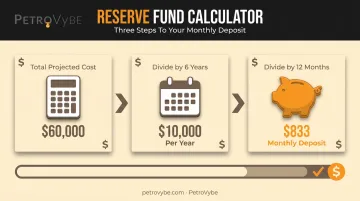
That's the core mechanic behind nearly every reserve fund, whether it's funding a repaving project or a pension obligation decades away.
Three Common Types of Reserve Funds
Most reserve structures fall into one of three categories:
- Renewal & Replacement Reserves — tied to the depreciation schedule of specific equipment or components, replenished on a set timeline (roofs, HVAC systems, elevators)
- Improvement Reserves — set aside for planned upgrades or expansions, usually approved through a formal budgeting or rate-setting process rather than tied to depreciation
- General/Contingency Reserves — unrestricted funds held for broad emergencies or built from net revenue set-asides
Reserves can also be classified by how they're governed. Board-restricted reserves are earmarked for a specific purpose and typically can't be redirected to cover an unrelated operating shortfall, while unrestricted reserves remain flexible for whatever emergency arises first.
Governance determines how reserves get used, but timing determines whether they're enough. That's where the critical year comes in: a year when a major expense draws down reserve balances well below the historical average.
Organizations that map out multi-year projections can see these dips coming and adjust contributions ahead of time rather than getting caught short.
Common Uses and Real-World Examples of Reserve Funds
Reserve funds look different depending on who's holding them, but the underlying logic, plan ahead for the expenses you can see coming, stays consistent across sectors.
HOAs and Condominiums
This is the most visible example for most people. Reserve funds cover large, non-recurring costs: roof replacement, road repaving, pool resurfacing, elevator overhauls. When reserves are underfunded, the association typically has one option left: a special assessment, meaning an unplanned bill sent directly to homeowners.
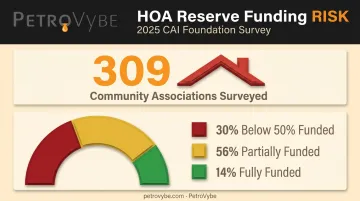
That risk isn't hypothetical. In a 2025 survey by the CAI Foundation of 309 community associations, 30% reported their reserve funds were below 50% funded, while only 14% reported being fully funded overall. Underfunding on this scale is exactly what turns a routine maintenance item into a homeowner emergency.
Nonprofit Organizations
For nonprofits, a reserve fund is often called an operating reserve, and it acts as a safety net during funding gaps. Picture a homeless shelter that takes storm damage to its building right as a major grant payment gets delayed. Without a reserve, services stop. With one, the shelter keeps its doors open while it sorts out repairs and funding.
Propel Nonprofits recommends a benchmark of three to six months of operating expenses, adjusted based on how reliable an organization's cash receipts are. A board-approved policy should spell out the purpose, target amount, and process for tapping the fund.
Corporations, Universities, and Government Bodies
Larger institutions typically run two flavors of reserves: depreciation-based reserves for equipment replacement, and contingency reserves for self-supporting activities that shouldn't disrupt the core operating budget.
The University of California's Office of the President, for example, sets capital-maintenance reserve targets of 1% to 3% of current replacement value and a central operating reserve around 3.5% of covered funds. These are institution-specific policies, not universal rules, but they illustrate the discipline larger organizations apply.
Reserve Funds in Oil & Gas and Energy Development
Energy operators face their own version of this challenge: wells need periodic workovers, aging infrastructure requires maintenance, and eventually there are plugging and abandonment obligations to satisfy. Capital-intensive industries like oil and gas plan around these cycles the same way an HOA plans around a roof.
PetroVybe's approach reflects this same logic, built around two pillars: Protect and Scale. Protect means acquiring legacy production assets and running targeted workovers to keep existing wells performing. Scale means reinvesting cash flow into new development to compound output over time.
Rather than holding a fixed, ring-fenced reserve account, PetroVybe treats this as disciplined reinvestment: capital gets deployed only when risk-adjusted returns justify it, drawing on partner equity, credit facilities, and operating cash flow. The goal mirrors any reserve strategy: protect what's already producing while funding the next stage of growth.
Pension Funds
Pension funds represent reserve logic at a massive scale. Employee and employer contributions build a pool of assets, invested over years or decades, then paid out to retirees according to actuarial schedules.
The health of these reserves is measured by a funded ratio, plan assets divided by projected obligations, though the American Academy of Actuaries cautions there's no single percentage (like 80%) that universally defines a healthy plan.
Reserve Fund vs. Operating Fund vs. Emergency Fund
These three terms get used interchangeably, but they serve different purposes.
| Fund Type | Primary Use | Typical Liquidity |
|---|---|---|
| Operating fund | Day-to-day costs: payroll, utilities, insurance, routine maintenance | High, spent continuously |
| Reserve fund | Planned, non-recurring expenses tied to specific assets or obligations | High, but drawn down infrequently |
| Emergency fund | Unplanned, personal income shocks or unexpected bills | High, immediately accessible |
The operating fund keeps the lights on this month. The reserve fund covers the roof replacement three years from now. The emergency fund is the personal version, unplanned and unbudgeted.
That personal parallel matters for anyone evaluating illiquid alternative investments, including private oil and gas development partnerships. Before committing $100,000 or more to a 10-year hold period, it makes sense to keep a separate personal reserve fund for near-term liquidity needs.
According to the Federal Reserve's 2024 survey, only 63% of adults could cover a hypothetical $400 emergency expense using cash or its equivalent. That's a useful reminder that long-term capital and near-term liquidity should never come from the same pool of money.
How to Build and Manage an Effective Reserve Fund
Building a reserve fund that actually works starts with an honest assessment of future costs, not a guess.
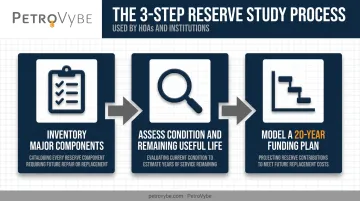
The reserve study process: HOAs and institutions typically commission an independent reserve study every three to five years. A qualified consultant works through several steps:
- Inventories major components, such as roofs, paving, and mechanical systems
- Assesses current condition and estimates remaining useful life for each
- Models a multi-year funding plan, often projecting 20 years out
Funding targets vary by entity, but many organizations aim for 70% to 100% funded status relative to their component inventory.
Best practices worth following:
- Automate regular deposits so contributions don't get skipped during tight months
- Keep reserve funds in highly liquid, low-risk accounts, not long-term investments
- Never use reserve funds to plug routine operating shortfalls
- Revisit the reserve study or projection annually, even between full updates
Warning signs of an underfunded reserve:
- Frequent or recurring special assessments
- Deferred maintenance that keeps getting pushed to "next year"
- Borrowing to cover a project that reserves should have funded
If any of these show up, the fix is usually a budget adjustment: raising monthly contributions, re-prioritizing which components get funded first, or commissioning an updated study to reset expectations.
Frequently Asked Questions
What is a reserve fund?
A reserve fund is liquid cash or assets set aside to cover unexpected costs or planned future obligations. It's kept separate from the funds used for routine, day-to-day expenses.
What is the purpose of a reserve fund?
It ensures financial stability by preventing a single large, unplanned expense from disrupting core operations or services. It acts as a buffer between predictable budgets and unpredictable timing.
Is a reserve fund an asset or a liability?
The fund itself, meaning the cash or investments held, is an asset. The obligation it covers may be tracked separately, but an internal savings designation isn't a liability.
How much money should be kept in a reserve fund?
It depends on the entity. HOAs often reference reserve study targets between 70% and 100% funded, while nonprofits commonly aim for three to six months of operating expenses.
What's the difference between a reserve fund and an emergency fund?
A reserve fund is typically organizational and planned around specific known future costs. An emergency fund is usually personal and meant for unplanned, unpredictable expenses.
Can a reserve fund be used for purposes other than emergencies?
Yes. Many reserve funds are restricted for planned uses, like a scheduled roof replacement, while others stay unrestricted for general emergencies based on board policy.