

Introduction
Your programs work. Your mission matters. But when someone asks "what's your fundraising strategy?", the honest answer is often a shrug and a grant calendar held together with sticky notes.
That gap points to a fund development problem — the underlying system fundraising tactics alone can't fix.
In 2025, total nonprofit revenue rose 5.0% while the number of donors giving fell 3.6%, according to the Fundraising Effectiveness Project. Dollars went up. Relationships went down. That gap is exactly what fund development exists to close.
Fund development functions as the relationship engine that makes philanthropy possible, extending far beyond isolated fundraising tactics. This guide breaks down 14 timeless principles behind that engine, first articulated by fundraising pioneer Simone Joyaux, and shows you how to turn them into an actual plan.
Key Takeaways
- Fund development thrives on long-term relationships built through consistent donor engagement over time
- People give to causes and people they trust, driven by clear understanding of an organization's mission
- A written plan converts good intentions into measurable, repeatable results
- Donor retention and lifetime value matter more than one-time dollar totals
- Trust-based stewardship principles extend across every capital-raising relationship, from nonprofit causes to business partnerships
What Is Fund Development? (And How It Differs From Fundraising)
Fund development is the strategic, ongoing process of building relationships with prospects and donors who invest time, money, or service in a cause. It's an organizational commitment, built through years of consistent engagement rather than a single ask.
Fundraising, by contrast, is what happens inside that larger system: a specific appeal, an event, a year-end campaign. Fundraising is the tactic; fund development is the strategy that gives that tactic its purpose.
Here's the distinction in practice:
| Fundraising | Fund Development | |
|---|---|---|
| Timeframe | Short-term, campaign-specific | Ongoing, multi-year |
| Focus | Getting the gift | Building the relationship |
| Success metric | Dollars raised | Donor retention, lifetime value |
| Owner | Development staff | Entire organization |
Success in fund development doesn't hinge on how much a single appeal raised. It hinges on whether that donor gave again next year, and the year after that.
Overall donor retention sat at 43.3% in 2025, with new-donor retention lagging far behind at just 18.9%, per FEP's retention benchmarks. That gap between acquiring and keeping donors is where most organizations lose revenue year over year.
The 14 Basic Principles of Fund Development
These principles, popularized through Simone Joyaux's decades of fundraising practice, aren't trendy hacks. They're foundational rules that still hold up because they're built on how people actually decide to give. Here's how they group into five practical themes.
Know Your Terminology: Predisposed, Prospect, and Donor
Precision matters more than enthusiasm here. Mixing up these three terms leads to asks that land at the wrong time, on the wrong person.
- Predisposed individual: Someone with a natural affinity for your cause but no established connection yet, such as a cancer survivor who hasn't heard of your specific nonprofit
- Prospect: Someone who has opted in somehow, like joining your mailing list or attending an event, but hasn't given
- Donor: Someone who has actually made a gift
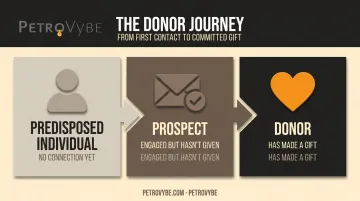
Ask a prospect for a major gift before they've even opened your newsletter, and you've likely lost them. Terminology isn't bureaucratic hairsplitting. It's what keeps your outreach from feeling tone-deaf.
Build a Culture of Philanthropy and a Donor-Centered Mindset
A culture of philanthropy means every staff member and board member, from the receptionist to the executive director, treats every gift as meaningful, regardless of size. It's not the development director's job alone.
Layered on top of that culture is donor-centeredness: matching the donor's motivations to your mission, instead of pushing your organization's passion onto them. A donor who cares about literacy doesn't want a generic appeal about your building fund.
Giving skews emotional before it's rational. Research using behavioral and brain-imaging methods found people donated on 64% of trials when shown a photo of an identifiable beneficiary, compared to just 27% with a silhouette, according to a study published in the Journal of Neuroscience.
A face moves people more than a statistic does, because donors connect with stories, not abstractions.
Engage Relationships Ethically Instead of Exploiting Them
Board members and volunteers are some of your most valuable fundraising assets, but only when they're engaged the right way. That means involving them directly in identifying, cultivating, and soliciting donors, rather than expecting them to write checks and disappear.
Two guardrails matter here:
- Permission marketing: never trespass on someone's personal network. Let predisposed individuals opt in rather than pressuring a board member's neighbor into a gift they didn't choose
- Focused energy over broad visibility: a viral social post doesn't equal contributions. Time spent nurturing people already interested outperforms time spent chasing awareness
Organizations where board members were actively involved in fundraising were notably more likely to meet their annual goals compared to those where boards stayed hands-off, per Urban Institute research. Involvement, done ethically, works.
Give First, Then Ask With Intention
Before you ask anyone else for a gift, your own board and leadership need to give first. Asking someone to invest in something you haven't personally backed undermines your credibility instantly.
Once that internal giving is in place, solicitation follows a formula fundraising veteran Henry Rosso summarized decades ago. Ask the right person to solicit the right prospect for the right amount, for the right reason, in the right way, at the right time.
Skip any one of those variables and the ask feels off, even if the cause is compelling.
Build Sustainable, Diversified Fund Development
Individual donors remain the backbone of the sector. U.S. charitable giving hit an estimated $617.2 billion in 2025, with individuals contributing $394.2 billion of that total, according to Giving USA's 2026 report. Individuals aren't just generous. They're the most loyal segment when treated with genuine stewardship.
Two things follow from that:
- Most "fundraising problems" are symptoms. Weak leadership or an unclear mission will sabotage even the best-run campaign, so fix the root cause, not the appeal copy.
- Diversify your sources. Relying on one grant or donor is fragile. A healthy mix of grants, individual giving, sponsorships, and events protects the budget.
How to Build a Fund Development Plan Around These Principles
Principles without a plan stay theoretical. Here's how to operationalize them:
- Set core vs. dream goals. Define your bare-minimum operating number (core) separately from your growth target (dream), so the plan still succeeds even if you fall short of the stretch goal.
- Build a real, itemized budget. Use actual vendor quotes and last year's expenses for staffing, programs, technology, and marketing, not optimistic guesses.
- Diversify funding streams deliberately. Blend grants, individual giving, major and planned gifts, corporate sponsorships, peer-to-peer campaigns, and earned revenue.
- Create a realistic timeline. Map a grant calendar and campaign dates, and ramp fundraising targets gradually instead of expecting Month One results.
- Assign clear roles. Decide who on staff, the board, or among volunteers owns each function, and outsource where internal capacity is thin.
- Monitor monthly, evaluate quarterly. Track donor retention, acquisition rate, and engagement frequency, then adjust tactics based on what the data shows.
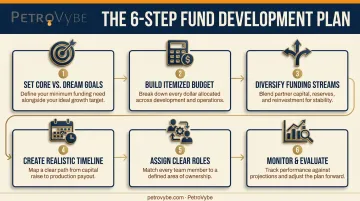
Put the plan in writing rather than keeping it as a mental model. If you can't hand someone a copy, you don't have a plan yet.
What Does a Fund Development Professional Do?
A fund development professional wears more hats than the title suggests. Core responsibilities include:
- Donor research and qualification: identifying who's a prospect versus who's ready for an ask
- Relationship cultivation — building trust over months or years, not days
- Solicitation: making the actual ask, using that right-person, right-amount formula
- Stewardship — thanking, reporting back, and reinforcing the donor's decision to give
- Impact reporting — showing donors exactly what their gift accomplished
The profession is grounded in ethical standards and a researched body of knowledge. Voluntary credentials like the CFRE (Certified Fund Raising Executive) signal this expertise, requiring ongoing professional practice points and a recertification exam every three years.
A good fund development professional doesn't carry the fundraising burden alone. They coach board members and volunteers to participate, rather than doing all the asking themselves.
Applying Fund Development Principles Beyond Nonprofits
Trust, transparency, giving first, and long-term stewardship aren't exclusive to charities. Any organization asking people to commit capital runs on the same relationship mechanics.
Private capital development companies that treat backers as long-term partners rather than one-time transactions are practicing donor-centered philanthropy with a different vocabulary.
PetroVybe, a Texas-based natural gas development company, illustrates the parallel. Built on Biblical Stewardship principles, the company structures its accredited investor partnerships around several of the same ideas found in the 14 principles above:
- Give first: PetroVybe discloses leadership credentials before asking for capital, including Chief Geophysicist Michael Stamatedes's 75.2% well-selection success rate over 48 years, nearly double the industry average of under 40%
- Third-party validation: A licensed, independent engineering firm assigned PetroVybe's proved reserves a $48MM PV-09 valuation before any capital changes hands
- Dedicated relationship stewardship: Director of Partner Relations Alicia Ammari serves as a consistent point of contact for accredited investors, mirroring the donor-stewardship role inside nonprofit development
- Long-term horizon over transaction: With a minimum $100,000 commitment and a 10-year hold built for compounding production, PetroVybe's structure rewards partners who think in years, not one-time trades
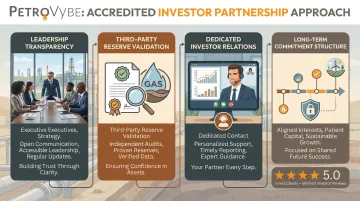
Whether you're stewarding a $50 annual donor or a $100,000 accredited investor, the underlying discipline is identical: give before you ask, verify before you promise, and stay in the relationship long after the transaction closes.
Frequently Asked Questions
How do you create a fund development plan?
Start by setting core versus dream goals, then build a real budget from actual quotes and past expenses. Diversify your funding sources, set a realistic timeline, assign clear roles, and monitor results monthly against quarterly benchmarks.
What is the difference between fundraising and fund development?
Fundraising is short-term, campaign-specific income generation, like a single appeal or event. Fund development is the long-term, relationship-driven strategy that supports and sustains that fundraising over time.
What is the job description of a fund development professional?
They handle donor research, relationship cultivation, solicitation, stewardship, and impact reporting. Their role also includes coaching board members and volunteers to participate in fundraising, not doing it all solo.
What is a "culture of philanthropy" and why does it matter?
It's an organization-wide attitude where every staff member and board member values giving, regardless of gift size. Donors can sense when fundraising feels like everyone's job, not one department's burden.
How do you measure whether fund development principles are working?
Look beyond total dollars raised to donor retention rate, lifetime value, and acquisition cost. Rising revenue paired with falling donor counts often signals a retention problem hiding behind strong top-line numbers.
Can these fund development principles apply outside of nonprofits?
Yes. Any relationship-based capital-raising model, including private investment partnerships, benefits from the same trust, transparency, and stewardship principles that drive nonprofit donor retention.